
Slab Leaks and Mold: How Fast It Grows in Your Home
Yes, a slab leak causes mold. It starts within 24 to 48 hours, hides under flooring and inside walls, and keeps growing as long as the leak feeds it. Here is the timeline, the health risks, and what to do.
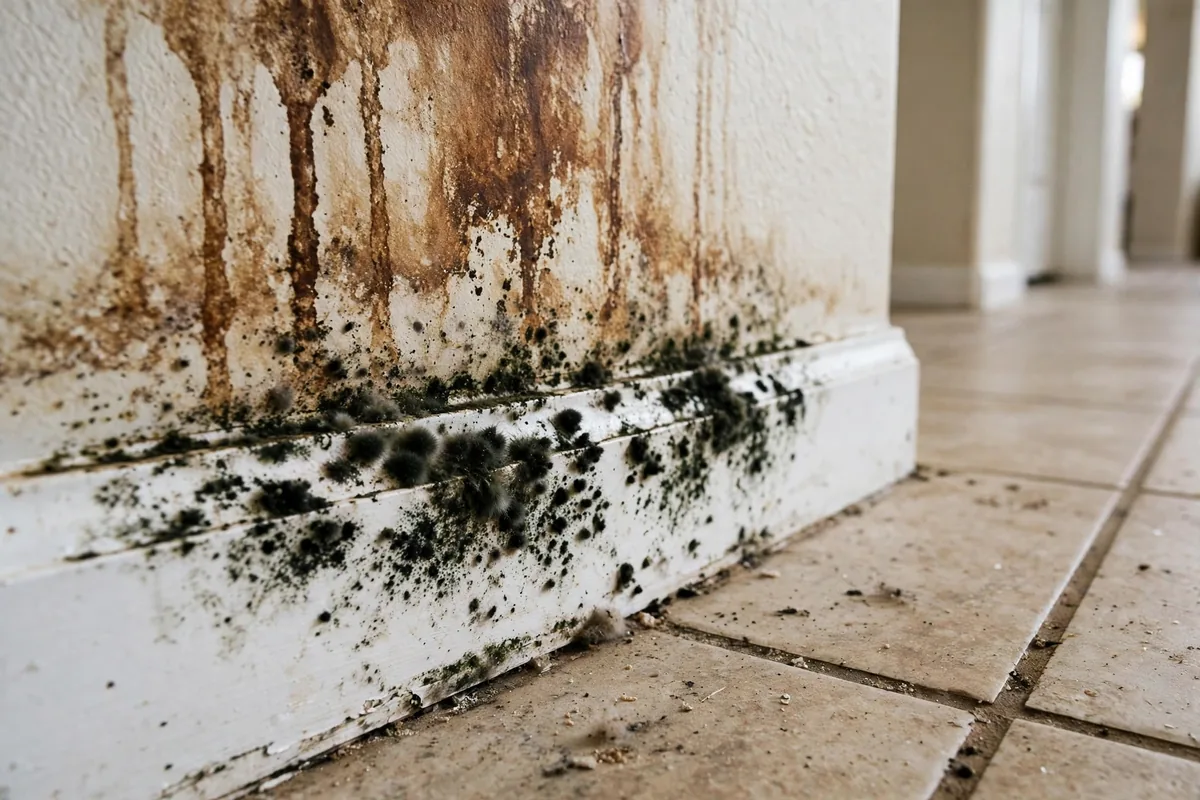
The short answer: Yes. A slab leak causes mold, and it starts fast. Mold spores germinate within 24 to 48 hours of sustained moisture, and a slab leak supplies exactly that: a constant, hidden feed of water under your concrete. The moisture wicks up through the slab into flooring, drywall, and cabinets, and the mold grows in the places you cannot see, under the flooring and inside the walls, sometimes for months before you ever smell it. Below is the growth timeline, what it means for your health, and the order of operations that actually fixes the problem.
If you are here because you smell something musty near the floor, skip to the signs of hidden mold and then read how to confirm the leak itself with the water meter test. If you are not sure what a slab leak even is, start with our slab leak symptoms guide.
How fast does mold grow from a slab leak?
Faster than the leak itself becomes visible. Mold needs three things: moisture, a food source, and warmth. A slab leak delivers all three continuously. Here is the timeline:
- 24 to 48 hours: spores that are already floating in every home germinate wherever moisture stays constant. Under flooring or behind baseboards, the colony has begun. You will not see or smell anything yet.
- 3 to 7 days: the colony spreads across the damp surface. On drywall paper and wood, which are excellent mold food, growth accelerates. Still invisible from the room.
- 2 to 4 weeks: growth reaches the edges of the hidden zone. Musty odor starts to appear near the floor. This is usually the first moment a homeowner notices anything.
- Months: a slab leak never dries on its own, so the colony keeps expanding. Flooring buckles, baseboards darken, and the smell spreads through the room. By the time mold is visible, the hidden colony is much larger than what you see.
The critical point: the clock restarts every time the surface dries. A leak that never stops means the 24 to 48 hour window never closes. That is what makes slab-leak mold different from a one-time spill, which you can dry and be done with. The leak keeps feeding the colony until the pipe is fixed.
Why slab-leak mold grows where you cannot see it
Concrete looks solid, but it wicks moisture like a sponge. Water from a pressurized leak travels through the slab and rises into everything touching it. Flooring sits directly on the slab, baseboards sit on the flooring, drywall sits behind the baseboards. The moisture moves up the assembly while the room above stays dry, so the mold establishes itself in the hidden layers first.
The three hiding places:
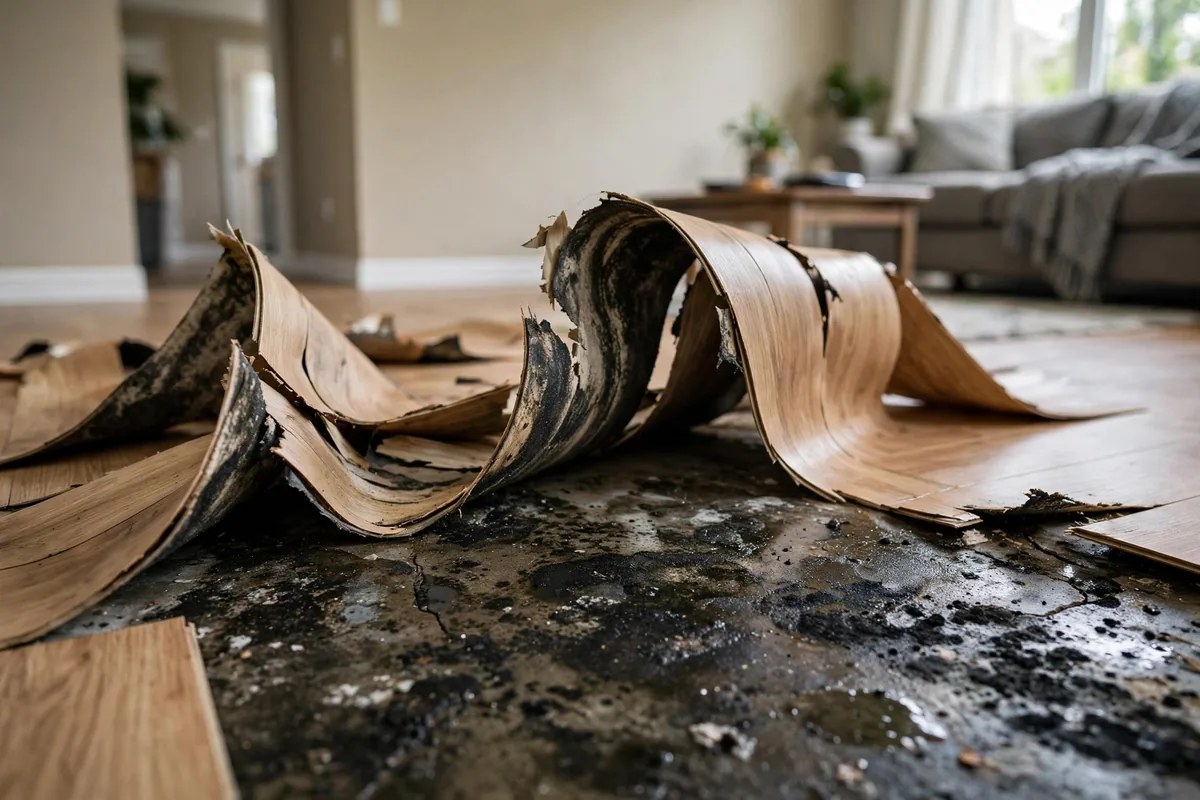
- Under flooring. Vinyl plank, laminate, and carpet pad trap moisture against the concrete. The mold grows on the damp slab and the flooring backing. The floor surface can look almost normal while the colony spreads underneath.
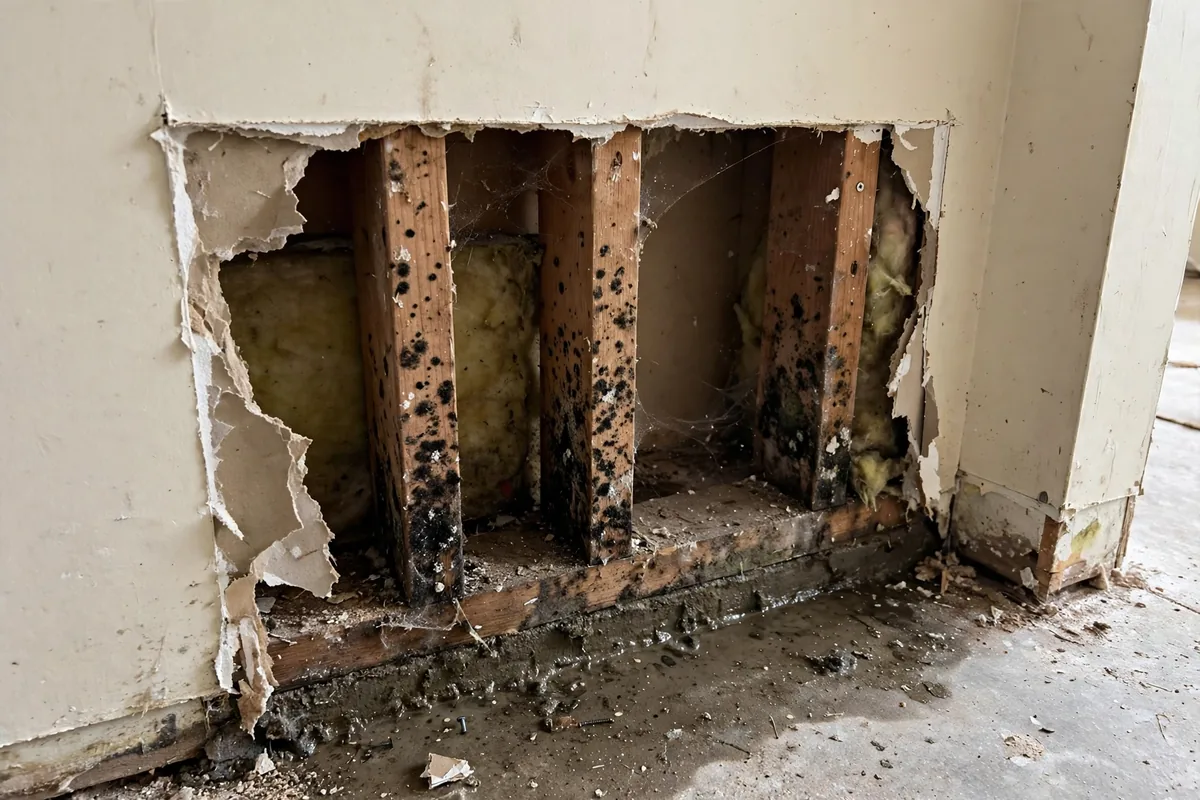
- Inside wall cavities. Drywall paper is mold food. Moisture wicking up from the slab feeds growth on the back of the drywall and on the wood framing, completely out of sight until the bottom of the wall is opened.
- Under cabinets and fixtures. Vanities, kitchen base cabinets, and laundry room fixtures sit on the slab and seal moisture underneath. These areas stay damp the longest and get checked the least.
Is mold from a slab leak dangerous to your health?
Mold exposure is a genuine health concern, and it is worth taking seriously without exaggerating it. Mold releases spores and microbial fragments into the air. Breathing them can trigger allergic reactions, asthma flare-ups, coughing, congestion, itchy eyes, and skin irritation. People with asthma, allergies, chronic respiratory conditions, or weakened immune systems react more strongly. Children and older adults are also more sensitive.
The musty smell is your warning system. A musty odor means a colony is established and large enough to release noticeable amounts of microbial gases. If family members feel worse at home and better away, or symptoms concentrate in one room, hidden mold deserves a place on the suspect list. For health questions, talk to a doctor. For the moisture source, that is where leak detection comes in.
One honest note: no one can identify the mold species, or the health risk, from a photo. Species identification requires lab testing. What you can know without a lab is that sustained moisture plus organic material plus warmth equals active growth, and active growth in a living space needs to be removed, not just dried.
The 7 signs of hidden mold from a slab leak
Hidden mold announces itself indirectly. Watch for these, especially together:
- Musty smell near the floor. The single most reliable early sign. Mustiness that is strongest at floor level, in one area, points to growth under the flooring or in the wall base.
- Warped, buckled, or cupped flooring. Moisture under vinyl plank or laminate makes it lift and separate. Wood swells. The flooring damage is the visible tip of the moisture underneath.
- Dark spots or discoloration at baseboards. Mold often shows first as speckling along the bottom of baseboards or the lower inches of drywall.
- Staining on walls near the floor. Brown or yellow staining that creeps upward from the baseboard means water has been wicking into the drywall, which means mold is very likely inside the wall.
- Allergy or asthma symptoms that are worse indoors. Congestion, coughing, or itchy eyes that ease when you leave the house are a classic pattern.
- Paint or wallpaper bubbling near the baseboard. Trapped moisture pushes finishes off the wall from behind.
- A high water bill with no visible leak. This is the combination that points specifically at a slab leak rather than a roof or plumbing fixture leak. Water is going somewhere you cannot see, and moisture plus time equals mold. Run the water meter test before assuming anything.
Who fixes what: the plumber, then the mold remediator
Order matters. Mold remediation done before the leak is fixed is money thrown away, because the water keeps feeding regrowth. The correct sequence:
- Confirm the leak. A pressure test and acoustic location prove the leak and pinpoint it. Guessing wastes time while the colony grows. Our detection process guide explains what the visit looks like.
- Stop the water. Repair the pipe using the method that fits your situation. Compare them honestly in our slab leak repair options comparison, and price the whole job in our slab leak cost guide.
- Dry everything, fast. Once the water stops, affected materials need to dry within 24 to 48 hours to halt new growth. Dehumidifiers, fans, and removing wet flooring or drywall sections all count.
- Remove what cannot be saved. Porous materials with established growth, drywall, carpet pad, insulation, usually have to go. The mold roots grow into the material, and surface cleaning does not reach them.
- Remediate and verify. A mold remediation company handles containment, HEPA filtration, and proper disposal for larger colonies. For small, surface-level patches on hard non-porous surfaces, careful cleaning can suffice, but anything inside walls or under flooring is a professional job.
Do not just spray bleach and call it done. Bleach lightens the color of mold on porous surfaces without killing the roots inside drywall or concrete, and the smell returns within weeks while the colony keeps growing underneath. Worse, scrubbing dry mold without containment spreads spores through the house. Bleach has its place on hard, non-porous surfaces, but it is not a remediation plan for slab-leak mold.
How to stop mold before it starts after a slab leak
Mold is optional. It only grows where moisture lingers, so speed is the entire strategy:
- Confirm the leak the same day you suspect it. The water meter test takes about ten minutes. Every week of an unconfirmed leak is another week of colony growth.
- Get detection before damage. Acoustic location pinpoints the leak so the repair opening is small. A small opening means less exposed slab and less drying afterward. If the situation is urgent, our emergency leak repair line runs 24/7.
- Keep the area ventilated during and after repair. Air movement across the exposed slab speeds drying dramatically.
- Dehumidify. Arizona air is dry, which helps, but an enclosed room with a wet slab needs active dehumidification for the first days after the repair.
- Document everything with photos and dates. If insurance enters the picture, a timeline of the first signs, the detection report, and the repair protects your claim. Read our guide on what to do when a slab leak claim is denied before you need it.
When to call right now
Call today if you can see mold spreading along baseboards or flooring, if a section of floor is warped and smells musty, or if family members have new respiratory symptoms that track with time spent at home. Those mean the colony is established and the leak is still feeding it. Call (480) 885-4943 or reach us through the contact page. Our slab leak detection services cover the full diagnosis across Apache Junction: we confirm whether you have a leak, pinpoint it, and give you the honest repair scope so the drying and remediation can start from a dry slab. For the bigger picture of what unchecked leaks do to a home, see our slab leak damage guide and the escalation timeline of an ignored slab leak.