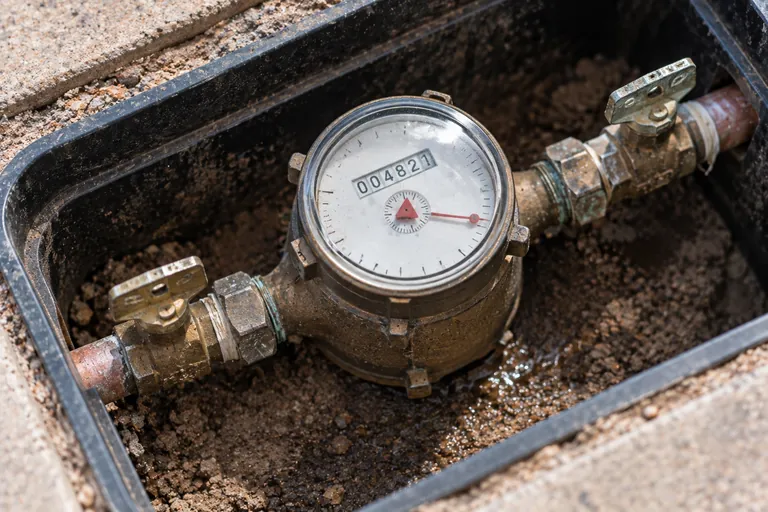
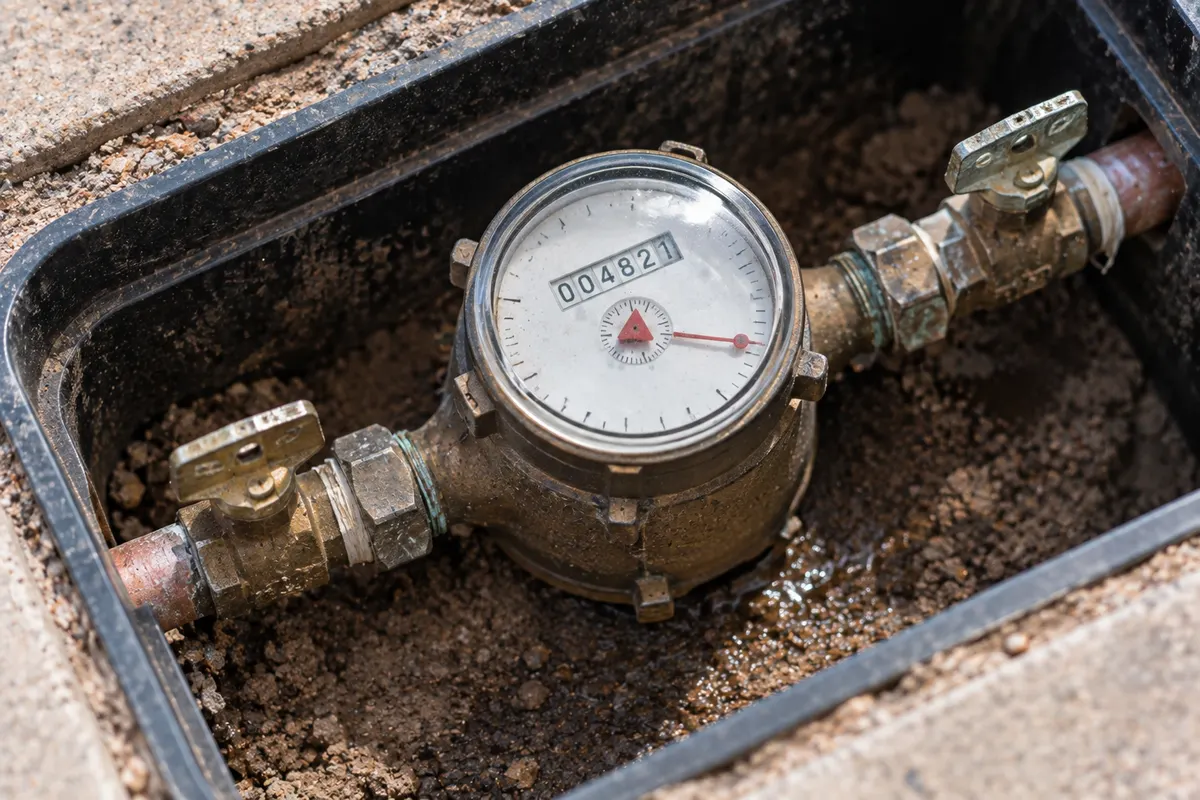
Check the meter with everything off
If it keeps moving with no fixtures running, water is escaping the pressurized supply side.
Slab leak vs. drain leak
Water under a slab does not always mean the same thing. A leak in a pressurized supply line and a leak in a drain or sewer line can both show up as a damp patch of flooring, but they behave differently and are confirmed with different tests. This page explains how to tell them apart.
Quick answer
Slab leak, drain leak and sewer leak get used loosely in everyday conversation, but they describe different lines that behave differently and need different tests. Getting the terms straight helps you describe the problem accurately and understand what a technician is actually checking. For the signs of a supply-line slab leak specifically, see slab leak symptoms.
The difference
Supply lines carry water into the house under constant pressure, whether that water is being used or not, which is why a leak on that side keeps running around the clock and shows up on the water meter even when everything is off.
Drain lines carry water away after it has been used, and they are not pressurized; water only moves through them when a fixture sends it there, using gravity to flow toward the sewer or septic connection. A leak in a drain line generally only leaks while water is passing through it.
How to tell
A few checks narrow it down before any equipment comes out.
If it keeps moving with no fixtures running, water is escaping the pressurized supply side.
Water that shows up only after a shower, load of laundry or flush points toward a drain line.
A sewage-like odor points toward a drain or sewer line rather than a clean-water supply leak.
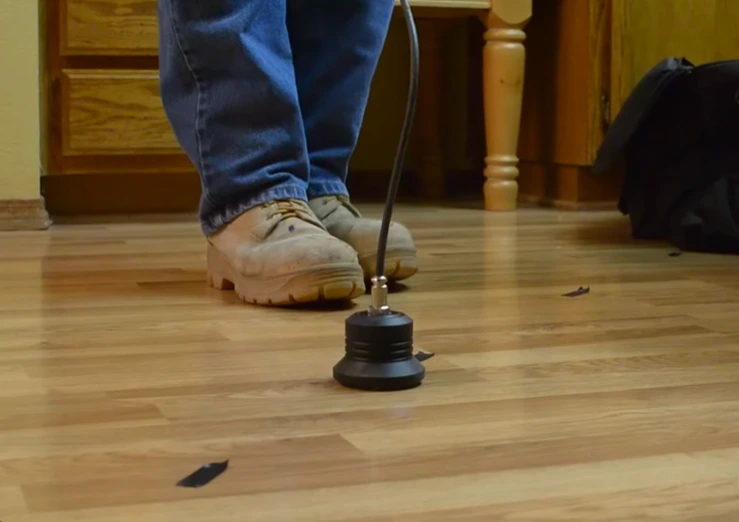
A pressure test checks the supply side; a camera or dye test checks the drain side. See how slab leak detection works for the supply-side process.
Easy to confuse
It happens often, mainly because both can leave the same kind of evidence on the surface: a warm or damp patch of flooring, a musty smell, or grout and baseboards that stay wet. None of those signs point specifically to one line over the other on their own.
The water meter is the fastest way to narrow it down, since it only responds to the pressurized supply side. A meter that holds steady with a leak still present is a reason to look at the drain line rather than assume the supply side is clear.
Slab leak vs. sewer leak
They are often lumped together in conversation, but they are different problems. A slab leak is on the clean-water supply side, under constant pressure. A sewer leak is on the waste side, carrying used water and waste away from the house without pressure, relying on the pipe's slope instead.
A sewer leak is more likely to bring a foul odor and, in more significant cases, backups at drains, rather than the water-bill and meter signs that point to a supply-side slab leak.
Always a slab leak?
Not necessarily. "Slab leak" is commonly used specifically for the pressurized water-supply line, since that is the leak that keeps running and driving up a water bill. But drain and sewer lines also frequently run under a slab, and a leak there is sometimes called a slab leak in casual conversation even though it behaves differently.
Being specific about which line is leaking matters because it changes both the signs to expect and the test used to confirm it.

Detection
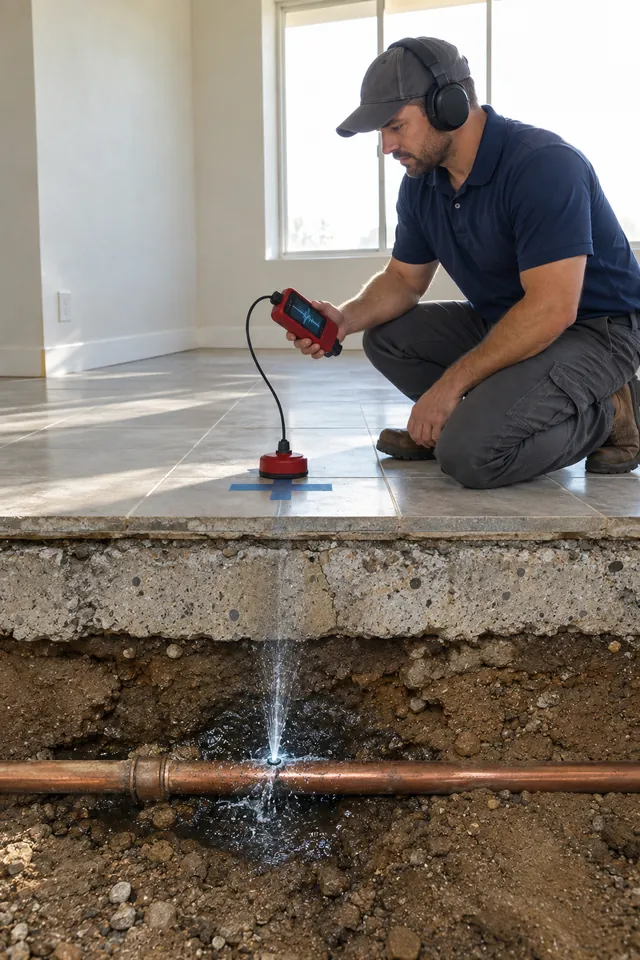
Not entirely. A supply-line slab leak is confirmed with a pressure test, since the line should hold pressure when nothing is leaking, and located with acoustic listening or thermal imaging once a leak is confirmed. Our detection guide covers that process in full.
A drain line does not hold pressure the same way, so it is more often checked with a camera run through the line, or a dye and flow test, to see where water is escaping. If a supply-side test comes back clear but signs of a leak remain, checking the drain line is usually the next step.
Not sure which?
Guessing from the signs alone is where mix-ups happen, since a warm patch, a musty smell or damp flooring can point to either line. The more reliable path is having the supply side checked first with a meter reading and pressure test, since that rules a slab leak in or out directly.
If the supply side checks out clear, the drain line is the next thing to look at rather than a dead end. Either way, testing gives an answer that guessing about smells and warm spots cannot.
Local context
Leak Finders checks the water-supply side for slab leaks across Apache Junction and nearby communities, including Gold Canyon, San Tan Valley and Eastmark. If a leak turns out to be on the drain side, we can point you toward the right next step. See the full list of service areas.
Check the water meter with every fixture off. If it keeps moving, the leak is on the pressurized supply side, pointing to a slab leak. If water only appears when a fixture is used or a toilet is flushed, a drain line is more likely.
A slab leak is in a pressurized supply line and can leak continuously. A drain leak is in a waste line that only carries water when a fixture is used, and relies on gravity rather than pressure.
Yes. Both can show up as a damp patch of flooring or a musty smell, so the visible signs alone are not always enough to tell them apart. A meter check, pressure test or drain inspection confirms which one it is.
Not exactly. A slab leak is in the pressurized water-supply line, while a sewer leak is in the waste line, which is not pressurized. Both can run under a slab but leak differently and are tested differently.
No. The term usually means a leak in the water-supply line under a slab, but a drain or sewer line under the same slab can leak too and is sometimes loosely called a slab leak as well.
Keep reading
Not sure which one you have?
Call the dispatcher and describe what you're seeing. We will explain the tests that fit and point you toward a drain specialist if that turns out to be the source.

Talk with the local team
Call or email us with what you have noticed. We respond quickly and are available 24/7.