
Hot-water slab leak
Hot-water slab leak: signs, detection and repair
A leak on the hot-water line under a slab behaves a little differently from a cold-line leak, mainly because the water carries heat into the concrete and flooring above it. This page covers what makes a hot-water leak distinct: its signs, how it is found and fixed, and whether the line is worth rerouting.
Live dispatcherUpfront optionsBacked workmanship
Quick answer
What is a hot-water slab leak?
Short answerA hot-water slab leak is a leak on the hot-water supply line where it runs under a concrete slab. Because hot water is escaping, the leak can warm the concrete and flooring around it, which is why a warm patch on the floor is one of its more distinctive signs, alongside the usual slab-leak signs like a moving meter or a rising bill.
Everything about finding and fixing the leak works the same as it does for any slab leak. What is different is the clue the heat leaves behind, and a couple of extra questions worth asking when the leak turns out to be on the hot line. For the full detail on detection and repair, see how slab leak detection works and slab leak repair options.
Signs
What are the signs of a hot-water slab leak?
Short answerA warm or hot patch of flooring that stays warm, rather than coming and going, is the sign specific to a hot-water leak. It is often paired with general slab-leak signs: a moving water meter, a rising water bill, or the sound of running water. Slower hot water arriving at a fixture can also be a clue.
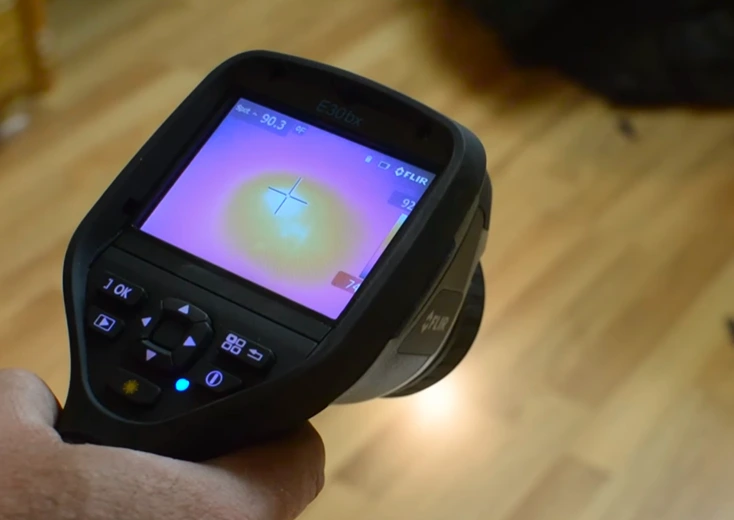
The sign that points specifically to the hot line is a patch of flooring that feels warm underfoot, especially if it stays warm rather than warming up only at certain times of day. That warmth is what people mean when they ask why one area of their floor is warm, or whether a hot spot means a leak.
A warm patch by itself is not proof. Sunlight through a window, ducting underneath, or a nearby appliance can also warm a floor. What makes it worth testing is the combination: a warm patch alongside a moving water meter, a rising bill, or the sound of running water. Our guide to slab leak symptoms covers those general signs in full.
Detection
How do you detect a hot-water slab leak?
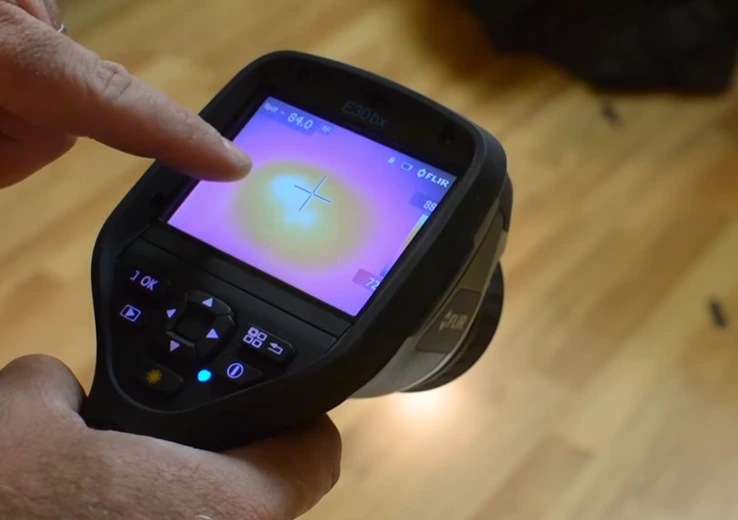
Short answerDetection follows the same process as any slab leak, with pressure testing and line isolation confirming which line is leaking, but thermal imaging plays a bigger role because a hot-water leak warms the surrounding area. That heat signature helps narrow down the location before the spot is confirmed with a second method.
The process is the same one used for any slab leak: a meter check, pressure testing and line isolation confirm that a leak exists and which line it is on, and a locating method pins down the spot. What changes with a hot-water leak is which locating method tends to be most useful.
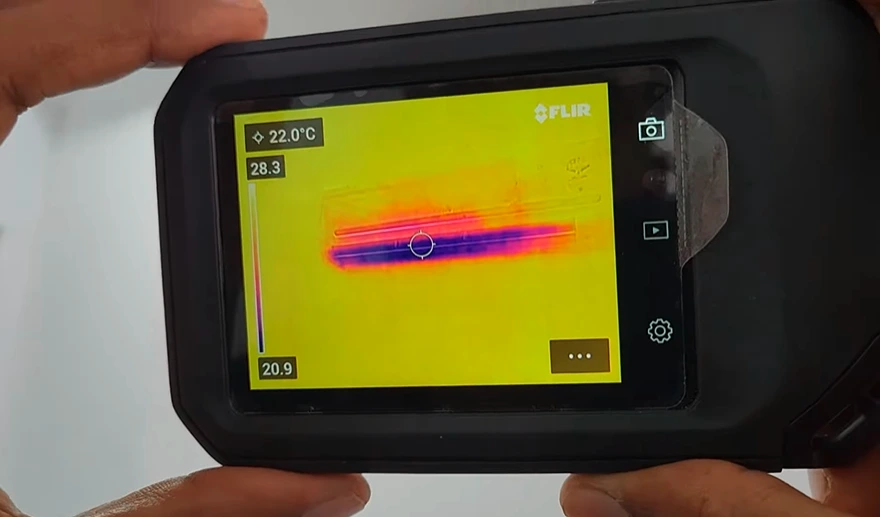
Because the leak is warming the concrete and flooring, thermal imaging can pick up a heat pattern that lines up with the leak, which helps narrow the search before the location is confirmed with a second method such as acoustic listening. See our full guide to how slab leak detection works for the complete process.
Confirming the line
How do I know if a slab leak is on the hot-water line?
Short answerIsolating the hot and cold lines and pressure-testing each separately shows which one is leaking. If only the hot side loses pressure, the leak is on the hot line. This is a standard part of professional detection, not something to attempt by opening the floor yourself.
A technician isolates the hot and cold sides of the plumbing and pressure-tests each on its own. The side that will not hold pressure is the one that is leaking. That result, combined with a warm patch on the floor, is usually enough to confirm the leak is on the hot line before locating equipment is brought in.
Repair
How do you repair a hot-water slab leak?
Short answerA hot-water slab leak is repaired the same three ways as any slab leak: a spot repair at the leak, rerouting the line, or repiping. The choice depends on where the leak is and the condition of the pipe. Insulating the new section is worth asking about, since it affects heat reaching the slab again.
The same three options apply as with any slab leak: repairing the pipe at the leak, rerouting the line around the slab, or repiping a larger section. Our guide to slab leak repair options compares them in detail, including the factors that make one option fit better than another.
One extra question worth raising for a hot line: whether the replaced or rerouted section should be insulated. Insulation can reduce heat loss and reduce how much heat reaches the slab if the pipe were ever to leak again, though it is a detail to discuss with your technician rather than something every job needs.
Safety
Is it safe to leave a hot-water slab leak?
Short answerIt is not usually a fire or electrical hazard, but it is not something to leave either. A hot-water leak keeps wasting water and the energy used to heat it, and it can damage flooring and the area around the slab the same way any slab leak can. The heat does not make it more dangerous, but it does not make it safe to ignore.
A hot-water leak is not typically a fire or electrical hazard on its own. That does not make it harmless. Like any slab leak, it keeps running whether or not anyone notices, which means it keeps adding to your water bill and the cost of heating that water, and it can damage flooring and the area around the slab the longer it continues.
If you notice a hot-water leak, treat it the way you would any slab leak: rule out the easy causes, confirm what you are seeing, and have it tested rather than waiting to see if it goes away.
Rerouting
Should hot-water lines be rerouted after a slab leak?
Short answerNot automatically. Rerouting a hot-water line has the same trade-offs as rerouting any line: it can avoid breaking the slab and keeps the new pipe reachable, but it needs a workable route and changes where the pipe runs. Some homeowners choose to reroute a hot line that has already leaked, but a technician should weigh it against a repair for your specific home.
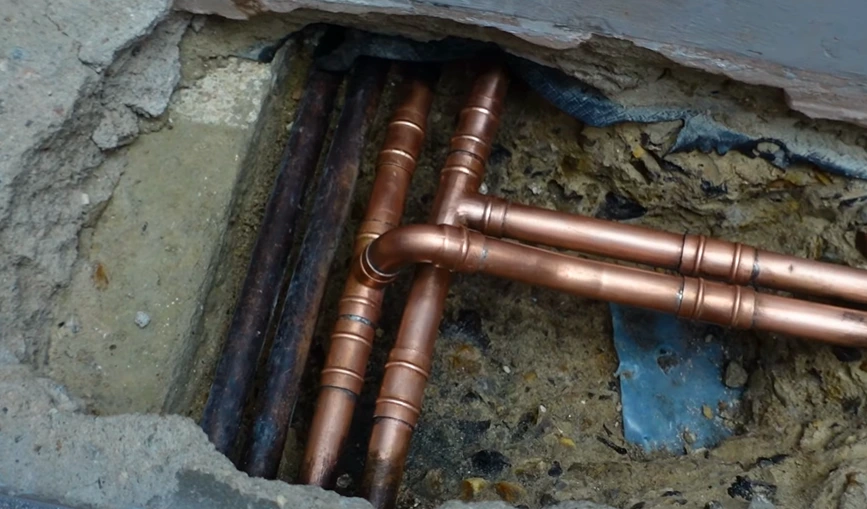
Rerouting a hot line has the same trade-offs as rerouting any line under a slab: it can avoid breaking the concrete and puts the new pipe somewhere easier to reach later, but it needs a workable route through walls or the attic, and it is not always the better option compared with a spot repair.
Some homeowners lean toward rerouting after a hot line has already leaked once, on the idea that a pipe that has failed once may be more likely to fail again. That is a reasonable question to raise with your technician, but it is not a rule, and the right call still depends on the condition of the pipe and the practicality of the route.
After the repair
How long does a floor stay warm after a slab leak?
Short answerThere is no fixed length of time. It depends on how long the leak has been running, how much water escaped, and the flooring material above it. A floor can stay warm for a while after a repair too, as the concrete releases the heat it absorbed, so warmth alone should not be used to judge whether a repair worked.
There is no set number of hours or days. A floor that has been warmed for a long time by a running leak has absorbed more heat than one caught early, and that heat takes time to release even after the leak is fixed. Flooring material also matters, since tile and concrete hold and release heat differently than wood or carpet.
Because of that, a floor staying warm for a while after a repair is not necessarily a sign that anything is wrong. If you are concerned, the same tests used to find the original leak can confirm whether the repair is holding.
Local context
Hot-water slab leaks in Apache Junction
Leak Finders detects and repairs hot-water and cold-water slab leaks across Apache Junction and nearby communities, including Gold Canyon, San Tan Valley and Eastmark. Thermal imaging is one of the tools we use to help confirm and locate a hot-water leak. See the full list of service areas.
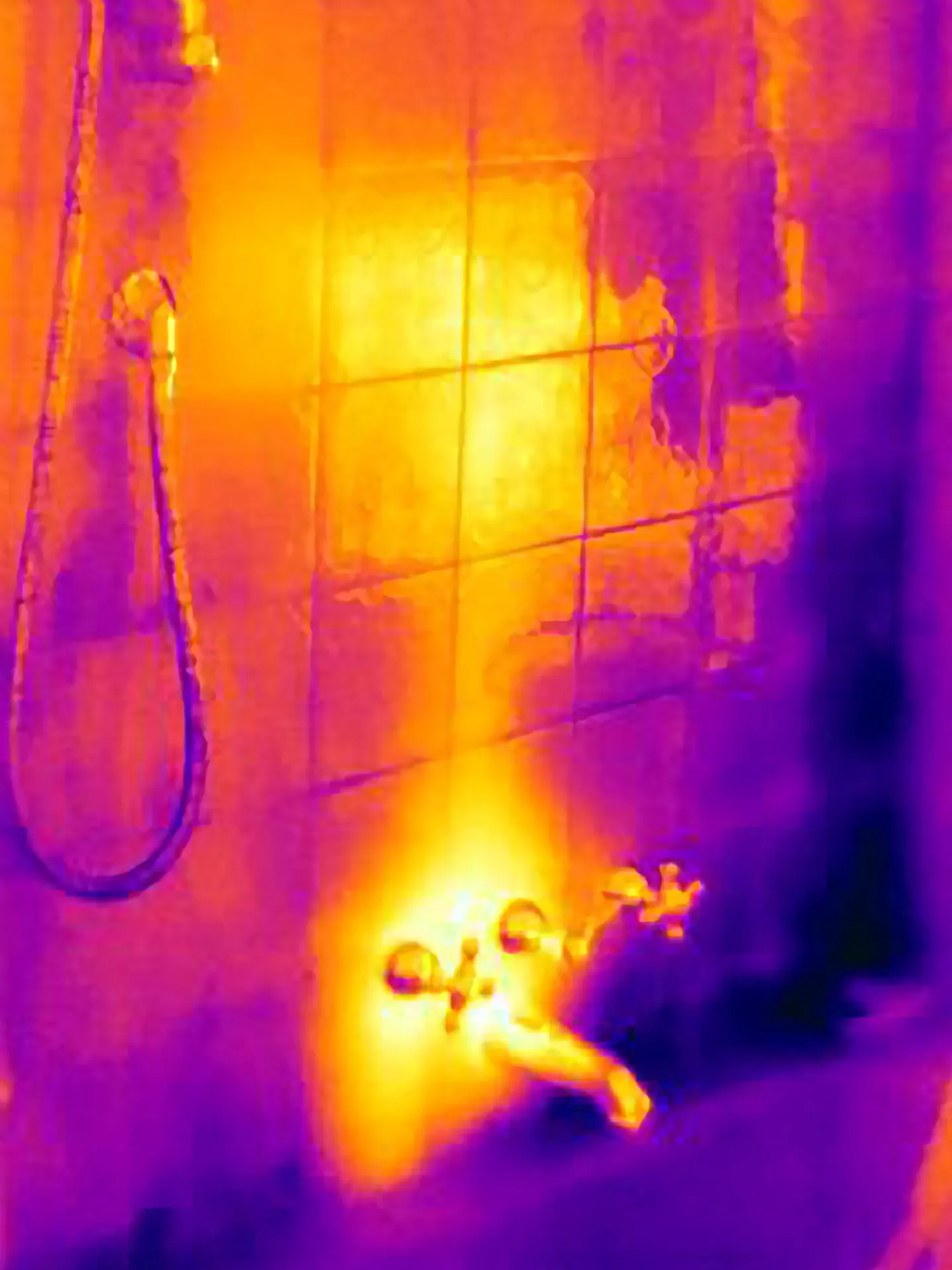
What are the signs of a hot-water slab leak?
The distinctive sign is a warm or hot patch of flooring that stays warm. It often appears alongside general slab-leak signs such as a moving water meter, a rising water bill, or the sound of running water.
How do you detect a hot-water slab leak?
The same process used for any slab leak applies, with thermal imaging playing a bigger role because the leak warms the surrounding area. Pressure testing and line isolation confirm which line is affected before the spot is pinpointed.
How do you repair a hot-water slab leak?
It is repaired the same three ways as any slab leak: a spot repair at the leak, rerouting the line, or repiping. The choice depends on where the leak is and the condition of the pipe, the same as it would for a cold-line leak.
Is a warm floor a sign of a hot-water slab leak?
It can be, especially if the patch stays warm rather than coming and going. Sunlight, ducts and nearby appliances can also warm a floor, so it is a reason to test rather than a confirmed diagnosis on its own.
Should hot-water lines be rerouted?
Not automatically. Rerouting can avoid breaking the slab and keeps the new line reachable, but it needs a workable route and is not always the better option. Compare it with a spot repair for your specific home.
Keep reading
Related guides
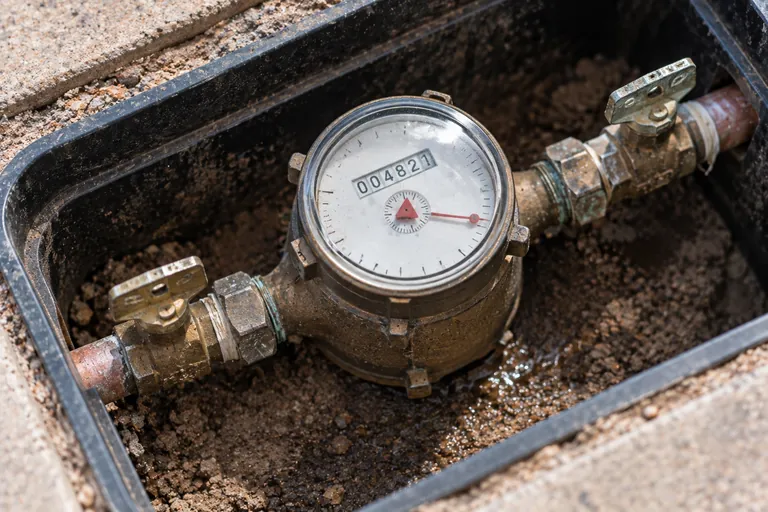
Slab leak symptoms
The full set of warning signs, including warm floors, a moving meter and running-water sounds.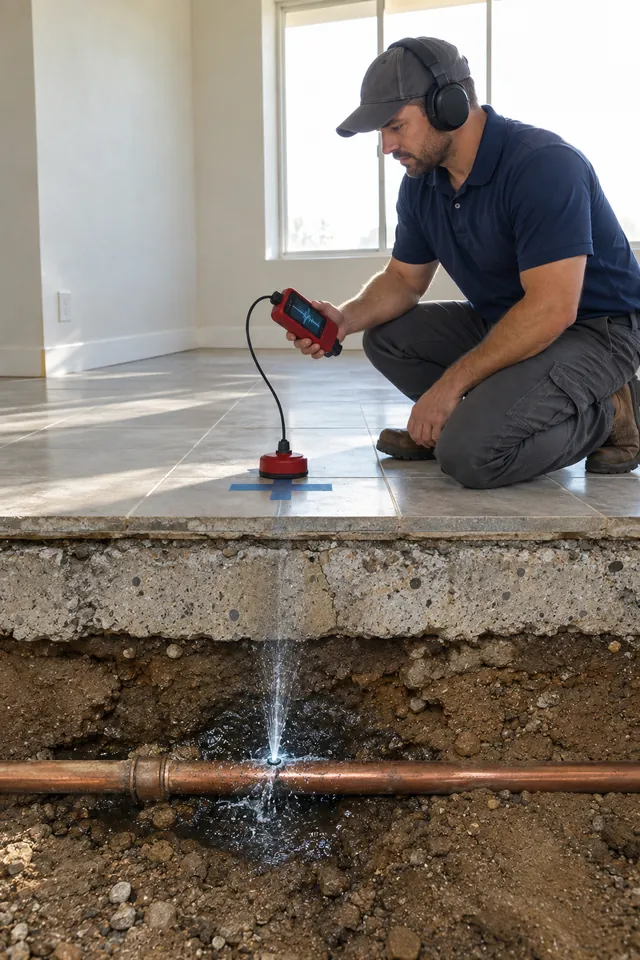
How slab leak detection works
The tests and tools used to confirm and locate any slab leak, hot or cold.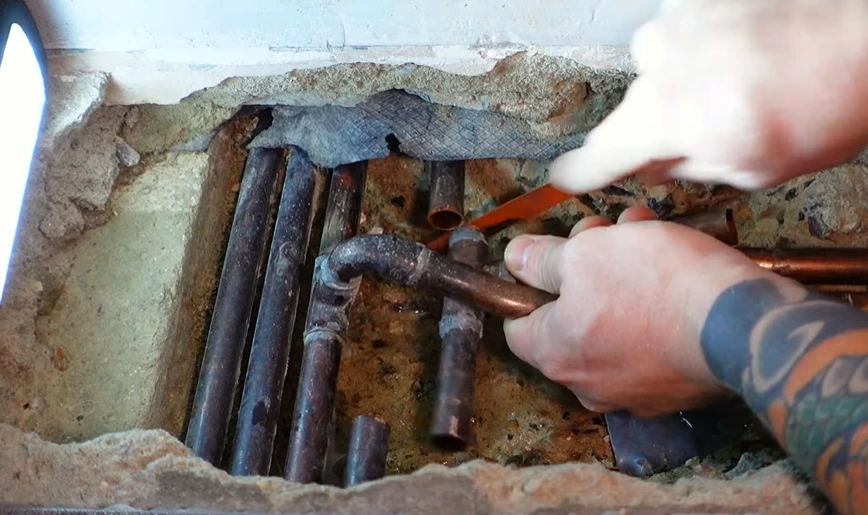
Slab leak repair options
Spot repair, rerouting and repiping compared, with how each works and when it may fit.Notice a warm spot on your floor?
Have a hot-water leak checked before it runs longer.
Call the dispatcher and tell us what you have noticed. We will explain the tests that fit your situation and the options before any work begins.

Talk with the local team
Request hot-water slab leak testing
Call or email us with what you have noticed. We respond quickly and are available 24/7.