
Can a Slab Leak Fix Itself? What Happens If Ignored
A slab leak never seals itself, no matter how quiet it gets. Here is the honest escalation timeline, from the first wasted gallons to foundation movement, and why waiting only raises the repair bill.
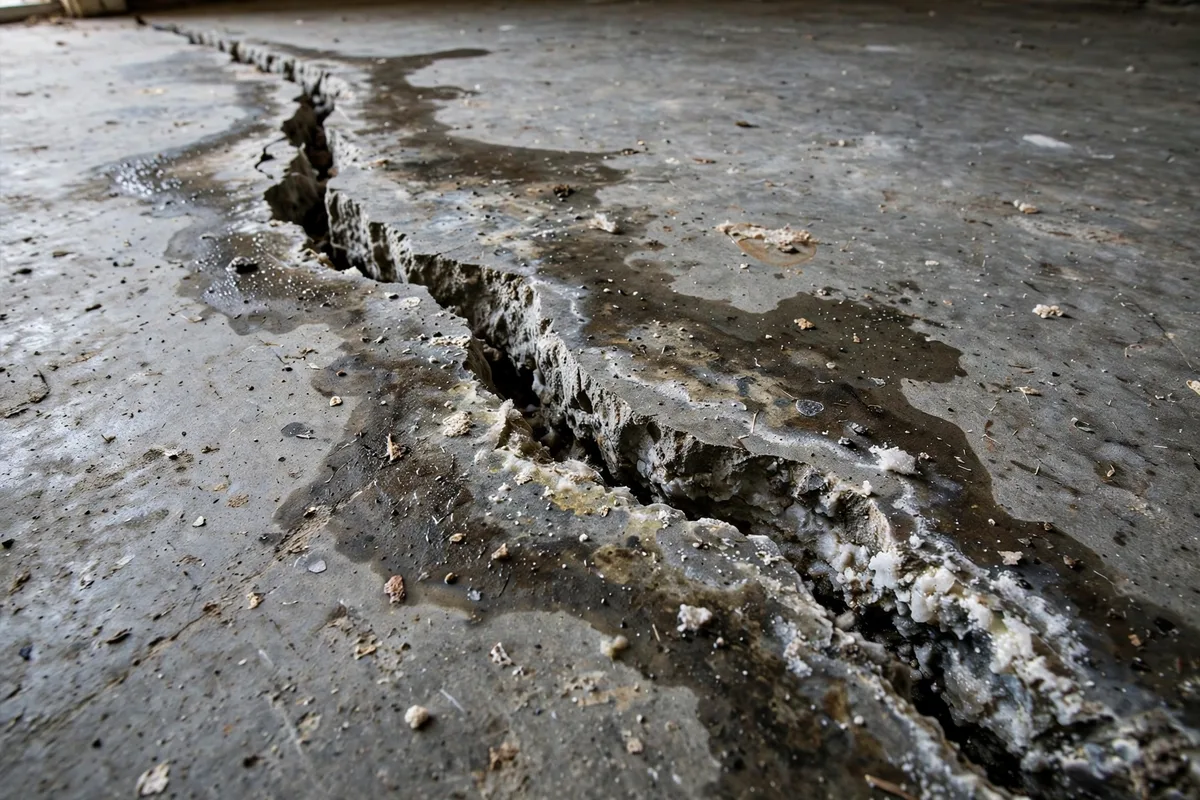
The short answer: No. A slab leak can never fix itself, and waiting never makes it cheaper. A water line under your slab is pressurized, and pressure only widens a breach, never closes one. Copper does not heal, minerals do not plug a pressurized opening, and concrete does not seal itself. What feels like the leak "going away" is almost always the leak changing behavior, not stopping. Meanwhile the water keeps flowing: into the soil, into your foundation, and onto your water bill. Below is the honest escalation timeline and what to do at each stage.
If you are reading this because the sound of running water stopped or the warm spot on the floor cooled down, do not cancel the detection visit. Confirm what is actually happening with the water meter test first. It takes about ten minutes and tells you whether water is still moving through a pipe that should be still. And if you are new to slab leaks entirely, our slab leak symptoms guide covers the full warning-sign checklist.
Why can't a slab leak seal itself?
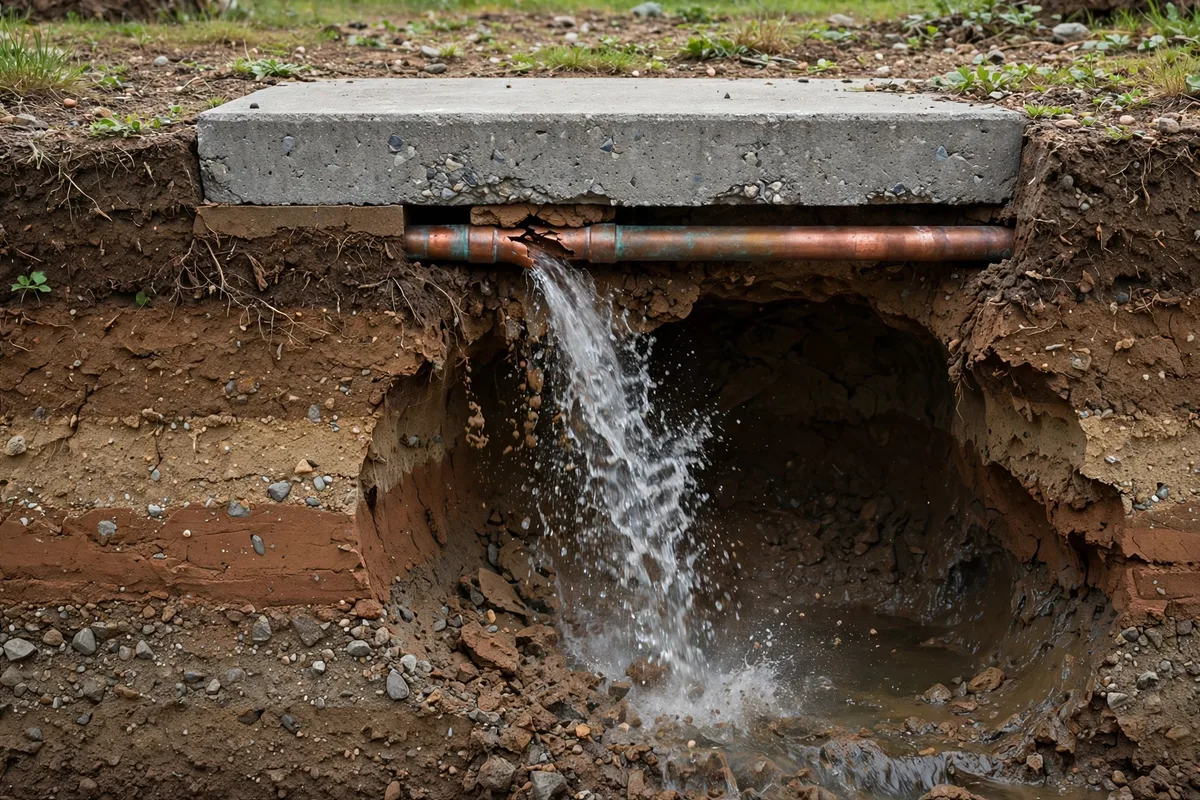
It helps to see what a slab leak actually is. In most Apache Junction homes the water supply lines run inside the concrete slab, usually copper in homes built from the 1970s through the 1990s. A slab leak is a breach in one of those lines: a pinhole from corrosion, a crack from soil movement, a failed joint. The line is pressurized, typically 40 to 80 psi, which means water is being forced out through that opening every second of every day.
Nothing in that setup heals. Copper does not grow back. The minerals in Phoenix-area hard water do not plug a pressurized opening; they may leave scale around it, but 60 psi of water pushes straight through scale. Concrete does not caulk itself. The only force acting on the opening is pressure, and pressure makes holes bigger, not smaller. That is the entire physics of the situation, and no waiting period changes it.
Some leaks do slow down temporarily. A shifting pebble of soil can press against a pinhole and reduce the flow for a while. Municipal pressure fluctuates through the day. But a pinhole that is temporarily muffled is still a pinhole, and the corrosion that made it is still working on the rest of the pipe. Every leak detection tech in the East Valley has a story about the homeowner who waited because it seemed to get better, and called back when the floor buckled.
But the sound stopped. Did the leak stop?
This is the most common reason people cancel a detection visit, so it deserves a straight answer. The sound of running water under the slab comes and goes with pressure, temperature, and soil conditions. Hot water lines expand and contract. Soil shifts in monsoon season and settles in the dry months. A leak that was loud in July can be inaudible in October while flowing the same amount of water, or more.
The leak also does not have to be where you listen. Water travels. A leak under the laundry room can sound like it is under the hallway, and as the soil around the pipe saturates and compacts, the acoustics change. The sound moving or fading tells you nothing about the flow. Only a meter test tells you the flow. If your meter's low-flow indicator is moving with every fixture off, water is leaving your house somewhere, and a silent leak is still a leak.
The warm spot cooling down is the same story. A warm floor spot means a hot-water line leak near the surface. As the leak saturates deeper soil and the water spreads, the surface spot can cool even as total water loss rises. Do not read comfort into a cooling floor. Read the meter.
What happens if you ignore a slab leak: the escalation timeline
Ignore a slab leak and nothing gets better. It gets more expensive in a predictable sequence:
- Your water bill climbs, then climbs again. Even a pinhole leak wastes hundreds of gallons a day, and it runs 24 hours a day. The first bill shocks you. The second one, a month later, is worse, because the leak has had another month to grow. A leak wasting 200 gallons a day in September can be wasting far more by November. Our high water bill guide walks through the triage steps, but the fix is always the same: find the leak and stop it.
- The soil under your slab erodes. This is the stage most homeowners never picture. A pressurized leak does not just drip into the dirt. It jets water into the soil, washing fine particles away and carving out a void beneath the concrete. Apache Junction's clay-heavy soil is especially vulnerable: it swells when saturated and shrinks when it dries, and a constant leak keeps one zone permanently saturated while the soil around it cycles. The void grows, and the slab above it starts spanning a gap it was never designed to span.
- Your foundation moves. A slab spanning a void will crack, and a cracked slab lets in more water, which erodes more soil. You start seeing the classic signs: hairline cracks in the slab or stem wall, tile that cracks in a line, doors that stick, baseboards pulling away from the wall. At this point you no longer have just a plumbing problem. You have a plumbing problem plus a foundation problem, and foundation work costs multiples of pipe work. See our slab leak damage guide for what each type of damage looks like and how fast it moves.
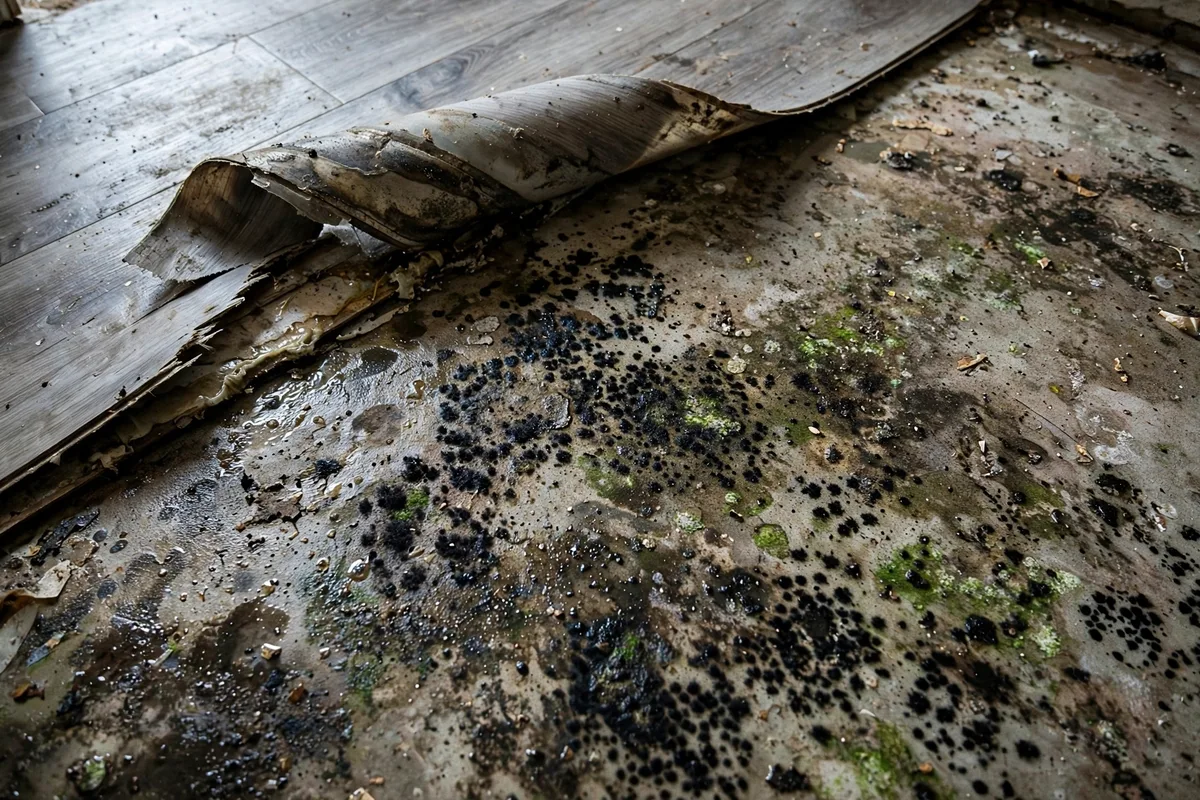
- Mold and moisture damage set in. Sustained moisture under a slab wicks upward through concrete and into flooring, drywall, and cabinets. Mold starts within 24 to 48 hours of continuous dampness, and under flooring it grows unseen for months. By the time you smell it, the colony is established. Remediation means removing flooring and sometimes drywall, on top of the plumbing repair.
- The repair itself gets bigger and more expensive. A leak caught early is often a single spot repair: locate, open, fix, patch. A leak ignored for months can mean multiple weak spots along a corroded line, a compromised section of slab, and damaged flooring that has to come up anyway. Homeowners who wait sometimes discover that what would have been a repair is now a reroute or a repipe. Compare the options honestly in our slab leak repair options comparison, and price the whole picture in our slab leak cost guide.
- Your insurance options shrink. This is the one that surprises people. Homeowners insurance generally covers sudden and accidental water damage, not gradual damage from a leak you knew about and ignored. Wait months after noticing the signs and the adjuster can reasonably argue the damage was gradual and preventable. Document everything from the first suspicion, and read our guide on what to do when a slab leak claim is denied before you need it.
How long can a slab leak go unnoticed?
Longer than you would think. A small pinhole in a hot water line can run for months before the signs are obvious enough to connect. The slab hides everything: there is no puddle, no spray, no visible pipe. The first signals are indirect, a water bill that drifts upward, a floor that feels warm in one spot, a faint hiss at night. Many homeowners explain each one away for a season before the pattern becomes undeniable.
That is exactly why detection exists as a service separate from repair. A pressure test on your supply lines takes under an hour and tells you definitively whether you are losing water, and acoustic listening pinpoints the spot within inches. If you are unsure, the uncertainty itself is the reason to test. Our detection process guide explains what the appointment looks like, and there is no obligation attached to knowing.
Four myths that cost homeowners the most
- "Hard water minerals will seal it." They will not. Scale forms slowly and has no structural strength against 40 to 80 psi. Minerals do not plug pressurized leaks; they plug the aerators on your faucets.
- "The bill went back down, so it fixed itself." Bills fluctuate with irrigation schedules, seasonal use, and estimated reads. A single lower bill means nothing. Two consecutive rising bills with no usage change mean everything.
- "I will wait until I can see where it is." You will never see a slab leak. It is under concrete. Waiting for visible confirmation means waiting for secondary damage: cracked tile, buckled flooring, mold. Detection equipment sees through the slab so you do not have to wait for the damage to surface.
- "Insurance will cover whatever happens." Insurance covers sudden events. A leak you watched develop for months is the textbook definition of gradual damage, which most policies exclude. Early documentation and early repair are what keep a claim viable.
What to do the moment you suspect a slab leak
- Run the meter test. Turn off every fixture and water-using appliance, then watch your water meter's low-flow indicator for 15 minutes. Any movement means water is leaving the system. Step by step: the water meter test.
- Document what you see. Photograph the warm spot, the crack, the bill. Note dates. If insurance ever enters the picture, this timeline is your evidence.
- Do not tear up your floor. Guessing at the location and opening the slab yourself turns a precise repair into a destructive search. Detection pinpoints the leak before anyone cuts concrete.
- Get a detection appointment, not a repair quote. You cannot price a repair until you know what is failing. A proper diagnosis with pressure testing and acoustic location comes first, and the repair method follows from it. If things are actively getting worse, our emergency leak repair line runs 24/7.
When to call right now
Most slab leaks are urgent but not emergencies. Call immediately if you see water coming up through the slab or flooring, if a section of floor is hot to the touch, if you hear running water with everything off, or if a crack in the slab is visibly widening. Those signs mean active, significant water loss, and every day adds damage. Call (480) 885-4943 or reach us through the contact page. Our slab leak detection services cover the full diagnosis across Apache Junction, and we will tell you plainly whether you have a leak, where it is, and what the honest fix costs.