
Water Bill Suddenly High? Find the Hidden Leak Fast
A high water bill with no visible leak means water is going somewhere you cannot see. Here is the triage order that finds it: read the bill, rule out toilets and irrigation, test the meter, and recognize when the spike points to a slab leak.
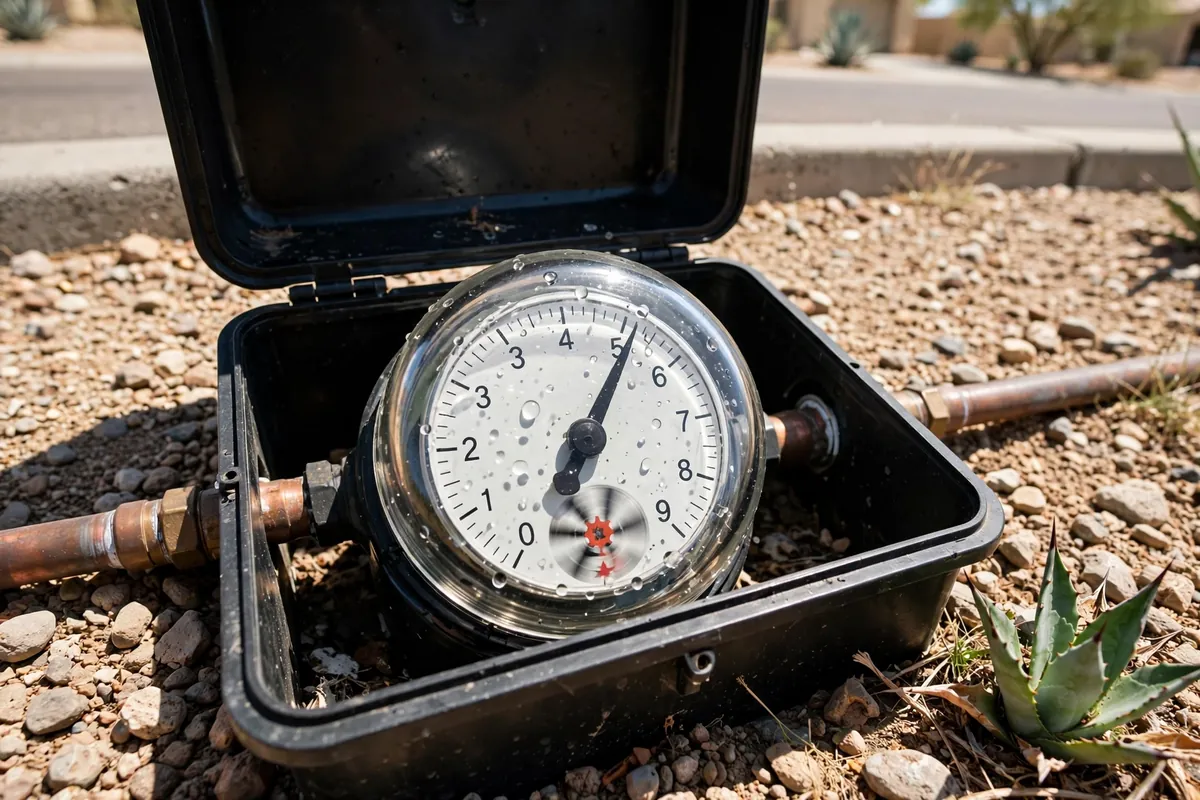
The short answer: a doubled bill with no visible leak almost always means water is escaping where you cannot see it, usually a running toilet, a stuck irrigation valve, or a broken supply line under the slab. Compare gallons before rates, rule out toilets and irrigation, then run our step-by-step water meter test. If the meter moves with everything off and the easy culprits test clean, call a leak detection company.
The math makes the stakes clear: a leak of just one gallon per minute wastes 1,440 gallons in a single day, more than 40,000 gallons over a billing cycle. Work through the triage in order. Each step clears a suspect, and the order matters: cheap fixes first, hidden leaks last.
How do you read a high water bill correctly?
Before you hunt for a leak, make sure the bill is telling the story you think it is. Bills climb for two separate reasons: you used more water, or the rate changed. Compare the gallons used with last month and with the same month last year, not just the dollar total. Summer irrigation in Apache Junction can double normal usage, so a July spike that matches last July is a watering pattern, not a leak.
- Gallons used vs. rate changes. If the gallons are flat but the dollars jumped, the rate or tier threshold changed. That is a utility question, not a plumbing one.
- Estimated vs. actual reads. Look for "estimated" on the bill. An estimated read that overshot your use gets corrected on the next actual read, and the catch-up can look like a sudden spike.
- Same month last year. This is your most honest baseline. Seasonal irrigation, a full pool, and overnight guests all distort month-to-month comparisons.
- Billing cycle length. A bill covering 33 days instead of 30 holds about ten percent more water use by itself.
If the gallons really did jump and none of these explain it, the extra water went somewhere on your side of the meter. A quick call to the water utility is worth making at this stage, but only to confirm the read type and current rates. If usage is genuinely up, the city cannot fix your plumbing.
Can a toilet cause a high water bill, or is it a slab leak?
A running toilet is the single most common cause of a mysteriously high bill, and it never leaves a puddle. A worn flapper or a stuck fill valve lets tank water bleed into the bowl silently, 24 hours a day, at a rate that can reach hundreds of gallons a day. It moves the water meter exactly like a pipe leak does, so this test comes before any talk of slab leaks.
Run the food-coloring dye test on every toilet in the house, including the guest bathroom nobody uses:
- Lift the tank lid. If the water level is up at the overflow tube, the fill valve is not shutting off, and that alone can waste a large volume.
- Add a few drops of food coloring to the tank water. Use enough to tint it clearly. Do not flush.
- Wait 15 to 20 minutes. Do not flush during the wait.
- Check the bowl. If color has appeared in the bowl without a flush, the flapper is leaking tank water into the bowl.
- Repeat on every toilet. Homes in Apache Junction often have three or more bathrooms, and a leak in the least-used one goes unnoticed the longest.
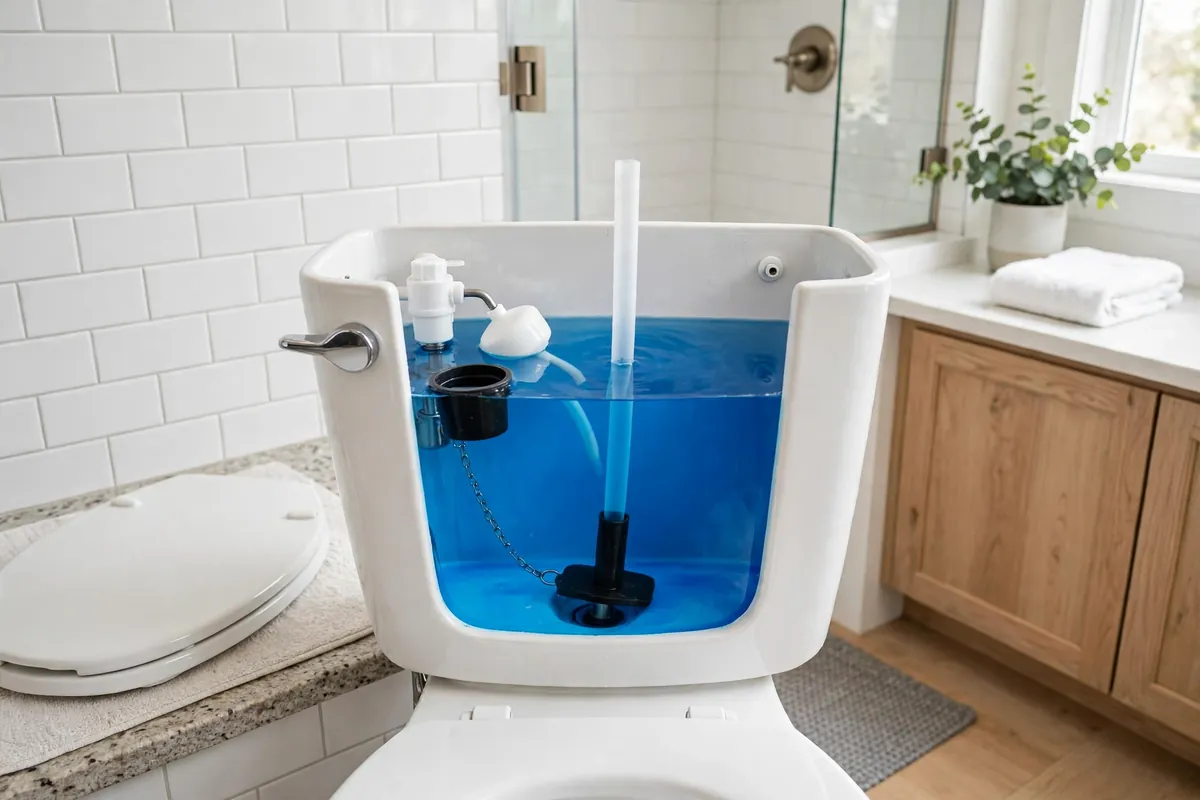
A failed dye test is good news: a new flapper is a cheap fix. Only when every toilet tests clean does a hidden pressurized line move to the top of the suspect list.
What else should you rule out before calling a professional?
Toilets are the most common culprit, but Apache Junction homes have a few local favorites that waste water quietly:
- Dripping faucets and hose bibs. One steady drip can waste dozens of gallons a day. Check every exterior hose bib, especially the ones behind bushes.
- The pool autofill. A stuck autofill valve refills the pool around the clock, and Arizona evaporation gives it cover. Shut the autofill off for a day and watch the pool level: if the level holds, the valve was the culprit.
- Irrigation timers and valves. The number two suspect after toilets in Apache Junction. Monsoon downpours wash out valve boxes, crack fittings, and leave valves stuck open, so a zone can run far longer than the schedule says. Walk each zone while it runs and look for geysers at sprinkler heads, soggy spots, and zones that keep running after the timer ends. Our irrigation system leak detection page explains how these failures hide in the yard.
- The water softener. Apache Junction has hard water, and most homes run a softener. A softener stuck in backwash flushes water to the drain on its own schedule, and you will never see it. Check the control display for error codes and listen for a trickle at the drain line.
- Reverse-osmosis and evaporative cooler feeds. An RO system that keeps draining and a swamp cooler with a stuck float both add water use that never shows as a puddle indoors.
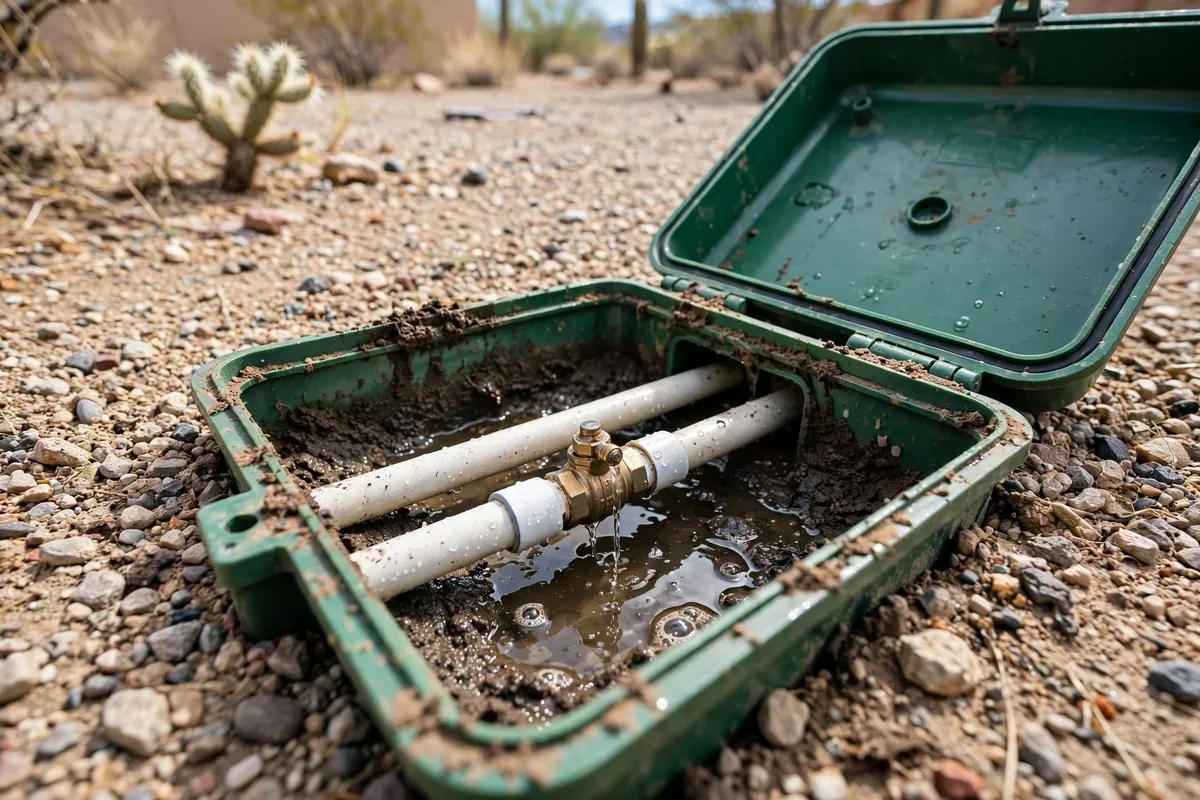
If the spike lines up with irrigation season, check the controller's runtime against the schedule: a reset controller reprogrammed to summer watering in winter can quietly add thousands of gallons.
What does the water meter test add to the picture?
Once the bill is confirmed and the easy culprits are clean, the water meter gives a decisive yes-or-no answer: shut off every water source, then watch the meter for one to two hours. If it moves, water is leaving your plumbing. The full procedure is in our step-by-step water meter test; the result tells you which section below applies to you.
When does a high water bill point to a slab leak?
A spiked meter with everything off, clean toilets, no visible leak above ground, and irrigation that checks out leaves one prime suspect: a pressurized supply line leaking where you cannot see it. Under the concrete slab is the most common hiding place. These leaks run 24 hours a day because the line is always pressurized, which is exactly what a doubled water bill looks like.
A few secondary signs strengthen the case before you call:
- A warm spot on the tile floor. A hot-water line leak heats the concrete above it, and your feet find it before your eyes do.
- The sound of running water with everything off. Press your ear to the floor in a quiet house at night.
- Damp spots, mildew, or a musty smell at the base of walls that never fully dries.
- A double-bill signature. If the water bill and the gas or electric bill both jumped in the same month, the heater is reheating replacement water around the clock, which points to a hot-water slab leak.
Apache Junction's older homes make this a familiar story: copper lines in 1970s through 1990s slabs, pitted by hard water and flexed by clay soil, until a pinhole bleeds water silently into the ground. If several items on the slab leak symptoms checklist match, you are past DIY territory.
What should you do next, and what should you avoid?
If the meter test confirms a hidden leak, act this week. A pressurized leak erodes soil under the slab every hour it runs, and the water bill keeps charging you for it:
- Know where your main shutoff is. If water ever comes up through the floor, shut the main valve at the meter immediately and call for emergency leak repair. For a quiet bill spike, the shutoff can stay open.
- Do not ignore it for two billing cycles. Waiting turns a detection job into a detection-plus-damage job. Slab leak repair costs climb with the damage, not with the leak size.
- Do not blame the city. Once the gallons are confirmed up, the water is leaving on your side of the meter, and the utility cannot fix that.
- Call for professional detection. Acoustic listening gear and isolated line pressure tests locate the break through the concrete, usually within inches, before anyone talks about repair. How slab leak detection works explains exactly what happens on the visit.
Leak Finders provides same-day leak detection across Apache Junction with electronic and acoustic equipment that finds the break without tearing up your floors. Call (480) 885-4943, or book through our contact page. Bring your meter readings and the bill: they tell us where to start listening.