
How to Check for a Slab Leak Yourself: The Water Meter Test
A free DIY test that answers one question in an hour or two: is water escaping your plumbing unseen? Here is how to find your meter, run the test, and read the results.
The short answer: shut off every water source in the house, then watch your water meter. If it keeps spinning with everything off, or its reading changes after one to two hours of zero use, water is escaping somewhere in your plumbing. When nothing leaks above ground and the toilets test clean, a broken line under the slab is the leading suspect.
If you have noticed the broader warning signs first, read our guide to how to detect a slab leak in your home for the full checklist, from warm floor patches to the sound of running water behind a wall. This article is narrower: a tight, step-by-step water meter test that gives you a yes-or-no answer today, for free, without breaking any concrete.
What does the water meter test actually tell you?
Your water meter is the gate between the city supply and your house. Every gallon that reaches your faucets, toilets, and hose bibs passes through it first. Watch that gate with everything off, and any movement means water is leaving the system where it should not.
The test answers one question: is water escaping your plumbing right now? It cannot tell you where. A spinning meter could mean a running toilet, a service line break in the yard, or a copper line leaking under the slab. Think of it as triage, not diagnosis: it tells you whether a leak is worth chasing professionally. Our guide to how professional slab leak detection works explains what happens after the meter says yes.
Where is the water meter in an Apache Junction home?
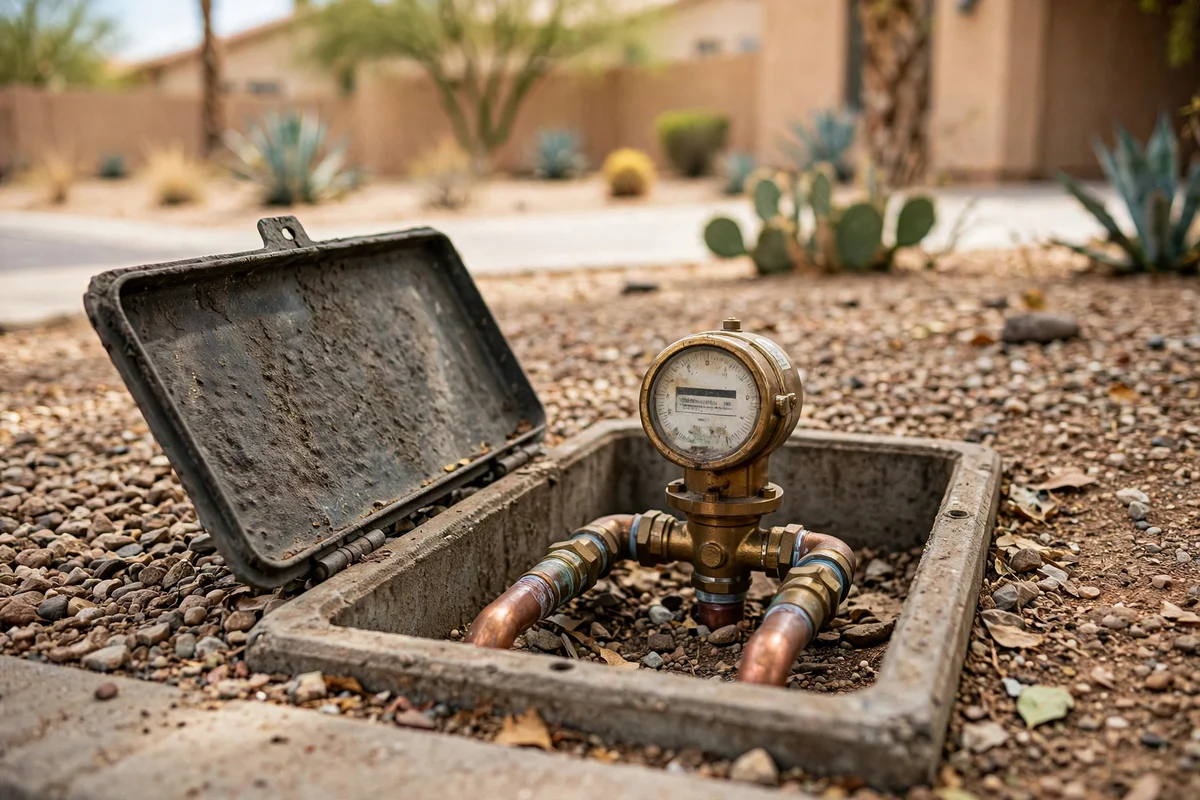
In most Apache Junction neighborhoods, the water meter sits in the ground near the street, inside a rectangular concrete or metal box with a lid marked WATER. Check the front yard between the sidewalk and the curb; on some lots it sits in a side yard near the property line. A meter key is the right tool to lift the lid, but a large screwdriver or the tip of a garden trowel works on most boxes.
Two Arizona realities to expect. First, after monsoon season, lids often disappear under silt, mulch, or landscaping rock, so feel for the lid's edge along the curb line. Second, wear gloves and tip the lid off slowly: Arizona meter boxes regularly house spiders, lizards, and the occasional scorpion. Inside the box you will see the meter itself and, next to it, the customer shutoff valve that controls all water entering the house.
How do you read a water meter to check for a leak?
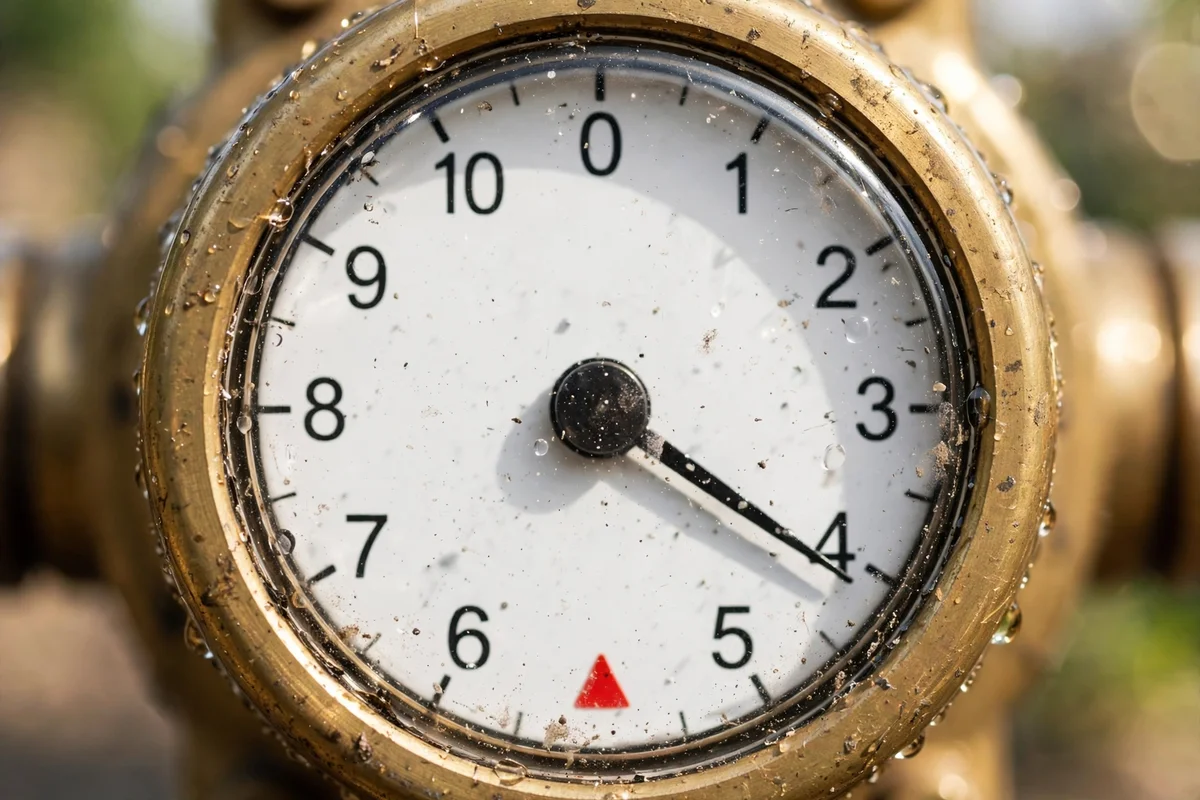
On an analog meter, a row of odometer-style numbers records total use, and a sweeping hand turns as water flows. Look for the low-flow indicator: a tiny triangle, star, or gear, often red, near the center of the dial. It is designed to spin on the smallest measurable flows, down to a drip. On a digital meter, look for a small faucet, triangle, or droplet icon that flashes when water is moving. The principle is identical on both types: any motion with everything off means flow.
What must be turned off before the test?
A false positive is the enemy of this test. Walk the house and shut down every source of demand before you start:
- All faucets, indoor and outdoor. Do not run the dishwasher or washing machine during the test.
- Toilets. Do not flush during the test, and make sure none of them is running.
- The irrigation controller. In Apache Junction this is the number one false positive. A single zone running on a timer will spin the meter and convince you that you have a leak.
- The pool autofill, if you have one.
- Water softener regeneration and reverse-osmosis systems, which use water on their own schedule.
- Ice makers, and the evaporative cooler water feed if your home still uses a swamp cooler.
Tell everyone in the house the plan: one toilet flush during the waiting period ruins the reading.
How do you run the water meter leak test?
- Record the reading. Write down the meter reading to the last digit, along with the time.
- Keep all water off for one to two hours. For a more sensitive test, run it overnight: note the reading after the last shower and dishwasher cycle, then read it again before anyone uses water in the morning.
- Compare. Any increase in the reading, or a low-flow indicator that is still spinning, means water moved through the meter while nothing should have been using it.
For a quicker answer, shut everything off and watch the low-flow indicator for two minutes. A spinning indicator gives the same verdict as a changed reading, but it can miss very slow leaks, which is what the longer wait catches.
How do you read the test results?
- The meter moved with everything off. You have a pressurized leak on your side of the meter. Water is leaving the system continuously.
- The indicator spins, but the reading barely changed. A slow leak, the kind a two-minute watch can miss. Repeat the test overnight for a clearer answer.
- The meter is perfectly still. Your supply lines are not losing water. Shift the investigation to toilets, drain lines, and the pool, because drain-side leaks never register on a meter.
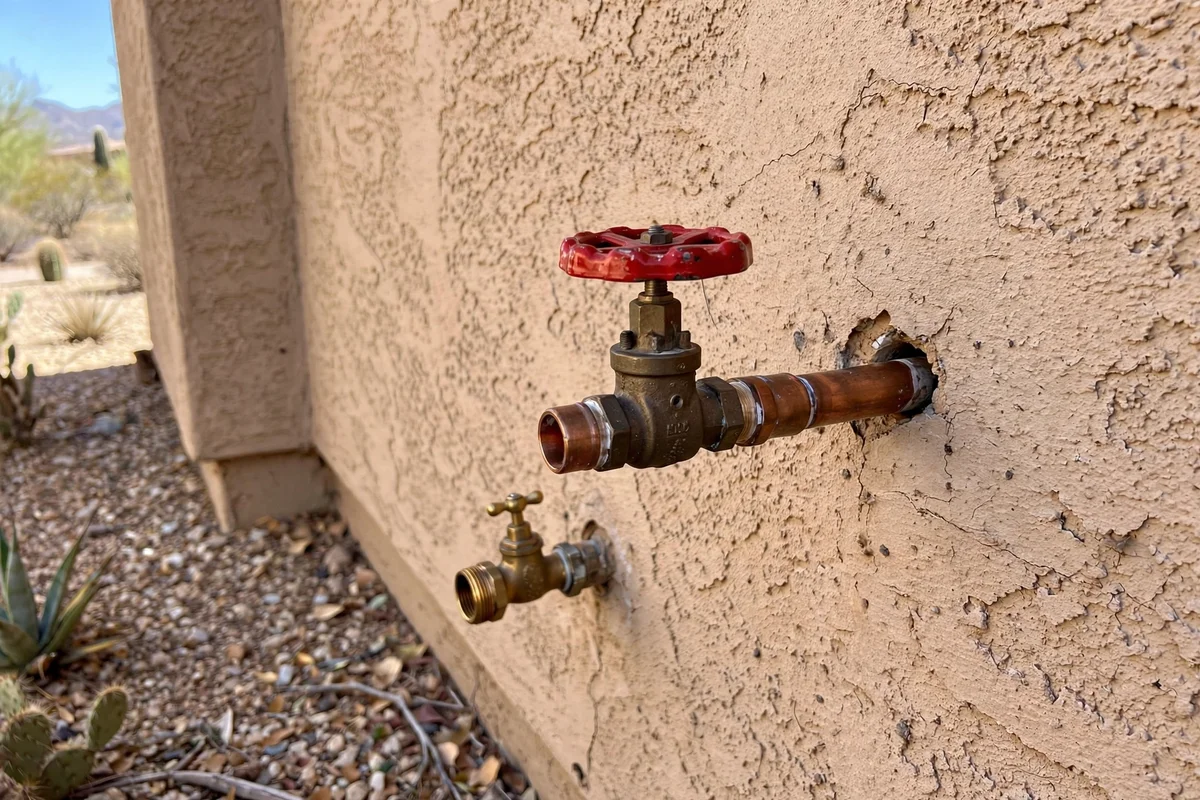
To isolate the leak, close the customer shutoff at the meter and watch the indicator. If it stops spinning, the leak is in the house plumbing, under the slab, or inside a wall. If it keeps spinning, the leak is in the service line between the meter and the house. Either way, you now know which side of the valve to hunt on. Line-by-line pressure testing is how a professional narrows it from there.
Why does the toilet dye test come next?
Before you blame the slab, rule out the most common culprit. A worn toilet flapper lets tank water bleed into the bowl around the clock, and it can waste hundreds of gallons a day. It moves the water meter exactly like a pipe leak does, which is why plenty of "slab leak" panics end at a two-dollar flapper.
The dye test takes fifteen minutes. Drop a few drops of food coloring into the toilet tank, do not flush, and wait. If color appears in the bowl, the flapper is leaking. Test every toilet in the house, including the guest bathroom nobody uses.
What does a positive test mean for a slab leak?
If the meter moves, the toilets pass the dye test, and you cannot find any leak above ground, no damp drywall, no soft baseboards, no wet spots in the yard, the water is leaving somewhere you cannot see. Under the concrete slab is the prime suspect. Apache Junction's older homes make this a familiar story: copper supply lines buried in 1970s to 1990s slabs, pitted by hard water and flexed by expansive clay soil, until a pinhole bleeds water silently into the ground, 24 hours a day.
Two details sharpen the picture. If you feel warm spots on the tile or hear running water at night with everything off, you are likely looking at a hot-line leak. And if the water bill and the gas bill both jumped in the same month, that double-bill signature points the same way. Both are classic signs of a slab leak. From here, the job is pinpointing: acoustic listening gear and isolated line pressure tests locate the break through the concrete, usually within inches, before anyone talks about repair. Our overview of slab leak repair options explains what comes after the leak is found.
When should you call a professional?
Call when the meter test says leak, the toilets are clean, and there is no visible source. You have a hidden pressurized leak, and it will not fix itself: it wastes water every hour and erodes soil under the slab while it runs. If water is actively coming up through the floor, call for emergency leak repair right away. Otherwise, book a detection visit and bring your meter readings. Leak Finders provides same-day leak detection services across Apache Junction, with electronic and acoustic gear that finds the break without tearing up your floors. Call (480) 885-4943, or check our slab leak FAQ for the questions we hear most.