
Is My Pool Leaking or Just Evaporating? The Bucket Test for Apache Junction Pools
A simple 48-hour bucket test tells you whether your pool is leaking or just evaporating in the Arizona heat. Here is exactly how to run it and read the results.
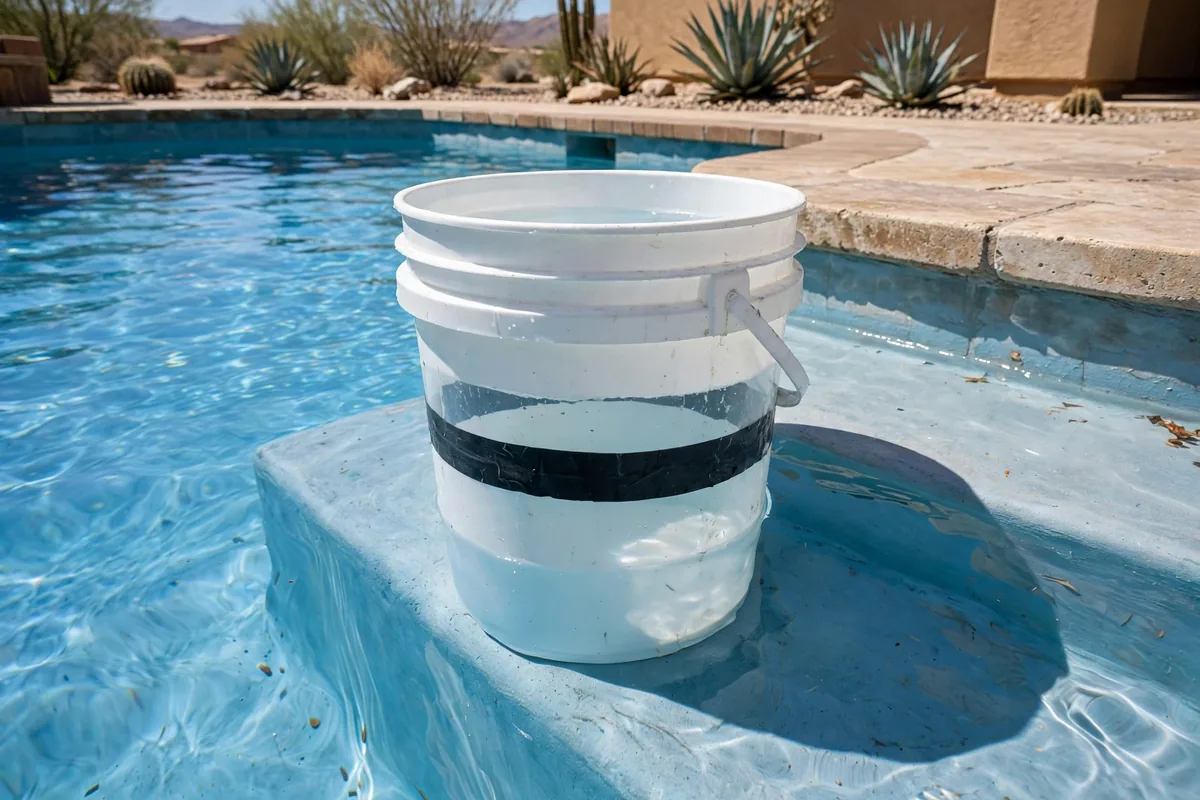
If your Apache Junction pool keeps losing water, the bucket test settles the question in 48 hours. Set a water-filled bucket on a pool step, mark the water level inside the bucket and on the pool wall, then compare after 24 hours with the pump running and 24 hours with it off. When the pool drops faster than the bucket, you have a leak. When they drop together, it is evaporation. That single comparison is the most reliable DIY leak test a pool owner can run, and it gives a pool leak detection specialist in Apache Junction exactly the information needed to find it fast.
Confusion is normal here. An Arizona pool can lose a quarter inch of water a day to the summer sun and still be perfectly sound, so plenty of owners either panic over normal evaporation or ignore a real leak for months while the water bill climbs. The bucket test removes the guesswork because the bucket experiences the same sun, wind, and heat as the pool, leaving the leak as the only difference.
How much water loss is normal for a pool in Arizona?
Evaporation is the number one cause of water loss in East Valley pools, and summer numbers surprise most owners. A pool in Apache Junction can evaporate up to a quarter inch of water per day in June through August and still be healthy. Wind, waterfalls, spillover spas, and heavy swimmer use push that number higher.
Use this as your rule of thumb. Losing up to one to two inches a week in peak summer is usually evaporation. Losing more than that, or losing water at a steady rate through the cooler months when evaporation drops, points to a leak. A sudden jump in loss after a monsoon storm or an earthquake-like soil shift is another red flag, because the ground movement can open a crack or separate a fitting.
How do you do the bucket test?
The test takes five minutes to set up and 48 hours to complete. Run it on two calm days if you can, and keep the pool cover off the entire time.
- Turn off the autofill. An autofill valve quietly replaces lost water and ruins the measurement. Shut it off before you start and leave it off for the full 48 hours.
- Fill a 5-gallon bucket about three-quarters full with pool water. Using pool water keeps the temperature and chemistry identical to the pool, which keeps the comparison fair.
- Set the bucket on the second pool step. The bucket should sit low enough that pool water laps a few inches up its outside wall. This keeps the bucket at the same temperature as the pool water.
- Mark both water levels. Put a piece of tape or a marker line on the inside of the bucket at the water line, and another mark on the pool wall or skimmer at the pool water line.
- Run the pump normally for 24 hours. Do not add water, do not backwash, and keep swimmers out. After 24 hours, measure how far each level dropped and write both numbers down.
- Refill the pool to the original line and reset your marks. Then turn the pump completely off for the next 24 hours and measure again.
The two runs are the whole point of the test. The first run, with the pump on, includes any leak in the pressurized plumbing. The second run, with the pump off, isolates the pool shell and the suction side. One run alone only tells you that you have a leak. Two runs tell you where to look.
How do you read the bucket test results?
Compare the pool drop to the bucket drop for each run. The bucket is your control: whatever it lost is pure evaporation, so any extra loss in the pool is a leak.
- Pool and bucket drop the same amount: evaporation. Your pool is sound.
- Pool drops more than the bucket in both runs: a structural leak, most likely in the shell, skimmer, or a wall fitting.
- Pool drops more only with the pump on: a pressure-side leak in the return plumbing or at the equipment pad.
- Pool drops more only with the pump off: a suction-side or structural leak that shows when the system is at rest.
Write the numbers down for both runs before you call anyone. A technician who hears "the pool lost half an inch with the pump on and an eighth with it off" knows to start at the equipment pad, not the deep end.
What is the dye test, and how does it pinpoint a leak?
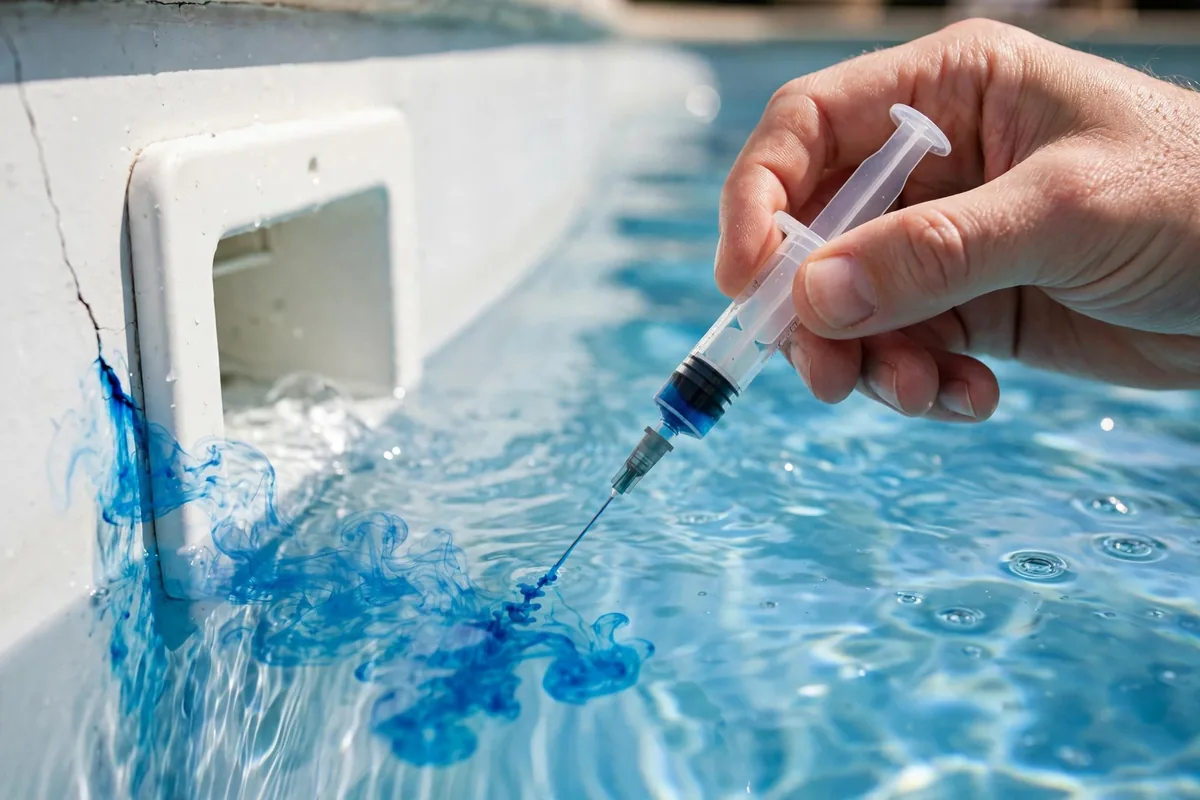
Once the bucket test confirms a leak, the dye test narrows it to a spot. Turn the pump off and let the water go completely still, then squirt a few drops of dye, food coloring or phenol red from a test kit, an inch or two from any suspected crack, fitting, or seam. If the dye gets pulled steadily into the spot, water is leaving there and you have found the leak.
Work the usual suspects in order: the skimmer throat, the return fittings, the light niche, the main drain, and any visible crack. Keep the dye bottle close to the surface and move slowly, because a ripple in the water makes the test unreadable. The dye test only finds leaks you can reach and see, which is why hidden plumbing leaks still need professional equipment.
Where do Apache Junction pools usually leak?
Local conditions shape where pools fail. Heat cycles flex every joint, and Phoenix-area hard water is rough on seals and gaskets. The four spots below account for most of the pool leaks we are called to in Apache Junction.
- The skimmer throat. The joint where the skimmer meets the pool shell flexes with daily temperature swings until the sealant separates. A dye test at the skimmer throat is always the first check.
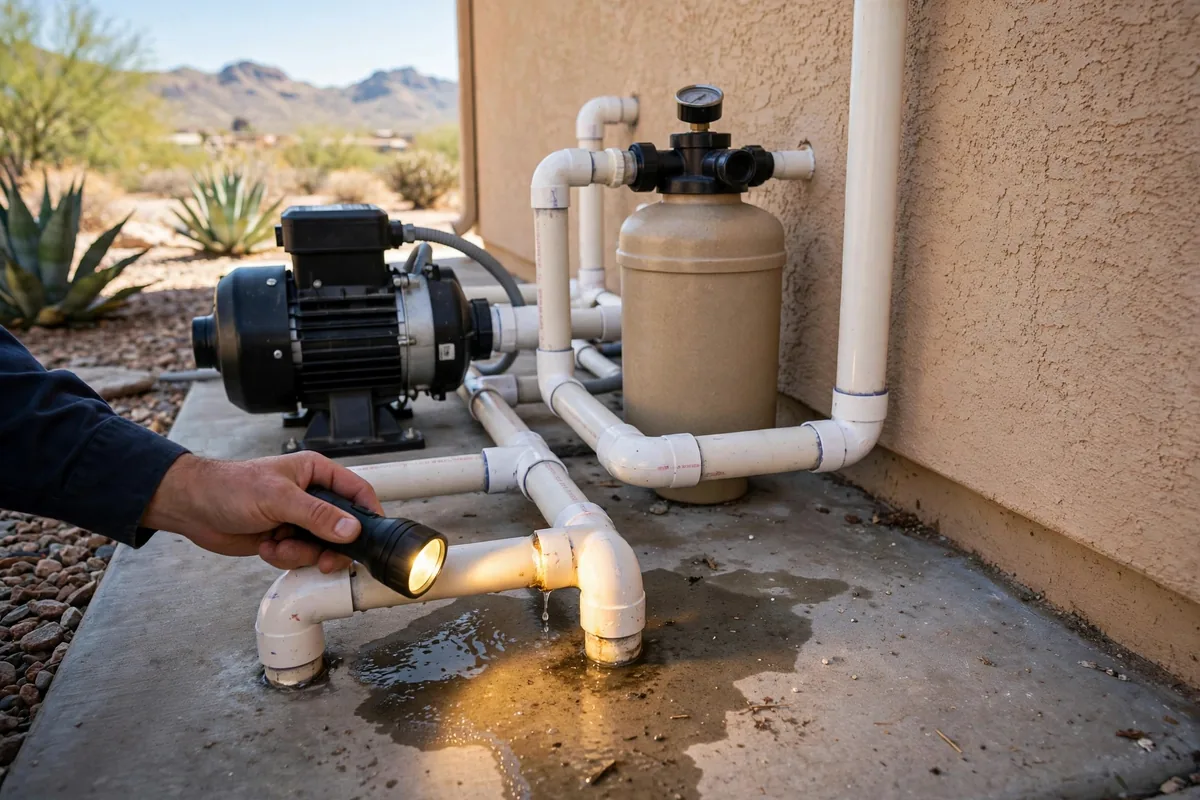
- The equipment pad. Pump seals, filter O-rings, heater unions, and PVC joints take constant vibration and pressure, and hard water pits the metal parts. A pressure-side leak here often shows up only in the pump-on run of the bucket test.
- Underground return plumbing. Shifting soil and tree roots crack buried lines over time. These leaks are invisible from the surface and are the most common reason a bucket test says leak while the dye test finds nothing.
- The light niche and main drain. The electrical conduit behind the pool light is a classic slow leaker, and main drain sumps can crack with age. Both leak whether the pump runs or not.
For the full story on why these failures happen in the first place, see our guide to the top 5 reasons for pool leaks in Apache Junction. This article sticks to finding the leak. That one explains the causes.
Can your weekly pool guy find the leak, or do you need a specialist?
A good weekly service tech can run a bucket test, spot an obvious equipment-pad leak, and reseal a skimmer throat. That covers the easy half of pool leaks. The hard half, a cracked underground line or a slow structural leak, needs acoustic listening equipment and isolated pressure testing, which is specialist gear that pool routes do not carry.
The practical rule is simple. If the bucket test points to the equipment pad or a visible fitting, your pool tech may handle it. If it points to underground plumbing, or the dye test finds nothing at all, you need professional pool leak detection with the right instruments. Guessing at buried lines with a shovel is how a small repair bill becomes a big one. Learn how professional leak detection works to see what the specialist visit involves.
When should you call a professional for pool leak detection?
Call when the bucket test shows the pool losing more than the bucket, when the dye test cannot pin the spot, or when the loss is steady through winter. Also call before the water bill does the talking: a leak that costs a few hundred dollars to locate can waste thousands in water and chemicals over a single Arizona summer.
Leak Finders provides pool leak detection services across Apache Junction, from Gold Canyon to Superstition Springs, with same-day appointments when dispatch is open. If your bucket test says leak, reach out or call (480) 885-4943 and tell us your two sets of numbers. We will know where to start before we arrive.