
Slab Leak Insurance Claim Denied? What to Do Next in AZ
A denied slab leak claim is not the end of the road. Most denials rest on the wear-and-tear exclusion or long-term leak language. Here is how to read the denial, document the loss, and appeal it.

The short answer: A denied slab leak claim is not the final word. Insurers deny most slab leak claims under the wear-and-tear or maintenance exclusion, or by calling the leak "long-term," often without solid proof of when it started. Denials get reversed when the homeowner produces dated documentation and independent evidence, so your job now is to build the file the adjuster says is missing.
Getting a denial letter feels like the end of a fight you barely got to start. You found the leak, filed the claim, waited for the inspection, and the answer came back as a form letter citing a policy section. Before you accept it, understand how these denials are built, because most of them follow one of a handful of templates, and each template has a known counter. Start with the slab leak insurance coverage guide for how policies treat these claims in the first place.
Why did my slab leak claim get denied?
Read the denial letter's fine print. The reason is usually one of five standard arguments, and knowing which one you face determines your next move.
- The wear-and-tear or maintenance exclusion. The most common denial. The policy excludes gradual deterioration, and the insurer argues the pipe corroded over years. The counter is dated evidence of when the leak was discovered and acted on, which is why professional detection findings matter.
- The long-term leak argument. Many policies exclude leaks that have been running for weeks or months under "continuous or repeated seepage" language. Adjusters sometimes label a leak long-term based on the amount of damage, not on evidence of duration. That label is an opinion until someone documents otherwise.
- The pipe itself is excluded, only the damage counts. Standard homeowner policies do not pay to fix the plumbing itself; they pay for the damage the water caused and sometimes the cost to access the pipe. If your claim asked the insurer to repipe the house, it was never covered. But the warped floors, the damaged drywall, and the concrete cut to reach the leak often are, which means a denied claim may still be a partially valid one.
- Missing documentation. Claims die on missing paper: no dated photos, no professional report tying damage to the leak, no proof of when you first noticed symptoms. Insurers are not required to build your case for you.
- Late reporting. Policies require prompt notice once you discover a loss. Waiting months after noticing symptoms, a warm floor, a spiking water bill, a running-water sound, gives the insurer a late-reporting argument on top of everything else.
Notice what none of these do: they do not prove your claim is wrong. They prove the insurer has an opening. Your appeal closes it.
What does homeowners insurance actually cover for slab leaks?
Slab leak coverage is narrower than most homeowners expect, which is part of why so many claims are denied. A typical homeowner's policy draws three lines:
- The plumbing repair is not covered. Replacing the failed pipe, rerouting the line, or repiping the home is considered maintenance of your plumbing system. That is your cost.
- The resulting water damage often is covered. Warped flooring, damaged drywall and cabinets, and the concrete cut to reach the leak: these are the damage the leak caused, and standard policies cover damage from a sudden, accidental event.
- The access cost may be covered. Many policies include the tear-out cost to expose a hidden pipe, which matters on a slab leak where reaching the pipe means cutting concrete.
The catch is the word "sudden." Insurers cover a pipe failure discovered and reported promptly far more readily than a pinhole they can paint as years old. Everything in your appeal should establish that the loss was discovered when you filed and acted on without delay. Our slab leak damage guide walks through what a leak actually damages while it runs, which helps you separate the covered damage from the uncovered repair.
How do you document a slab leak claim so it survives the appeal?
The single biggest difference between denied claims and paid claims is the paper trail. Build an evidence kit that answers the adjuster's objections before they raise them.
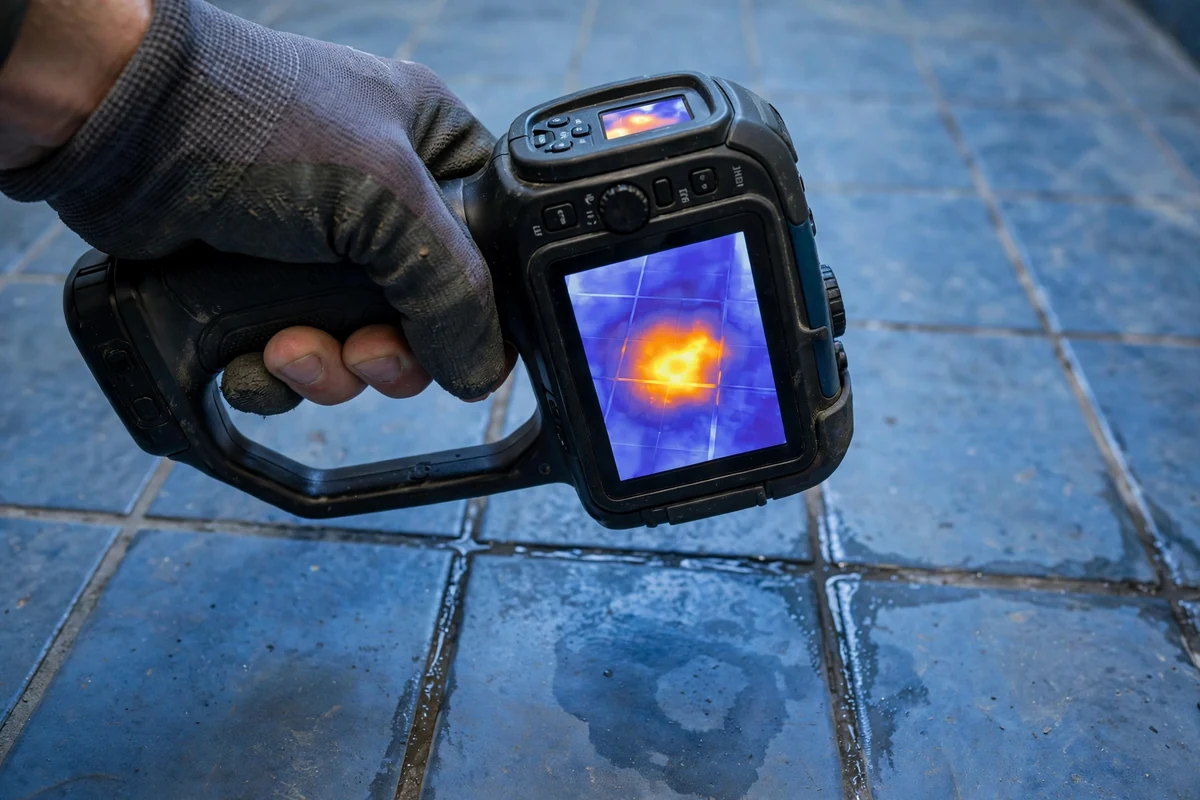
- Get a professional detection report, in writing, with dates. Acoustic and thermal imaging findings plus pressure test results, on company letterhead, dated the day of the visit. This establishes when the leak was identified and by whom. We provide written detection reports for exactly this purpose across Apache Junction.
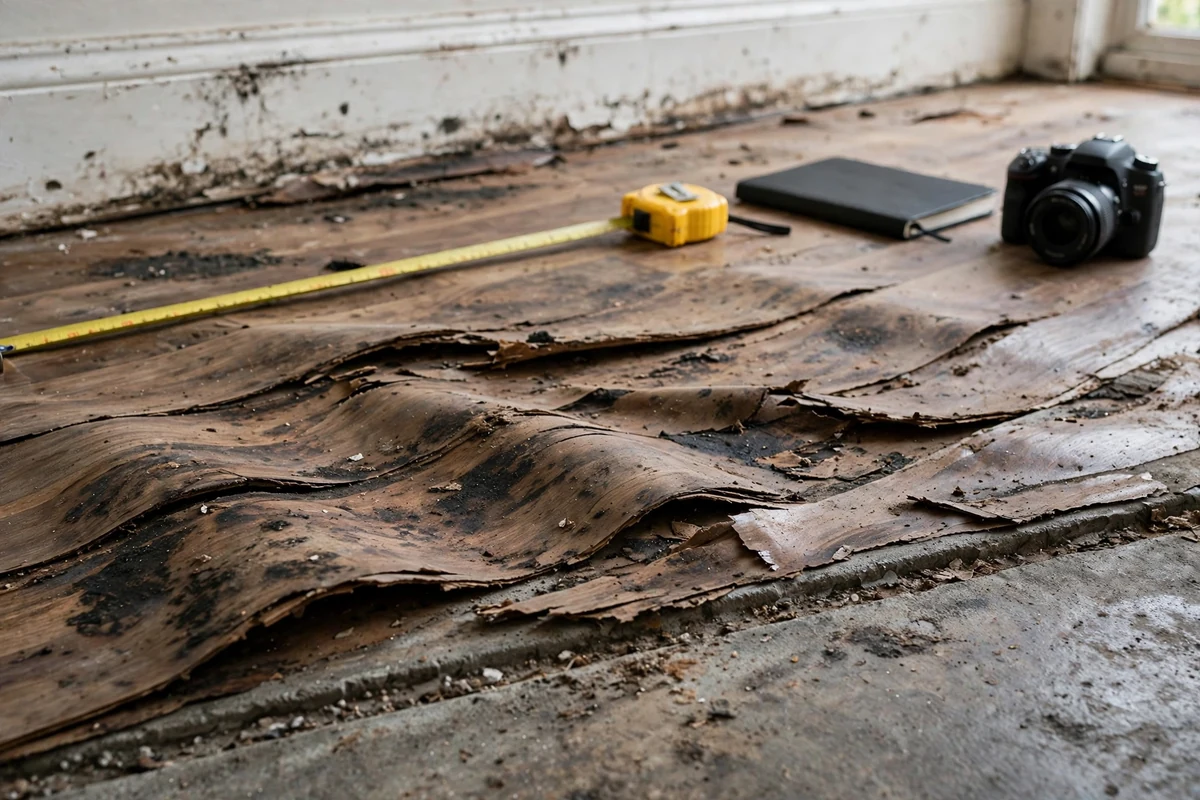
- Photograph everything, dated. Floor damage, water stains, the detection equipment in use, the torn-out concrete. Phone photos with timestamps count.
- Assemble the water-bill timeline. Twelve months of water bills showing the spike that matches the leak's onset. A sudden bill jump is strong evidence that the leak was not running for years.
- Keep every invoice and the timeline. The plumber's invoice, the detection report, the date you first noticed symptoms, the date you called the insurer. A written timeline beats a memory of a timeline.
- Save all communication with the insurer. Names, dates, what each person said. If the adjuster made promises or requests verbally, confirm them in writing.
- Get an independent engineer if the claim value justifies it. A licensed plumbing engineer who visits the site and writes an independent opinion on the leak's cause and the covered damage carries more weight than a second plumber's quote. This is the document that flips long-term leak denials.
How do you appeal a denied slab leak claim, step by step?
Work these in order. Most reversals happen in the first three steps, because a solid evidence kit changes the conversation before it ever reaches a regulator or a lawyer.
- Get the denial in writing with the cited policy sections. If it came by phone, ask for the letter. You cannot appeal an argument you cannot read. Note the exact exclusion language and the facts the adjuster used to apply it.
- Ask for the claim file. You are generally entitled to your file: the adjuster's notes, photos, and the reasoning. Reading it shows you exactly where their case is thin.
- Request a supervisor review. The first appeal is internal: a new set of eyes, your evidence kit, and a written request that answers each cited exclusion. Keep it factual and short.
- Send the evidence kit. Dated detection report, photos, water-bill timeline, engineer opinion if you have one. Each piece of evidence should map to a line in the denial letter.
- File a complaint with the Arizona Department of Insurance and Financial Institutions. A formal complaint triggers a written response from the insurer to the regulator. You do not need a lawyer to file one, and it costs nothing.
- Consult an insurance attorney. If the appeal fails and the claim is substantial, a short consultation tells you whether the denial is defensible or whether a demand letter is worth sending. Many insurance attorneys review claim denials without charging for the first look.
Should you hire your own engineer or a public adjuster?
These are different roles for different situations. An independent engineer inspects the leak site and writes an expert opinion on cause, duration, and the damage the water caused. That opinion is what counters a long-term leak label, because it replaces the adjuster's guess with a credentialed finding. Expect to pay a professional fee; it is usually worthwhile when the disputed damage is in the thousands.
A public adjuster works for you, not the insurer, and negotiates the claim on your behalf, typically for a percentage of the settlement. Public adjusters can be effective on larger claims but take a cut, so do the math: on a mid-size slab leak claim, the engineer's fixed fee often buys you more than the adjuster's percentage costs.
The common mistake is hiring neither and arguing the appeal on words alone. Insurers respond to documentation, not frustration.
What if the denial is actually correct?
Sometimes it is, and knowing that saves you months. If your claim asked the insurer to pay for the pipe replacement itself, or if the policy clearly excludes the type of leak you have, the appeal is unlikely to succeed on that part. But even then, re-read the letter for the parts that are not excluded: the resulting water damage, the access costs, the mitigation. Appeals that narrow the claim to what the policy actually covers succeed far more often than appeals that fight the policy itself.
If you do end up paying out of pocket, knowing your options keeps the cost under control. Compare approaches in slab leak repair options and the ranges local companies quote in slab leak repair costs in Apache Junction. And if you are still deciding whether the leak is real, the slab leak warning signs and our guide to how detection works show what confirmation looks like.
A denied claim also has a clock attached. Start the appeal now, while the leak site is intact and the evidence is fresh: concrete gets repaired, water bills pile up, and every week weakens the timeline you are building. If you need a dated detection report for the appeal, call (480) 885-4943, or reach us through the contact page. We document findings in writing on every visit.