
Post-Tension Slab Leaks: Why They Need a Specialist
Your home sits on a post-tension slab? A leak under it is a different job. Cutting blind can sever a tension cable, so scanning comes first and rerouting usually wins.
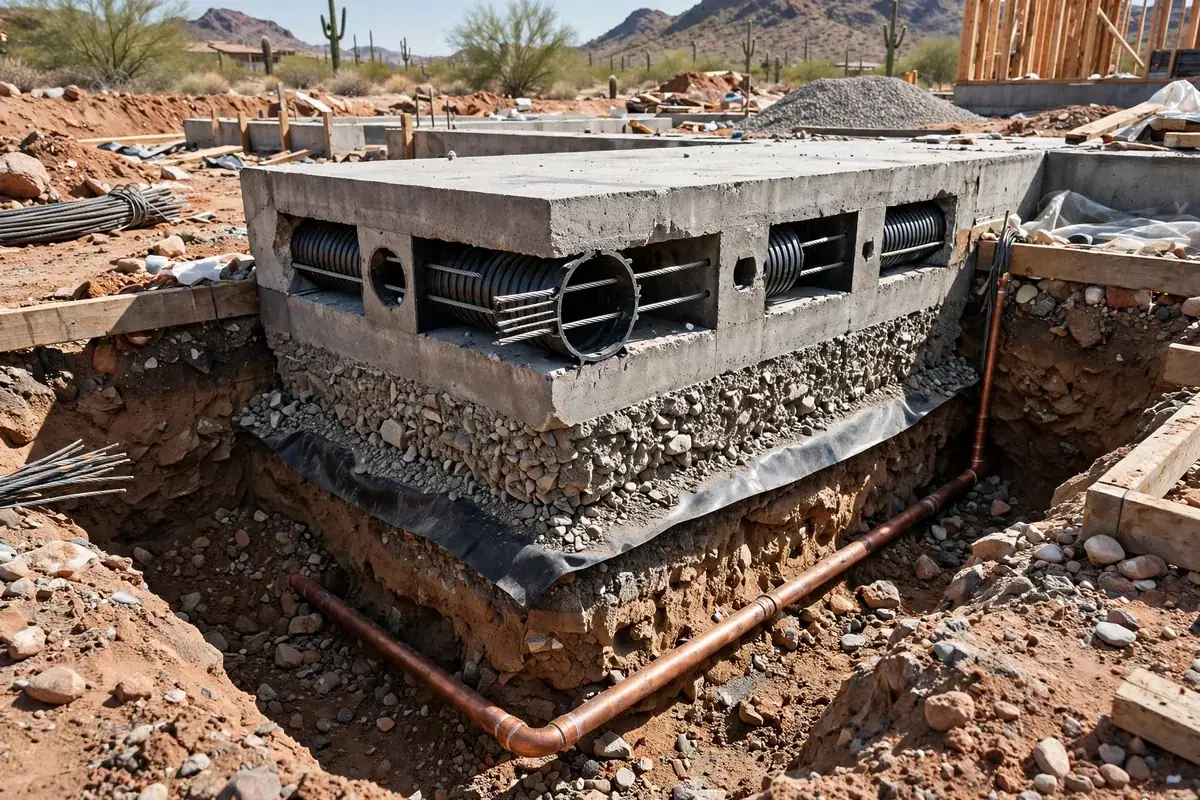
The short answer: a slab leak in a post-tension home needs a specialist because the slab is not just concrete. Steel cables run through it, pulled tight to thousands of pounds of tension, and cutting one by accident can crack the slab, drop part of the floor, or send a cable whipping out of the concrete. That is why the repair almost never starts with a jackhammer. It starts with a scan that maps every cable, and it usually ends with a reroute that leaves the slab alone entirely.
If you are not sure what kind of slab you have, check that first, before you let anyone cut. The steps below cover how to tell, how detection works on a post-tension slab, and which repair method fits.
What is a post-tension slab, exactly?
A post-tension slab is a concrete foundation with steel cables, called tendons, running through it inside plastic ducts. After the concrete cures, each cable is pulled tight with a hydraulic jack and anchored at the slab edge. The tension squeezes the whole slab together, which lets builders use a thinner slab that still resists cracking as Arizona soil swells and shrinks.
That design is common in newer Arizona homes, especially in subdivisions built from the 1990s onward around Apache Junction, Mesa Gateway, and Eastmark. It is a good foundation system. It is also a foundation system with a hazard built into it: a severed cable releases its stored energy all at once. The Post-Tensioning Institute, the industry body that writes the standards for these slabs, treats cutting into one without locating the tendons as a serious safety failure, not a shortcut.
Your water lines run through that same slab. A copper supply line under a post-tension slab fails the same way any buried copper line fails, pinholes from hard water, flexing from soil movement, age. The leak is ordinary. The floor it sits in is not.
How do I know if my home has a post-tension slab?
Most owners have no idea, because nothing about the finished floor gives it away. Here is how to find out:
- Look at the garage floor edge. Post-tension slabs often have small anchor pockets or patched circles along the exposed slab edge in the garage, where each cable was tensioned and grouted.
- Check the builder paperwork. The original plans, the foundation engineering letter, or the home inspection report from your purchase usually name the slab type.
- Ask the county or the builder. Permit records for newer subdivisions in the East Valley usually specify post-tension construction.
- Look for the warning stamp. Many post-tension garages carry a stamped or painted warning on the slab itself: do not cut or drill. If you see one, believe it.
- Ask us to check. A ground-penetrating radar pass across the garage and the suspect room settles it in under an hour, and it maps the cables at the same time.
If you cannot confirm either way, treat the slab as post-tension until a scan proves otherwise. The cost of a scan is small. The cost of a severed cable is not.
Why is a leak in a post-tension slab different?
Three things change the job:
- The danger is real. A tensioned cable under load can snap out of the concrete with enough force to injure anyone nearby and crack the slab for feet in either direction. No reputable contractor cuts blind into a post-tension slab.
- The repair options narrow. Breaking through the floor at the leak, the standard spot repair on a conventional slab, means cutting concrete right where cables run. On a post-tension slab that option is often off the table, or it requires an engineer to sign off on the cut location.
- Detection takes an extra step. The usual tools still work, a pressure test proves the leak exists and which line it is on, and acoustic listening narrows the area. But before anyone marks a cut point, the cables in that area must be located and marked. That is the step general plumbers skip, and it is the step that matters most.
Our slab leak symptoms guide covers the warning signs, warm spots, running water sounds, a climbing bill. On a post-tension home, those same signs carry one extra instruction: do not let anyone start breaking concrete until the cables are mapped.
The one rule: scan before anyone cuts
Ground-penetrating radar, GPR, is the standard tool. A technician rolls a radar unit across the slab and it reads the cables and ducts below, so each tendon gets marked on the floor in chalk before any work begins. The scan also shows rebar and the approximate depth of the cables, which tells the repair crew how much clearance they actually have.
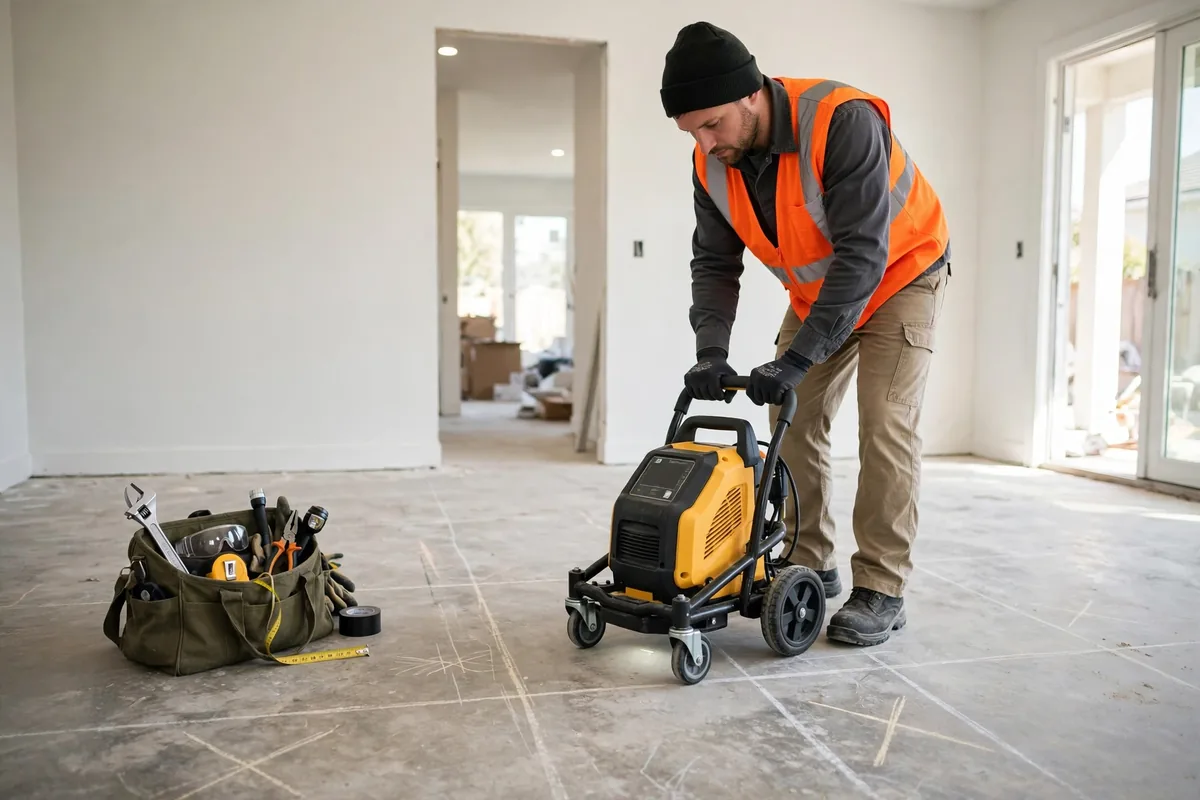
Two honest limits. First, GPR shows where the cables are, not where the leak is, so it never replaces pressure testing and acoustic location. Second, GPR cannot see through every floor covering, so tile or thick flooring sometimes has to come up in the scan area first. Both limits are manageable when the scan is planned as step one, not added as an afterthought.
Ask any contractor this question before they start: "Have you located and marked the tendons in the work area, and can you show me the marks?" If the answer is vague, stop the job. A contractor who will not show you marked cables has not mapped them.
What repair actually works on a post-tension slab?
Once the leak is located and the cables are mapped, the choice usually comes down to three options. Here is how they compare on a post-tension slab:
Reroute overhead: the usual winner
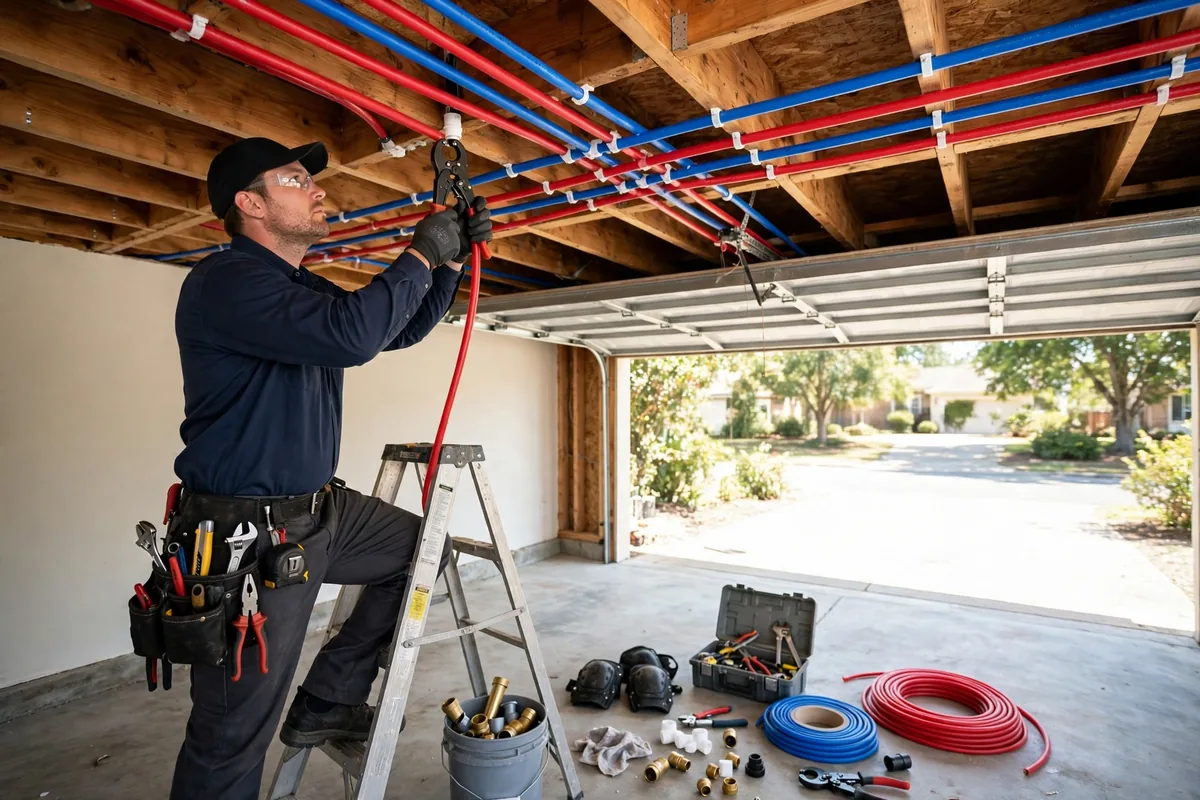
The leaking line is abandoned in place and a new line runs overhead, through the attic or garage, to the same fixtures. Nothing is cut into the slab, the cables are never touched, and the job typically finishes in a day. This is why rerouting dominates post-tension work. Our repair options comparison covers the reroute decision in full, and copper vs PEX explains why most reroutes use PEX for Arizona hard water.
Spot repair through the slab: possible, rarely preferred
A spot repair means opening the floor at the leak and fixing that one section of pipe. On a post-tension slab it only works when the leak sits in a clear zone between cables, confirmed by the scan, and sometimes it needs a structural engineer to approve the cut. Even then, you are cutting a finished floor, tile or terrazzo that may never patch invisibly. Compare that with a reroute that never touches the floor, and you see why spot repair loses most of the time here. Our tunneling vs breaking through guide covers the floor-damage side of this choice.
Tunneling underneath: the floor-saving exception
Tunneling digs under the slab from outside and reaches the pipe from below, so the cables above are untouched and the finished floor stays intact. It costs more than a reroute and takes longer, but for expensive tile, a leak under a kitchen island, or a home where overhead routing is blocked, it is the right call. It is also the option that demands the most experienced crew, because working under a tensioned slab leaves no room for guesswork.
What about epoxy lining?
Epoxy lining coats the inside of a drain line, and it has real uses for drain problems. For a pressurized supply leak under a post-tension slab, it is usually the wrong tool: it does not fix a pinhole in a supply line the way a reroute does, and it adds cost without removing the failed pipe. If a contractor pitches lining for a supply leak, get a second opinion.
How much does it cost, and how long does it take?
The scan itself is the cheapest part of the job, usually folded into the detection visit. A reroute typically runs less than a spot repair once floor restoration is counted, because there is no tile to replace and no concrete to patch. A full cost breakdown by method is on our cost page, and repair timelines covers how long each method keeps a crew in your home.
One cost warning: if a contractor quotes a post-tension job without mentioning a cable scan, the quote is missing a step, not saving you money. The scan will either appear as a surprise charge later or, worse, never happen at all.
Three questions to ask before you hire
- How will you locate the tendons? The answer should be GPR scanning, with marks on the floor you can see.
- What happens if the leak sits directly over a cable? The answer should be reroute or tunnel, not "we will cut carefully."
- Who takes responsibility if a cable is damaged? The answer should be the contractor, in writing, with insurance that covers structural damage. If they will not put it in writing, find a contractor who will.
If you are still confirming the leak, a water meter test takes about 15 minutes and tells you whether water is escaping at all. How detection works walks through the full process, scan included, step by step.
Post-tension slab? We scan first, then we fix it
We see post-tension homes every week in Apache Junction, Mesa Gateway, and Eastmark, and the routine never changes: pressure test to confirm the leak, acoustic location to find it, GPR scan to map the cables, then a reroute plan that leaves the slab alone. One visit, one written report, and no one cuts blind.
If water is coming up through the floor right now, do not wait. Call (480) 885-4943 or use the contact page. Our emergency leak repair line runs 24 hours a day, 7 days a week, and our full services cover detection and repair across Apache Junction.