
Copper vs PEX Repipe: What Arizona Homeowners Should Pick
Told you need a repipe? PEX wins for most Arizona slab homes: half the cost of copper, faster installs, and far better resistance to the hard water pitting that kills copper here. But copper still wins in a few situations. Here is how to choose.
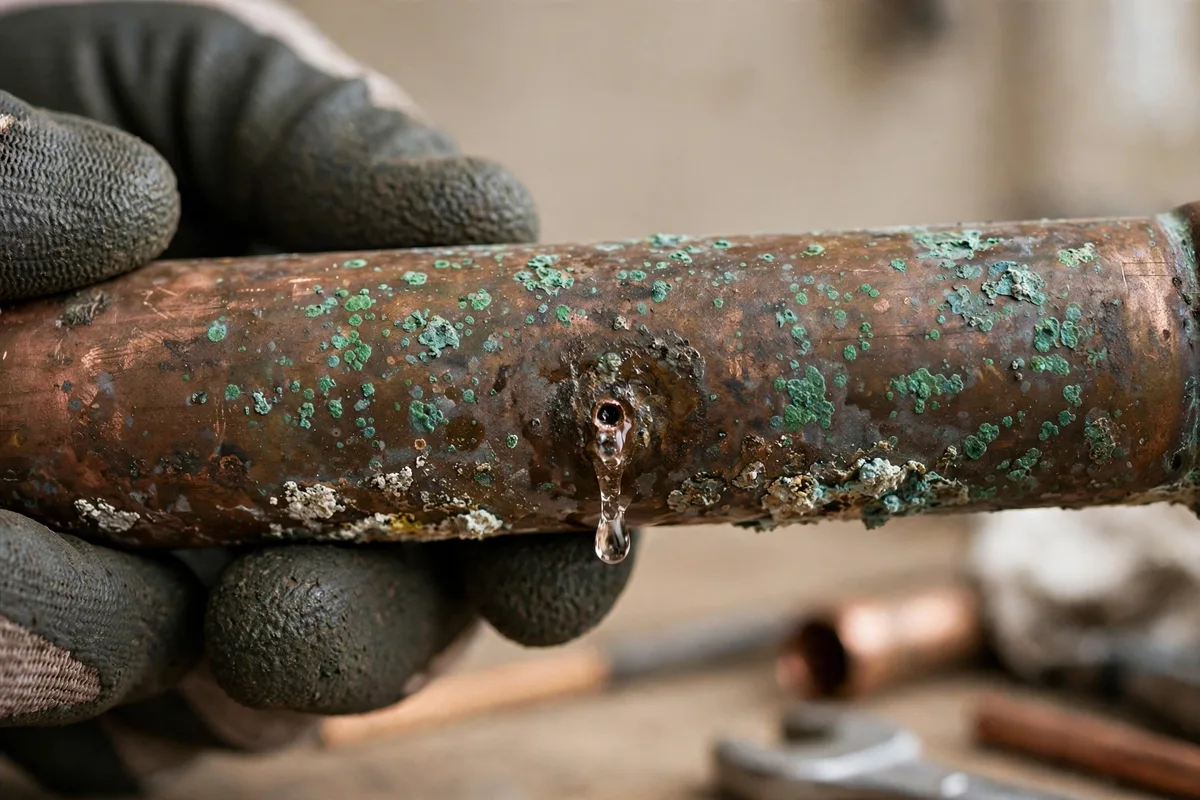
The short answer: For most Arizona homes, especially slab-on-grade homes whose original copper lines are now 30 to 50 years old, PEX is the better repipe choice. It typically costs about half what copper costs, installs in one to two days instead of a week, and resists the hard-water pitting that eats Arizona copper from the inside out. Copper still wins for exposed outdoor runs, heavy rodent pressure, and homes where buyers pay a premium for it. Read the next five minutes before you sign a bid, because the material choice locks in for decades.
If a plumber just told you that your home needs repiping, you are probably hearing the price and thinking about the material second. Flip that order. The material decision affects your cost, your install timeline, how long the system lasts in Phoenix-area water, and whether you ever deal with another slab leak. It is the highest-leverage decision in the whole project. Start with the slab leak repair options guide if you are still deciding between a repair, a reroute, and a full repipe.
What is a repipe, exactly?
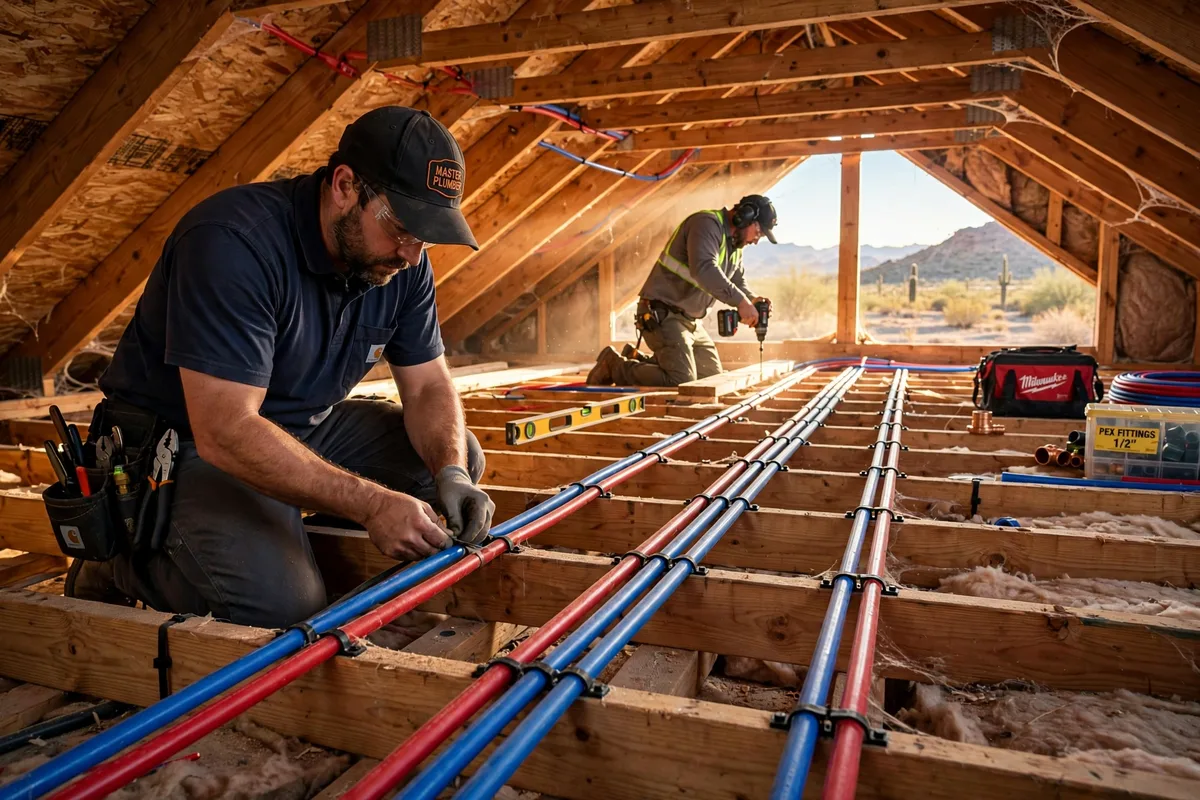
A repipe replaces every water supply line in your home with new pipe. In a slab-on-grade house, the crew does not touch the failing copper buried under the concrete. Instead, they abandon it in place and run new lines overhead through the attic and down inside the walls to every fixture. Your floors stay intact. That is the key difference from a reroute, which replaces only the one failing line (usually after a single slab leak), and from a spot repair, which patches the leak through the floor.
Most repipes in Apache Junction happen for one reason: the home's original in-slab copper has reached the age where pinhole leaks show up one after another. Fixing each one through the concrete gets expensive fast, and at some point replacing the whole system overhead is cheaper than the third or fourth slab repair.
Why do so many Arizona homes need repiping?
It is a local combination, and it explains why the copper-vs-PEX question matters more here than in most of the country. Most Apache Junction homes were built from the 1970s onward with copper supply lines poured directly into the slab. That copper is now 30 to 50 years old. Meanwhile, Phoenix-area water is famously hard, high in calcium and magnesium, and hard water pits copper from the inside. Hot lines go first because heat accelerates the corrosion. Add monsoon-season soil movement flexing the lines, and you get the pattern every East Valley plumber knows: first a pinhole leak under the slab shows its symptoms, then another one six months later on a different line.
PEX does not corrode or pit the way copper does, which is exactly why it has become the default repipe material across Arizona. But it has its own weaknesses, and an honest comparison covers them.
How do copper and PEX actually compare?
Here is the side-by-side, tuned for Arizona conditions rather than the generic national version:
- Installed cost: PEX typically runs about half the cost of copper for the same house, because the material is cheaper and the install is far faster. Copper carries premium material prices and far more labor hours for cutting, fitting, and soldering.
- Install time: A typical single-story PEX repipe takes one to two days. Copper on the same house often takes four to five, with more drywall openings for rigid pipe runs.
- Hard water resistance: PEX wins clearly. It does not pit or corrode in hard water the way copper does. Scale can still build up inside any pipe over time, but PEX will not develop pinhole leaks from mineral action.
- Lifespan in Arizona: Copper in Phoenix-area hard water realistically lasts 20 to 50 years, with the low end common on hot lines. PEX is expected to last 40 to 50-plus years, and most major brands back it with 25-year warranties. Note that PEX has not been in Arizona homes long enough for anyone to quote a proven local lifespan the way we can for copper.
- Chlorine and heat: City water is chlorinated, and chlorine at high temperatures ages any plastic faster. This is why installers keep PEX runs insulated and away from the hottest attic exposures where possible, and why you should hire a crew that follows the manufacturer's temperature guidance.
- Sunlight: PEX degrades in UV. Any run that will see daylight, stub-outs to the roof, exterior hose-bib lines, pool equipment feeds, must be copper or UV-protected. Copper shrugs off sunlight.
- Rodents: Pack rats and roof rats are a real Arizona problem, and they can chew through PEX. In attics with heavy rodent pressure, copper or rodent-hardened routing matters. Ask your installer what they do about it.
- Noise and water hammer: PEX is quieter. Its flexibility absorbs pressure spikes that make copper lines bang.
- Code approval: Both materials are approved under the plumbing codes Arizona jurisdictions use. This is not a permit problem either way.
- Taste and odor: Some homeowners notice a faint plastic taste from new PEX for the first days or weeks. It fades. Copper can leach trace copper into drinking water in aggressive water conditions, which is its own concern.
What does a repipe cost in Apache Junction?
Every house is different, but the ranges East Valley homeowners see for a typical 1,500 to 2,000 square foot single-story home look roughly like this. A PEX repipe usually lands between $4,500 and $8,000. A copper repipe on the same house usually lands between $8,000 and $15,000. See our slab leak repair cost guide for how these numbers relate to the other ways of handling failing in-slab copper.
Five things move you up or down inside those ranges:
- Fixture count. More bathrooms, a kitchen island, a wet bar, each one adds line runs and fittings. A 4-bath home costs meaningfully more than a 2-bath.
- Two stories. Second-floor plumbing adds routing complexity and patching.
- Attic access. A tall, walkable attic is fast. A low crawl attic slows the crew and raises labor.
- Drywall and texture patching. Some bids include patch-and-paint, some leave you with holes. Compare bids on identical scope, not headline price.
- Permits and inspections. Legitimate bids include them. A bid that skips permits is a red flag, not a discount.
One warning that saves real money: be suspicious of any bid that is dramatically cheaper than the rest. In this trade, the cheapest repipe is usually the one that skips the pressure test, the permit, or the drywall work.
When is copper still the better choice?
PEX wins the majority of Arizona repipes, but there are five situations where copper is genuinely the smarter material:
- Exposed or outdoor runs. Anything that will see sunlight, roof stub-outs, exterior hose bibs, pool equipment feeds, should be copper. PEX in UV light has a short, sad life.
- Heavy rodent pressure. If your attic has a pack-rat history, copper or rodent-protected routing is the safer call. Ask the installer to show you their rodent plan either way.
- Hot-water recirculation loops. Constant hot water circulation is the harshest service for any plastic. Copper handles it with the least long-term question marks.
- Partial work tied into existing copper. If most of your system is sound copper and only one section is being rerouted, matching copper keeps the system uniform and avoids mixed-material fitting stacks.
- Resale in copper-expecting neighborhoods. Some buyers and inspectors in higher-end East Valley neighborhoods treat a copper system as a premium feature. If you are selling soon, ask your realtor whether it moves the number.
When does PEX win?
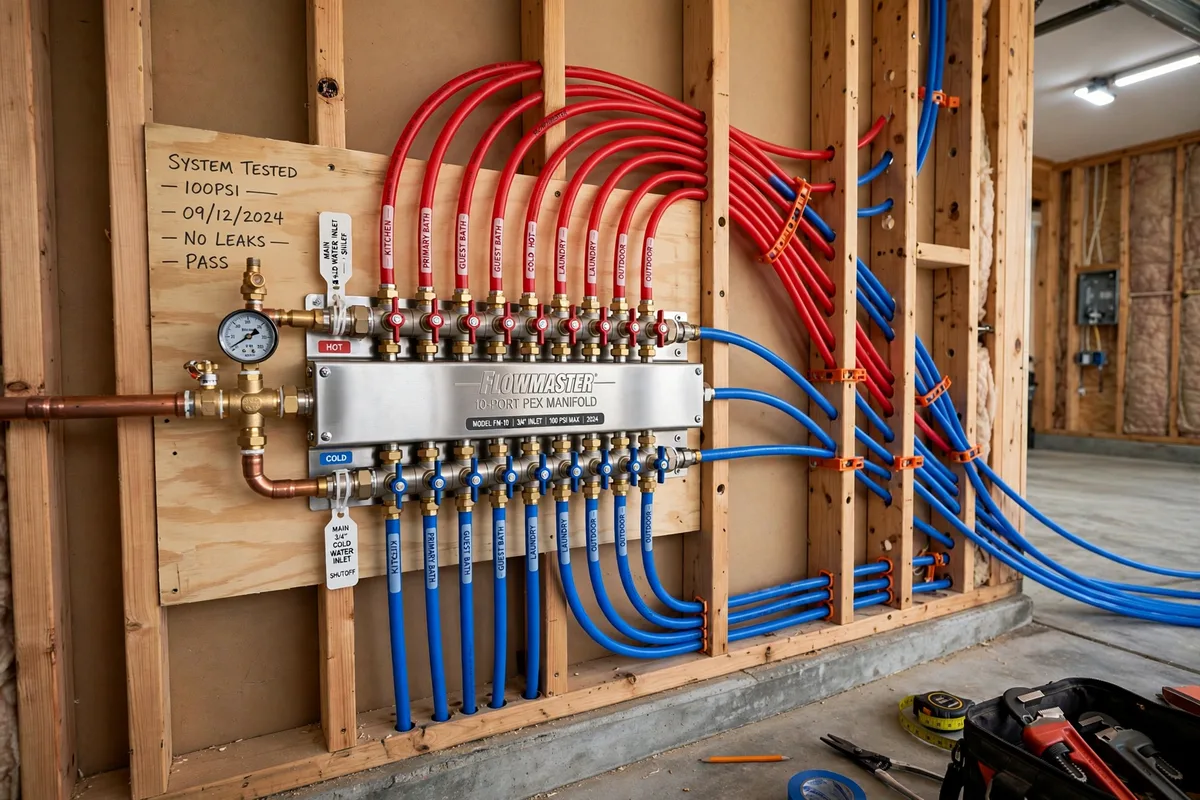
Nearly everywhere else, which is why most Arizona repipe crews reach for it by default. After repeated slab leaks on aging in-slab copper, a PEX repipe through the attic removes your plumbing from the soil movement and corrosion environment that caused the failures in the first place. It installs in a day or two, it costs roughly half, the manifold layout gives you a labeled shutoff for every fixture, and the flexible runs mean far fewer fittings buried in your walls. Fewer fittings means fewer future leak points. For a family that just wants the slab-leak era to end, that is the whole argument.
What about hard water and PEX?
This is the question Arizona homeowners ask most, and the answer is reassuring with one footnote. Hard water does not damage PEX the way it destroys copper. PEX does not pit, does not corrode, and does not develop pinhole leaks from mineral content. The footnote: mineral scale can still accumulate inside any pipe over years, slightly narrowing the line, which is why many repiped homes also get a water softener. A softener protects your fixtures, your water heater, and your new pipes alike, and it makes the whole system last longer regardless of material. If a plumber tells you PEX is immune to everything, find a second plumber. If one tells you hard water rules out PEX, find a second plumber too.
How long does a repipe last?
A copper repipe in Arizona hard water realistically gives you 20 to 50 years, with hot lines on the short end of that range. A PEX repipe is expected to last 40 to 50 years or more, backed by manufacturer warranties that are typically 25 years. The honest caveat: PEX has not been installed in Arizona homes long enough for a proven, locally observed lifespan the way copper's track record is proven. What is proven is the failure mechanism it avoids. Copper fails here from the inside out, from the water itself. PEX does not have that failure mode, and that is the bet you are making.
What happens during a repipe, step by step?
Knowing the sequence helps you spot a sloppy crew on day one:
- Detection and mapping first. Confirm which lines are failing and where, with pressure testing and acoustic location. Never repipe on a guess. Our guide to how slab leak detection works shows what a proper diagnosis looks like.
- Inspection, bid, and permit. The crew walks the attic and every fixture, you get an itemized bid with identical scope to compare against others, and the permit is pulled before work starts.
- Water off, lines run. The crew shuts off the water and runs the new lines through the attic and walls. On a PEX job this is usually a single day of surprisingly fast work.
- Pressure test. The new system is pressurized and held, every joint checked. This is the step you never skip, and you should be present for it or get the test readings in writing.
- Fixtures reconnected, old lines abandoned. Every faucet, toilet, and appliance gets tied into the new system. The old in-slab copper is capped and left buried.
- Drywall patched and painted. Openings get patched, textured to match, and painted if that was in your bid. Confirm this scope before the first cut.
- Final inspection and water on. The city inspector signs off, the water goes back on, and you get the warranty paperwork. Keep it with your house documents.
Should you repipe, or just reroute the one bad line?
This is the question hiding underneath the material question, and it matters more for your wallet. The rule of thumb most honest plumbers use: the first slab leak on an otherwise healthy system gets a reroute of that one line overhead, the cheapest permanent fix. The second leak on a different line is the warning. The third leak means the system is failing everywhere, and a full repipe is cheaper than repairing leaks one slab cut at a time.
Age shortens the rule. If your in-slab copper is past 40 years and the first leak just happened, ask for a repipe quote alongside the reroute quote. The math often favors doing it once. Compare all four approaches side by side in our slab leak repair options comparison.
Questions to ask before you sign a repipe bid
Bring these to every estimate. The good contractors answer them easily; the bad ones get uncomfortable.
- Is this bid PEX or copper, and what grade of fittings are you using?
- Does the price include the permit, the pressure test readings, and drywall patch-and-paint?
- How do you route around rodent-prone areas in my attic?
- What is the warranty on materials and on labor, in writing?
- How many days will my water be off, and what is the backup plan if the job runs long?
- Can you show me the pressure test holding before you close the walls?
The material choice matters, but the installer matters more. A perfect PEX system installed sloppily will out-leak a copper system installed well. Choose the crew first, then the material with them.
If you are facing this decision in Apache Junction, start with certainty about what is actually failing. A proper diagnosis with pressure testing and acoustic location tells you whether you need a reroute, a repipe, or something smaller entirely, and it protects you from paying for a repipe you never needed. See our leak detection and repair services, call (480) 885-4943 or reach us through the contact page. We document our findings in writing, and we will tell you honestly when a repair beats a repipe.