
Buying a Home in Apache Junction? Check for Slab Leaks
A 1970s or 1980s Apache Junction home can hide a slab leak that no standard inspection will find. Here is how buyers check the history: read the disclosure, ask the seller seven pointed questions, and get a pre-purchase leak scan before contingencies expire.
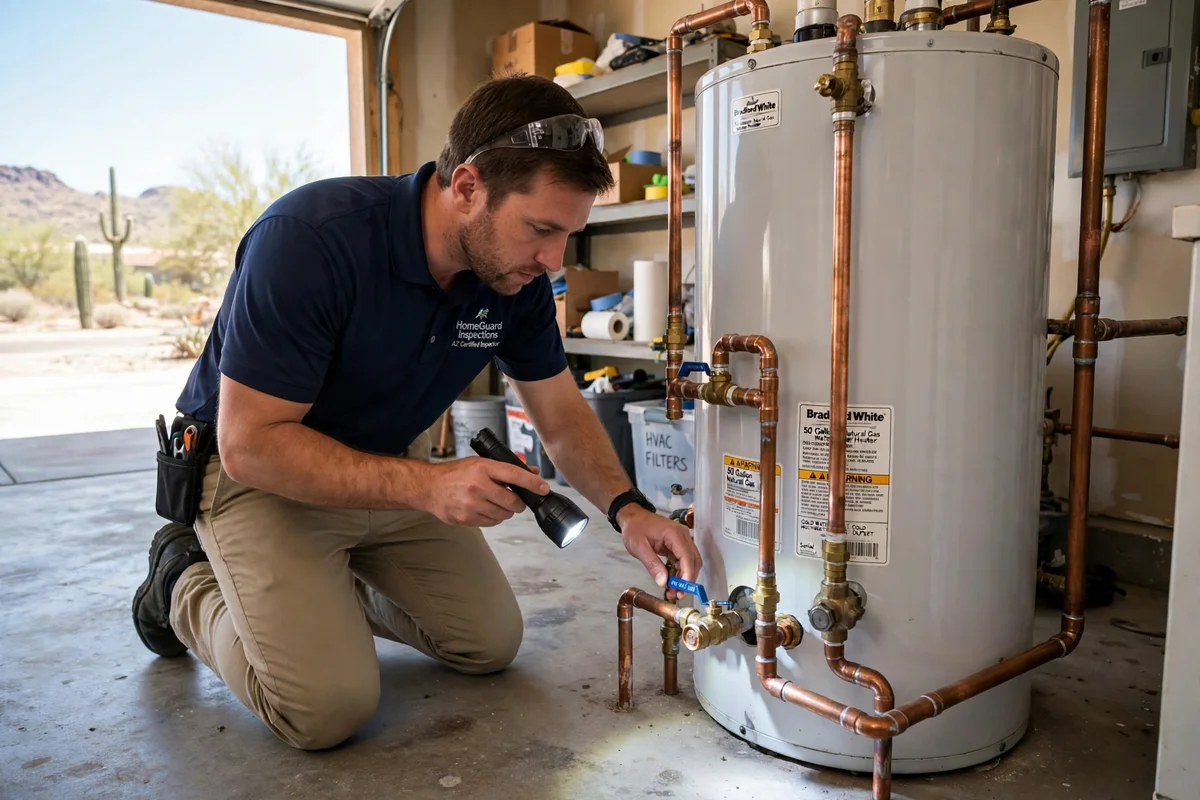
The short answer: Yes. Most Apache Junction homes for sale were built in the 1970s and 1980s with copper water lines under concrete slab, and a leak there is invisible above ground. A standard inspection will not catch it, and one repair does not clear the rest of the system. Read the disclosure, ask pointed questions, and get a pre-purchase leak scan.
Buyers sometimes assume that if a house looks fine, the plumbing is fine. Under-slab leaks do not work that way. A pinhole leak in a hot-water line can run for months, warming the concrete under the floor, while the only outward clues are a faint sound at night or a water bill that does not make sense. Learn the slab leak warning signs so you can spot trouble during a showing. In a market where homes change hands with original 40-year-old copper, the cheapest thing you can do is check before you commit.
Why do Apache Junction homes carry slab leak risk for buyers?
Apache Junction's housing stock skews older than the Phoenix metro average. Whole neighborhoods, Apache Wells, Superstition Springs, the original grids near Old West Highway, were built when copper lines were routinely buried directly in the slab. Four decades of Arizona hard water pitting the copper from the inside, combined with expansive desert soil shifting the slab, means many of these lines are living on borrowed time. Age alone is not a diagnosis, but it sets the baseline probability.
That matters during a purchase because a slab leak repair is disruptive and expensive relative to the home price. A spot repair means cutting concrete inside a finished home. A repipe means new lines through walls and attic. Understanding this before you make an offer is not pessimism; it is budgeting. Our guide to what slab leaks damage shows how a small leak becomes structural and cosmetic damage when it runs unnoticed.
What does Arizona law require sellers to disclose?
Arizona requires the seller to complete the Seller Property Disclosure Statement (SPDS), a standard form from the Arizona Association of Realtors, that asks directly about plumbing problems, including leaks. If the seller knows about a past or current slab leak, they are required to disclose it. That word, knows, does a lot of work: a seller who never noticed the signs can honestly answer no on a form while a leak is actively running.
So read the SPDS as a starting point, not a guarantee. Watch for these gaps:
- Vague or incomplete answers. Unknown on plumbing questions for a home the seller lived in for 15 years deserves a follow-up question, not a shrug.
- A disclosed repair with no paperwork. Fixed leak under slab in 2019, with no invoice, no permit record, and no warranty, is a claim, not a history.
- Fresh flooring or recent cosmetic work. New tile or flooring in one area of an otherwise original home can be a legitimate refresh, or it can be covering the access cut from a spot repair.
- Insurance claims mentioned but not detailed. Ask for the claim paperwork. Water-damage claims leave a paper trail.
A disclosure that looks clean on an older home is common and usually fine. Your job is to verify the clean answers, not just accept them. For more on how insurers treat these claims, see slab leak insurance coverage in Arizona.
Will a standard home inspector catch a slab leak?
No, not reliably, and it is not their fault. A standard general home inspection is a visual survey of accessible systems. The inspector walks the home, tests fixtures, and reports what they can see and operate. A slab leak is under several inches of concrete with no visual access. Most inspectors do not run isolated pressure tests on the supply lines, do not carry acoustic listening equipment, and do not use thermal cameras as a standard part of the inspection.
What an inspector can catch are the secondary symptoms: unexplained moisture at baseboards, mildew smells, a water heater that runs constantly, cracked or heaving floors. But those signs often do not exist yet when a leak is young, or they are hidden by staging, rugs, and furniture during showings. An inspector's clean report on plumbing means nothing visible, not nothing leaking. That distinction is exactly why buyers schedule a separate leak detection visit: different equipment, different question, different answer.
What should you ask the seller about slab leaks?
Put these in writing through your agent during the inspection period. Specific questions get specific answers; any plumbing problems gets a no.
- Has there ever been a slab leak, leak detection visit, or under-slab repair at this address? Ask for dates, who did the work, and copies of invoices.
- Has the home been repiped, and if so, what scope? A full repipe through walls and attic is very different from one spot repair or one bathroom reroute. Get the paperwork.
- Were permits pulled and inspections signed off for any plumbing repair? In Pinal and Maricopa County jurisdictions, permitted work leaves a public record you can verify yourself.
- Have there been any water-damage insurance claims on the home? Ask for the claim summary. Claims history tells you what the disclosure may not.
- What are the current average water bills, month by month for the last year? Unexplained spikes in past bills are a signature of a leak that ran and was never fully diagnosed.
- Has the water heater been replaced recently, and why? A new water heater after years of a leaking hot-water line is worth one more question about what the old one was doing.
- Is the original copper still in the slab? For 1970s and 1980s homes, knowing whether the slab lines were abandoned in place during a repipe tells you whether the risk is retired or just sleeping.

What does a pre-purchase leak detection scan include?
A pre-purchase scan answers one question: are the pressurized lines under this slab holding pressure right now? A detection company typically bundles three checks into one visit:
- Isolated pressure test. The supply lines are separated from the fixtures and pressurized with a gauge. A falling gauge means water is leaving the system somewhere, even with every faucet off.
- Acoustic listening. Sensitive ground microphones and listening discs pick up the hiss of a pressurized leak through the slab, which pinpoints the area.
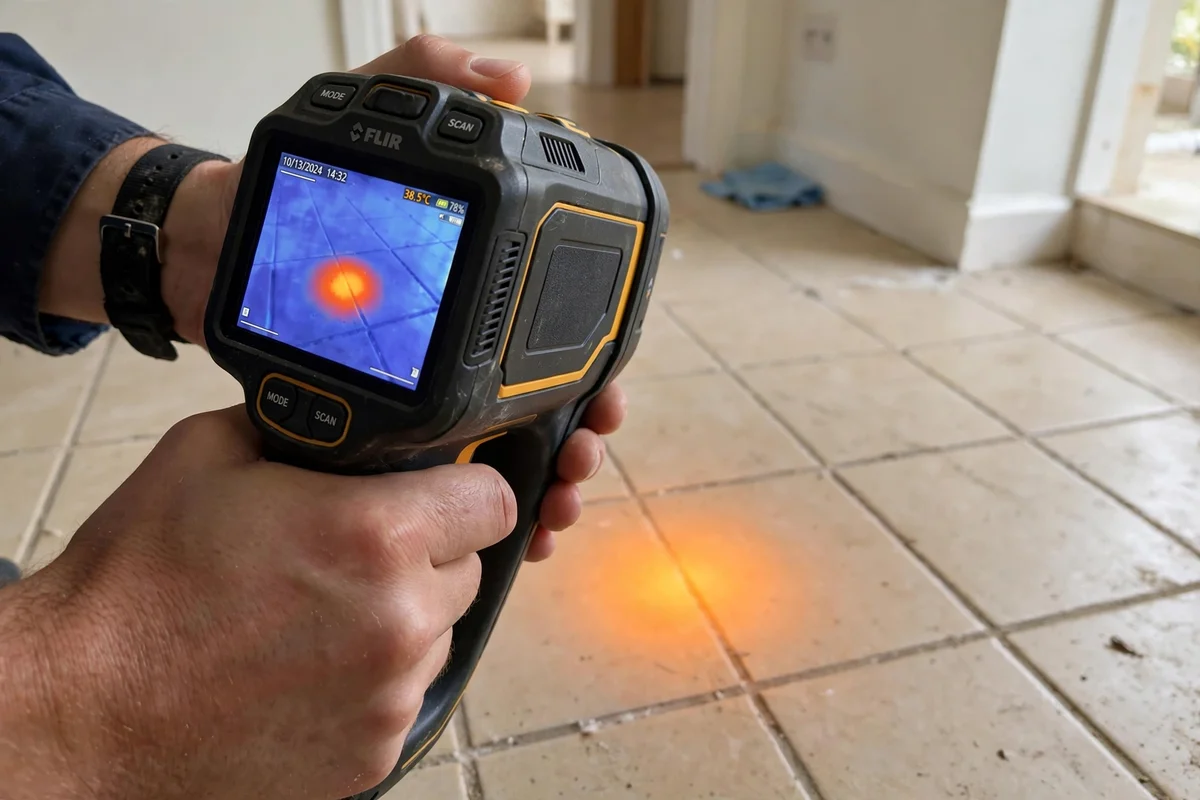
- Thermal imaging scan. An infrared camera reads surface temperatures across the floor. A hot-water line leak shows up as an unexplained warm pattern on tile or concrete.
Nothing gets cut, dug, or drilled. The visit usually takes a couple of hours and costs a small fraction of a repair, which is why buyers treat it as cheap insurance. The scan either gives you a clean pressure reading to close with confidence, or it gives you documented evidence to renegotiate before closing. Our page on how slab leak detection works walks through each method in detail.
Is a house with repiped plumbing a good buy?
Often yes. A properly repiped home has retired the in-slab copper that causes most of these problems, which removes the single biggest plumbing risk in an older Apache Junction house. But repiped is a claim you verify, not a word you accept at face value.
- Scope. Confirm whether it was a full repipe, with all supply lines rerouted, usually overhead, or a partial repipe covering only some fixtures. A partial repipe leaves original slab lines still in service.
- Permits and sign-off. Ask for the permit numbers and the jurisdiction's final inspection record. Permitted work is documented; unpermitted work is a story.
- Material. Ask what pipe material replaced the copper and confirm it matches what the invoice says.
- Warranty paperwork. Many repipe companies offer workmanship warranties that transfer to the new owner. Get the terms in writing, including what voids it.
- Abandoned lines. Verify the old slab lines were properly abandoned, not just disconnected, so nobody reconnects them during a future repair.
A repiped home with full permits, transferable warranty, and clean paperwork is genuinely a stronger buy than an identical home on original copper. A repiped home with no paperwork is just a story about a repipe. Compare repair approaches in slab leak repair options so you know what each scope actually means.
What should you do if the scan finds a leak before closing?
Do not panic, and do not walk away before you have numbers. A found leak during the inspection period is leverage, not a death sentence. Three paths are common:
- Ask the seller to repair before closing, with a licensed plumber of documented scope, permits, and paid invoice provided before you remove contingencies.
- Negotiate a credit or price reduction based on real quotes for the specific repair, so you control the work after closing. Get the quotes during the inspection period, not after.
- Walk away within your contingency if the scope is bigger than expected, such as multiple failing lines or a repipe-level problem, and the numbers no longer work.
Whatever you choose, document everything: the detection report, the quotes, the seller's response. A documented leak history follows the property in future disclosures, and having your own file protects you if questions come up later. If you need a sense of what repairs run, typical slab leak repair costs in Apache Junction are framed as the ranges local companies actually quote.
Leak Finders provides pre-purchase leak detection scans across Apache Junction with same-day availability during the inspection period, which is exactly when you need the answer. Call (480) 885-4943, or book through our contact page. Bring the inspection report and the SPDS: they tell us where to start listening.