
How Long Does Slab Leak Repair Take? Real Timelines
How long does slab leak repair take? Most fixes finish in a day or less. Honest timelines for every repair method, plus what makes the job run long in Apache Junction.
The short answer: Most slab leak repairs take less than a day. A spot repair usually finishes in 3 to 6 hours. A reroute takes about a full day. A whole-home repipe takes 1 to 2 days. Tunneling is the slowest method at 2 to 4 days. Add the detection appointment, 1 to 2 hours, and most homeowners go from "we found the leak" to "the water is back on" inside 48 hours. Below is what each method really takes in an Apache Junction home, and what makes the job run long.
If you have not confirmed the leak yet, do that before you plan around a repair date. A water meter test takes about 15 minutes and tells you whether water is escaping somewhere it should not. And once the leak is located, the repair method, and therefore the timeline, comes from our slab leak repair options comparison, which lays out when each method is the right call.
How long does slab leak detection take?
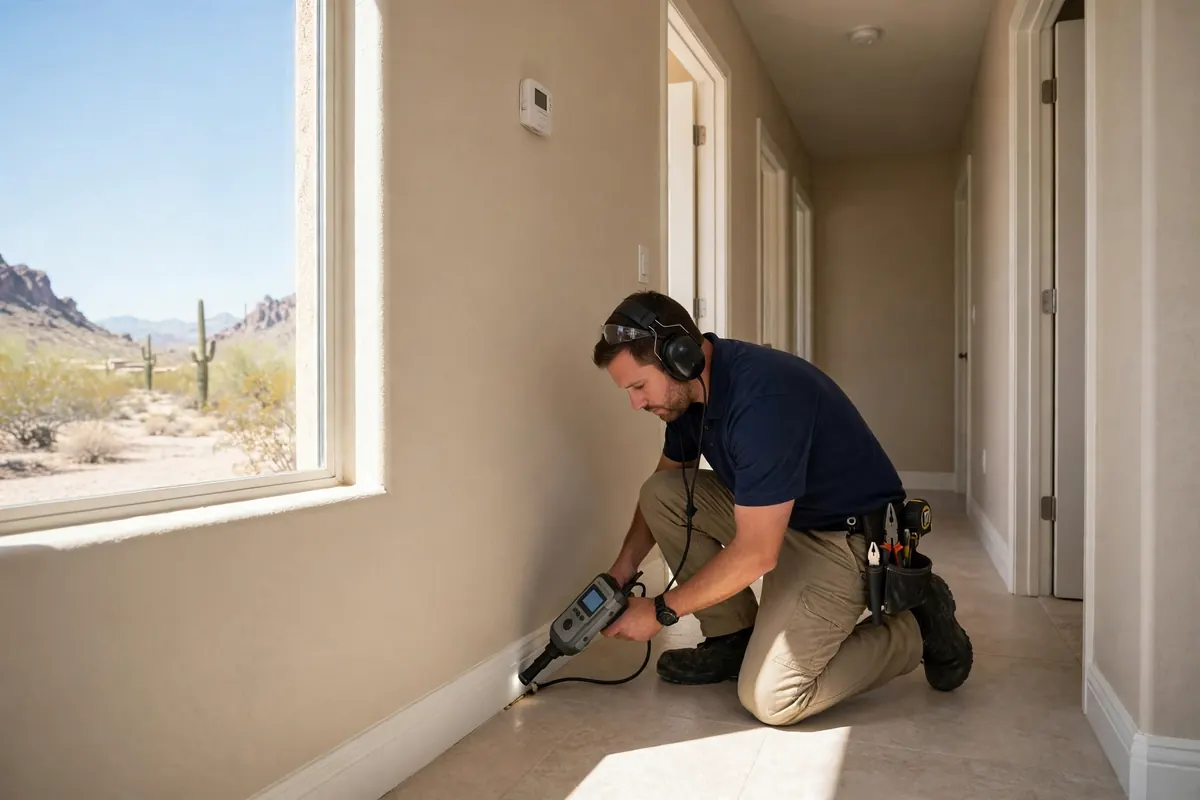
Detection is the fastest part of the job, and the part people skip too often. A proper detection appointment in an Apache Junction home takes 1 to 2 hours. That covers a pressure test on the supply lines, which confirms whether water is escaping, and acoustic listening, which pinpoints the leak location within inches. Thermal imaging can shorten the search when the leak is in a hot water line. Two hours of detection routinely saves days of exploratory demolition, because nobody is opening the slab on a guess. Our detection process guide walks through exactly what happens during the appointment.
How long does each slab leak repair method take?
The method sets the clock. Here are the honest timelines we quote in Apache Junction, based on typical single-story slab-on-grade homes in the area:
Spot repair: half a day
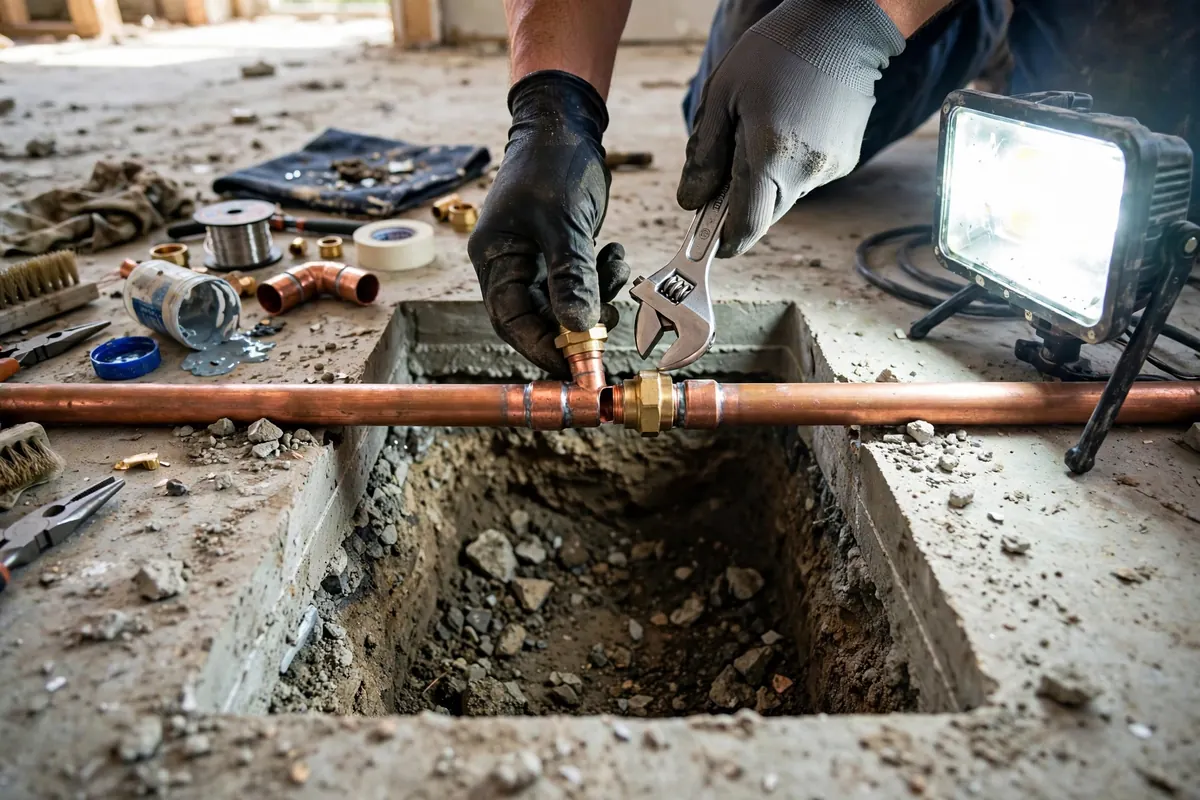
A spot repair takes 3 to 6 hours of work, usually done the same day as detection or the next morning. The crew confirms the marked location, shuts off the water, cuts a clean opening in the slab, exposes the pipe, cuts out the damaged section, and installs the repair. What most homeowners do not expect is the patch: the concrete opening gets filled and patched, and that patch needs to cure before it carries weight or gets flooring over it. You can walk around it the same evening, but the final floor finish often goes down a day or two later.
Reroute: about one full day
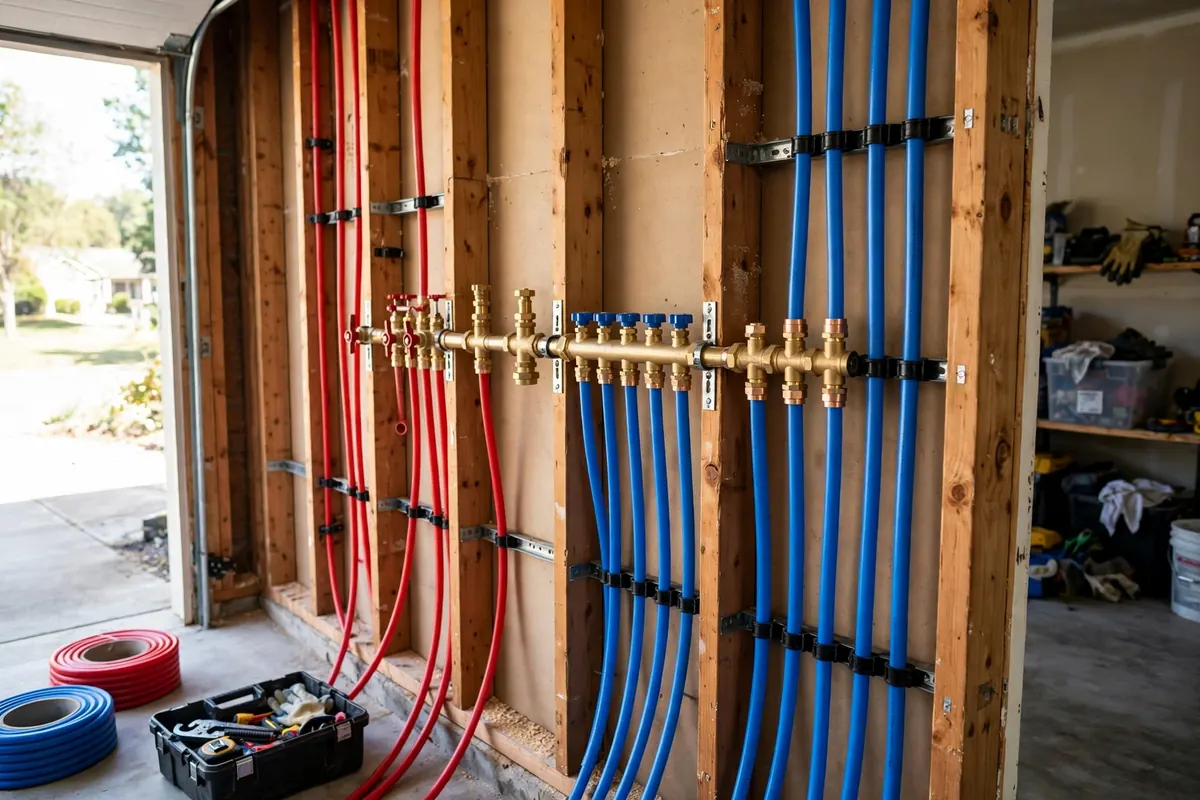
A reroute takes 6 to 10 hours. Instead of opening the slab, the crew runs new water lines through the walls or attic and abandons the leaking line in place. The plumbing work itself fits in a day for a typical home. The part that stretches the schedule is restoration: drywall patches need taping and texturing, and if the reroute crossed a finished ceiling, paint matching can push the full finish into the next day.
Whole-home repipe: 1 to 2 days
For the average Apache Junction home, a full repipe runs 1 to 2 working days. Day one is usually the rough-in: new lines throughout, pressure test, and inspection. Day two covers wall patching and cleanup. Two-story homes or homes with complex layouts can run a third day, but for most of the 1970s and 1980s ranch homes in the area, two days is the honest number.
Tunneling: 2 to 4 days
Tunneling is the slowest repair method, and deliberately so. Digging the access tunnel by hand takes a day, the pipe repair happens from below the slab, and then the tunnel is backfilled and compacted, which takes another day or two. Nobody rushes the compaction step, because a poorly compacted tunnel settles later. The tradeoff for the extra days is that your flooring never gets touched, which is exactly why homeowners with tile or terrazzo choose it. Full comparison in our tunneling vs breaking through guide.
Epoxy lining: 1 to 2 days
Epoxy lining skips the slab work entirely: the pipes are cleaned, dried, and coated from the inside, then the lining cures. The work takes a day, and the cure takes the rest of it. It fits drain and waste lines more often than supply lines, and the pipe needs to be in fair condition to begin with.
What makes a slab leak repair take longer?
Most jobs run on schedule. When one runs long, it is almost always one of these:
- More leaks than expected. Detection finds one leak, the crew opens the slab and finds corroded pipe with a second weak spot. This is the most common schedule-killer, and the reason honest contractors pressure-test the whole line, not just the flagged section. If your home has 30 to 50 year old copper, ask what happens to the price and the timeline if a second leak shows up.
- Post-tension slab. Many newer Apache Junction homes sit on post-tension slabs, and nobody cuts one before the tension cables are located. That cable locate is an extra step, and it is non-negotiable for safety. Rerouting is often the recommendation for these homes precisely because it avoids the slab.
- Expensive flooring. Saltillo tile, terrazzo, or a continuous stained concrete floor cannot be patched invisibly. The repair itself is quick; deciding how to handle the floor, and doing the restoration right, is what adds days.
- Permits and inspections. A repipe usually needs a permit and an inspection, and the inspection schedule is not yours to control. Most of the time it fits inside the job days, but a missed inspection window can add a day.
- Mold or water damage. If the leak ran long enough to grow mold under the flooring, remediation runs on its own timeline before the final finishes go in. Our slab leak and mold guide covers what that involves.
- Monsoon-season tunneling. Tunneling in saturated clay soil is slower and sometimes has to wait for the ground to drain. July through September is the wrong season to assume a two-day tunnel.
What makes a repair go faster?
- Detection first. The single biggest time-saver is a located leak. Exploratory demolition is how a half-day repair becomes a three-day one.
- One leak, accessible pipe. A single pinhole in a straight run of copper under a closet floor is the best-case job. Closets and utility rooms are where you hope the leak lands.
- Reroute over breakthrough. When the flooring is the problem, rerouting skips the slab, the cure time, and the floor restoration in one move.
- Decisions made up front. Knowing before work starts who handles drywall patching, paint, and flooring saves the idle day between trades.
What does the workday actually look like?
For a typical spot repair, the crew arrives and confirms the marked location, shuts off the water, cuts the opening, makes the repair, pressure-tests the line to prove it holds, and patches the opening. Water is usually back on within a few hours, and the crew cleans up the same day. For a reroute, lines get run through walls and attic in the morning, connections and pressure testing happen midday, and wall patching closes out the day.
One thing worth knowing: your water will be off during parts of the work, but not the whole job. Plan for a few hours without water, not a few days. If a job genuinely needs the water off overnight, that is something you should be told in advance, not something you discover at 6 p.m.
Do you have to move out during slab leak repair?
Almost never. For spot repairs, reroutes, and repipes, families stay in the home. The disruption is noise, a crew coming and going, and a drywall patch or two, not a construction zone. The exceptions are rare: a repipe that requires a full day with the main shut off, tunneling that blocks the only entrance to a room, or a mold remediation that seals off an area. If a contractor tells you to move out for a single spot repair, get a second opinion.
How soon can the work start after detection?
Often the same day or the next morning. A spot repair can follow detection immediately, since the equipment is already on site and the location is marked. Repipes and tunneling need scheduling, usually within a few days. And if the leak went unnoticed for a while, know that waiting adds damage and slows the eventual job: our escalation timeline explains why the repair is cheapest and fastest the day the leak is found.
Call for detection and an honest timeline
If water is actively coming up through the slab or flooring, do not wait for a convenient slot. Call (480) 885-4943 or reach us through the contact page, our emergency leak repair line runs 24 hours a day, 7 days a week. For pricing context on each method, see our slab leak cost guide and the slab leak repair service page, and our full detection and repair services cover the whole job across Apache Junction. We will tell you plainly whether you have a leak, where it is, which fix fits, and exactly how long it takes.