
Monsoon Foundation Heave vs Slab Leak: Tell the Difference
Cracks, sticking doors, and cracked tile after monsoon season? Learn whether your Apache Junction foundation is heaving, settling, or hiding a slab leak, and what to do about each.
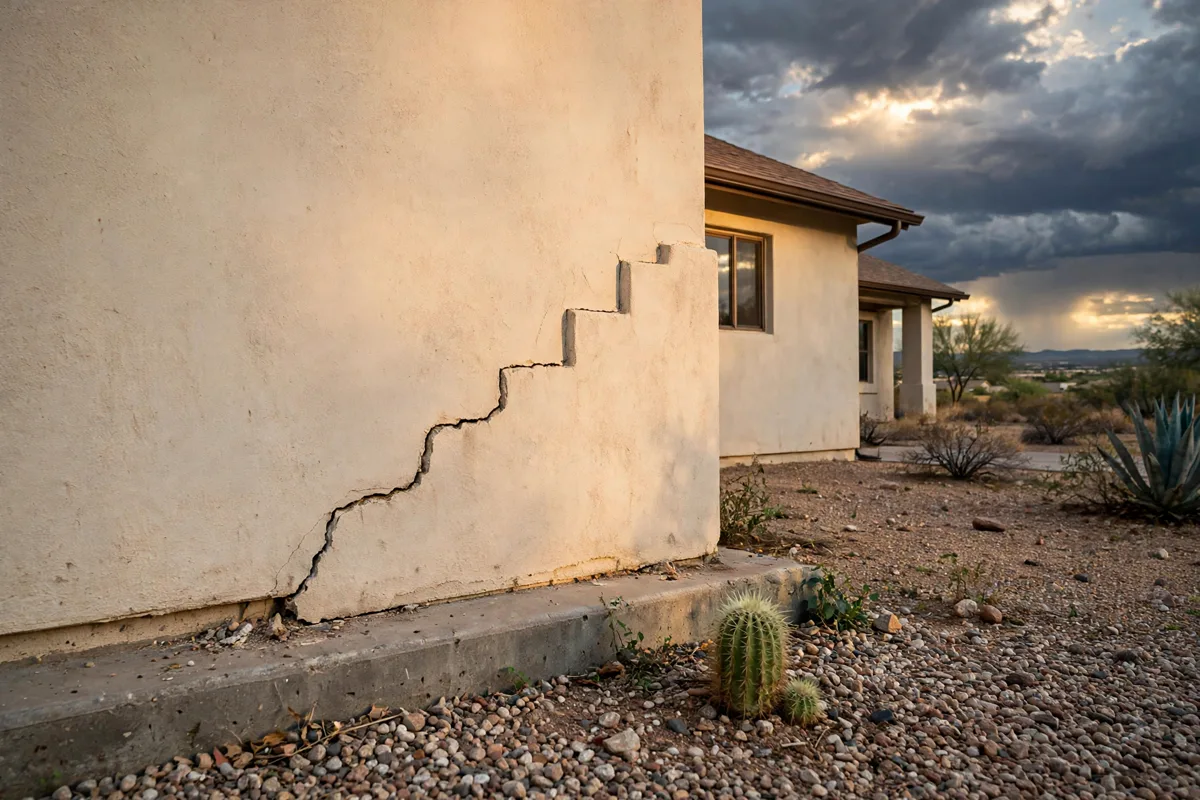
The short answer: if the stair-step cracks, sticking doors, and cracked tile appeared right after monsoon storms, your foundation is probably heaving upward, not sinking and not leaking. Foundation heave is Arizona clay soil drinking in rainwater, swelling, and lifting the slab; a slab leak is a broken water line under the concrete. The two look alike, but they behave differently: heave follows the weather and is seasonal, while a slab leak drives up your water bill, creates warm spots on the floor, and makes running-water sounds no matter the forecast. That distinction decides whether you need a foundation contractor or a leak detection specialist. Learn the slab leak symptoms that never come from soil movement, then use the guide below to diagnose your home.
Apache Junction sees this story every year. Monsoon storms roll in from July through September, dump weeks of rain into bone-dry clay soil, and a few weeks later doors will not close and new cracks zigzag up the stucco. Many assume a failing foundation or a slab leak. Most of the time the soil moved, the house flexed with it, and the answer is drainage, not piers.
What is foundation heave, and what is settlement?
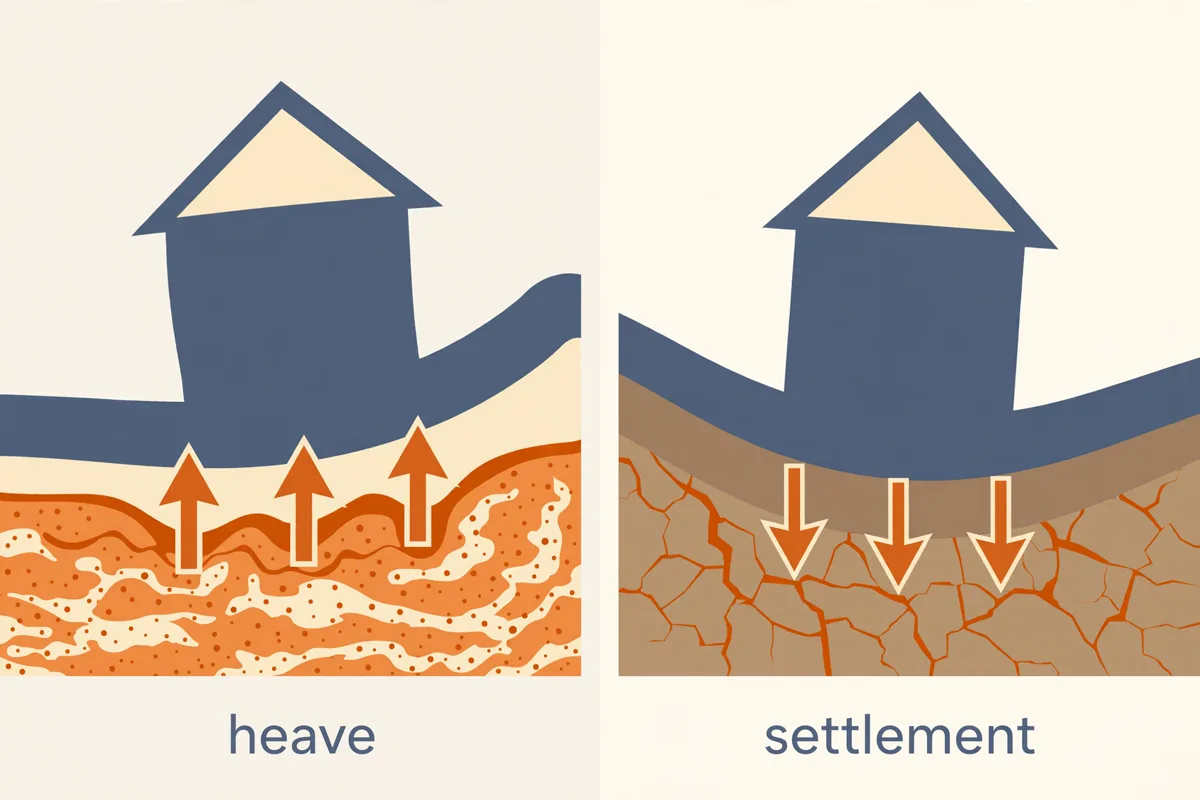
Heave and settlement are opposite movements of the same slab. Settlement is what most people picture: the soil under the foundation compresses or washes away, and part of the house sinks into the gap. Heave is the reverse: expansive clay soil absorbs water, swells, and pushes the slab upward. One is the house dropping, the other is the ground rising, and they leave similar-looking damage.
Think of clay soil as a dry sponge. Most of the year it sits shrunken and hard, then the monsoons hit and it swells unevenly, twisting the house a fraction of an inch. That twist racks door frames, pops drywall tape, and cracks tile grout. When the dry months return, the soil shrinks and the house often settles back. That seasonal cycle is the signature of heave.
Settlement does not follow the calendar. It comes from soil that was never compacted properly, organic material decomposing under the slab, or water washing soil away from under the foundation. The movement is slow, steady, and one-directional: down. A foundation with true settlement never bounces back in the dry season, and that difference in behavior is your most reliable free diagnostic tool.
Why does monsoon season heave Arizona foundations?
Arizona is practically engineered for heave: some of the country's most expansive clay soil, plus the exact trigger, long dry spells that shrink the clay to its minimum followed by intense monsoon downpours that saturate it in hours. That parched-to-soaked swing is the largest the soil experiences all year, so the swell is the largest too.
Apache Junction homes are especially exposed. Most went up from the 1970s through the 1990s, built slab-on-grade with concrete poured directly on native soil and copper supply lines buried in the slab. Those older homes predate modern soil-preparation standards and have been riding this cycle for decades. A newer home on a post-tension slab resists it; a 1980s ranch takes the full ride.
Heave also follows a pattern in where the damage shows: it almost always starts at the edges of the slab, where perimeter soil absorbs the most rainwater and dries the fastest. The classic post-monsoon complaints are the front door that sticks, the corner bedroom with new cracks, and the garage wall with a zigzag in the stucco. Symptoms in the center of the house point somewhere else entirely.
Is it heave or a slab leak? How to tell the difference
Heave and slab leaks share symptoms, but a slab leak brings evidence soil movement never produces, and soil movement keeps a calendar a leak never keeps. Run this sequence in order and you will usually have your answer before anyone sells you anything.
- Check the timing against the weather. Did the symptoms arrive within weeks of heavy rain at the edges of the house? That is heave. Did they appear in the dry months, grow steadily regardless of weather, or show up in the center of the floor plan? That points away from heave.
- Look at your last two water bills. A slab leak wastes water continuously. If your bill jumped with no change in use, soil movement cannot explain it. Heave never raises a water bill.
- Walk the tile barefoot at night. A persistent warm patch on the floor means hot water is heating the slab from below. Heave cannot warm a floor. Note that carpet hides this sign completely. A hot-water slab leak also often keeps your water heater running constantly, a second confirmation.
- Listen in a quiet house. With every faucet closed, put your ear near a wall or the floor. A faint hiss or rushing sound is water moving where it should not be; heave is silent. Those sounds are a classic reason to call for professional leak detection.
- Study the cracks themselves. Heave cracks tend to be wider at the bottom, following mortar lines in a stair-step pattern where the soil pushed up. Settlement cracks often widen at the top. Cracks that open and close with the seasons are heave; cracks that only ever widen deserve a closer look.
- Test the meter if anything still looks like a leak. Shut off every fixture and watch the water meter for ten minutes. A meter that keeps turning confirms water is leaving the house somewhere. If the meter is still, the bill is normal, and there are no warm spots or sounds, you almost certainly have a soil problem, not a pipe problem.
One honest caveat: heave can cause a slab leak. When clay lifts the slab, it flexes the buried copper lines, and a pipe thinned by hard water or age can open a pinhole. Cracks plus a climbing water bill a few weeks after a storm means treating it as a leak the heave triggered.
Why does a foundation company want to sell you piers?
Nobody with a sales quota will volunteer this: the foundation repair industry is built around settlement products. Steel piers, helical piers, and push piers all push a sinking foundation up from below. That is the correct answer for genuine settlement, not a treatment for heave, and it can make heave worse by anchoring a slab the soil keeps moving seasonally.
The incentive problem is simple. A foundation company sells what it installs, and what it installs is piers. Heave has no product: its treatments are drainage correction, gutters, grading, and moisture management. So a heave problem walked into a settlement company tends to leave as a settlement diagnosis with a quote that starts in the five figures. If your bid involves piers but your symptoms arrived with the storms and retreat in the dry months, get a second opinion from someone who does not sell piers.
The same caution applies in reverse. A plumber has no product for soil movement, and a leak detection company should never diagnose your foundation. Our job is narrower: if the water bill, the meter, the warm spots, or the sounds point to a broken line, we find it through the concrete. Honest trades stay in their lane.
What is the post-monsoon foundation checklist?
You cannot fully prevent heave, but you can take the wild swings out of it: keep soil moisture around the foundation as even as possible all year. Sudden saturation followed by months of drought is what makes clay move violently. Work through this checklist each October, right after monsoon season ends.
- Walk the grade around the house. Soil should slope away from the slab in every direction, dropping about six inches in the first ten feet. Low spots that pond water against the foundation are the top preventable cause of heave. Regrade with compacted soil, not mulch.
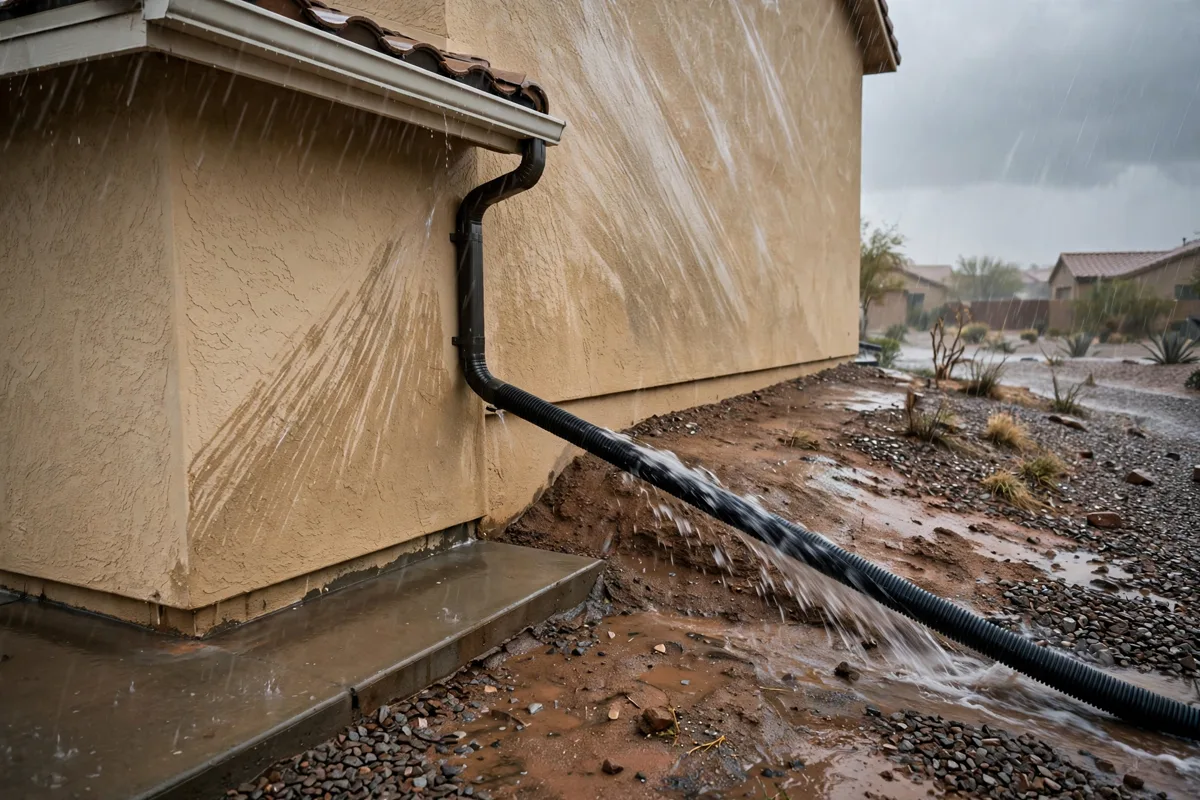
- Check the gutters and downspouts. Missing or clogged gutters dump the entire roof's rainfall onto one spot at the foundation edge. Extend downspouts at least four to six feet away. Many Apache Junction homes never had gutters, so adding them is one of the highest-return upgrades you can make.
- Look at where the AC condensate drains. The condensate line drips all summer and often discharges right at the foundation. Reroute it several feet away or into a French drain.
- Audit the irrigation. Sprinkler heads that soak the foundation line keep perimeter soil wet while the rest of the yard dries. Keep beds and spray zones a foot or more off the stem wall. Pool losing water too? Run the bucket test first to rule out evaporation before blaming the pool.
- Keep watering consistent through the dry months. Letting soil bake and crack all winter then soaking it in July maximizes the swell. Deep, even, infrequent watering of the landscape around the foundation keeps the clay from swinging between extremes.
- Photograph and measure the cracks. Mark any new crack with a pencil and note the date. Heave cracks that open in August and tighten by February are soil doing its seasonal dance. Cracks that only grow, or that fit a pencil, need a professional eye.
When should you call for leak detection in Apache Junction?
Call when the evidence points to water, not weather: a climbing water bill, a meter that turns with everything off, a warm patch on the tile, or running-water sounds in a quiet house. Pipe problems do not wait out the season, and a leak left running erodes soil under the foundation until it causes the very settlement everyone fears.
Leak detection answers it definitively: pressure testing isolates the losing line, then electronic and acoustic equipment pinpoints the break through the concrete, usually within inches, before anyone touches your floor. Compare that to guessing, or to a five-figure pier quote for a problem that was never settlement. If the leak is confirmed, our comparison of slab leak repair options covers spot repair, reroute, repipe, and epoxy lining with honest cost ranges, so you know what fixing it involves before a contractor sets a price.
If the situation is urgent, a gushing sound, visible water, or a meter spinning fast, do not wait for morning. Our emergency leak repair line in Apache Junction runs 24/7, with same-day detection across our service areas. We are licensed and insured, and from our Leak Finders base we will tell you straight whether you have a leak or just a very thirsty foundation.