
How Much Water Does a Slab Leak Waste Per Day in Arizona?
A hidden leak under your slab runs around the clock. Here is how many gallons it wastes per day, what that does to your bill, and how to measure your own leak.
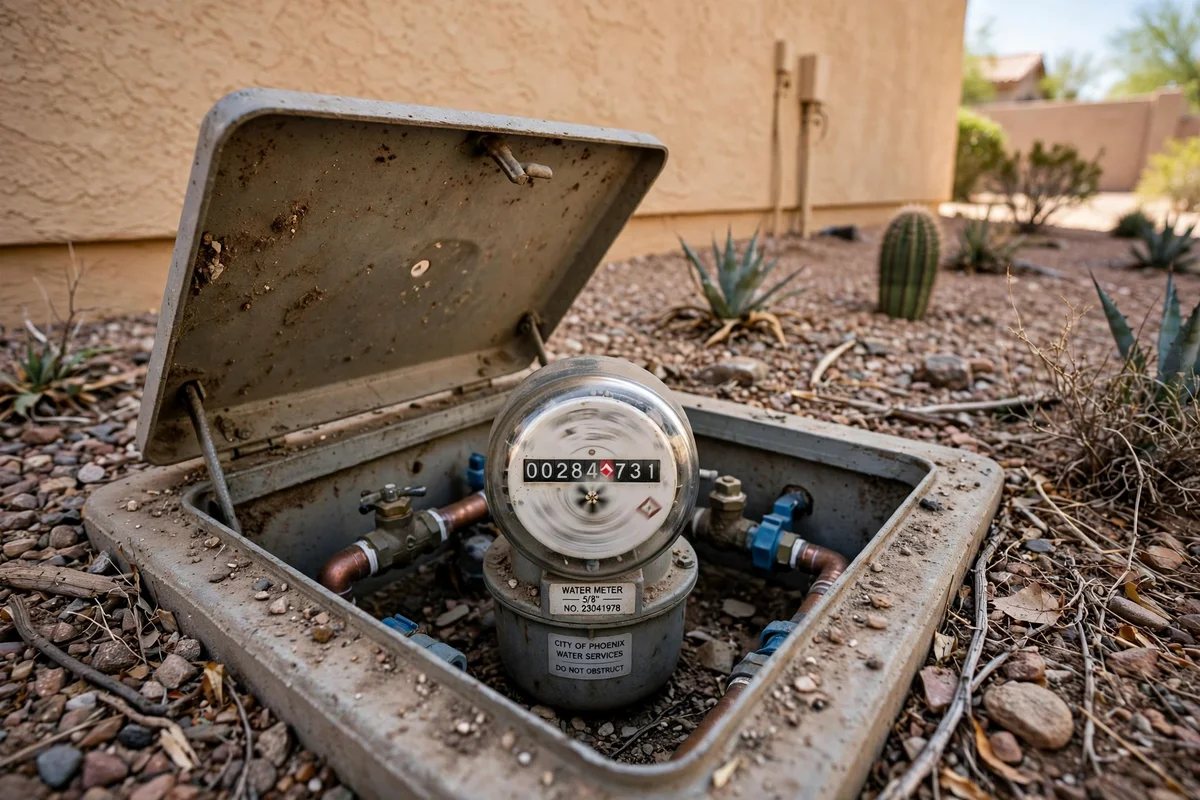
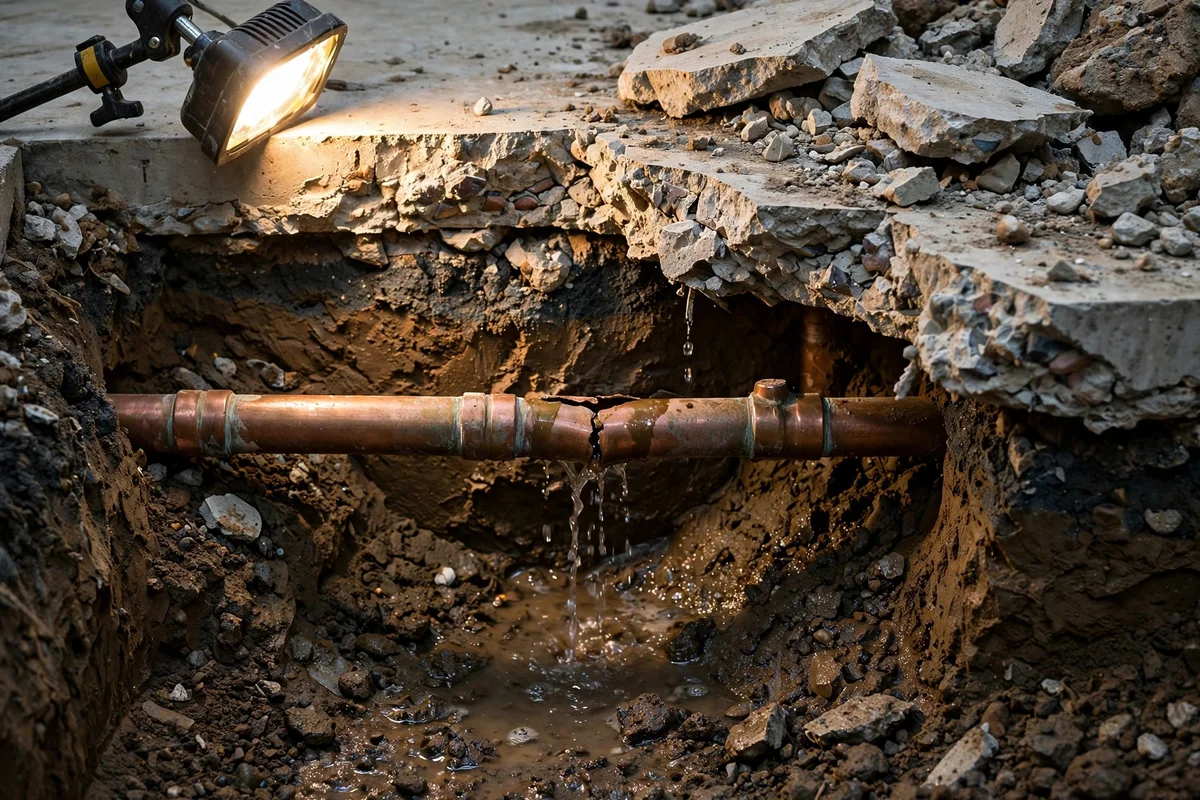
The short answer: a slow slab leak wastes roughly 10 to 50 gallons a day, a steady leak wastes 50 to 250 gallons a day, and a split pipe can waste 1,000 gallons a day or more. The reason the numbers get big so fast is simple. A slab leak runs around the clock, under pressure, out of sight. A faucet you would fix in a day can run under your floor for weeks before you notice it. At 100 gallons a day, a leak you miss for two months wastes 6,000 gallons. That is water you paid for, soaking into the soil under your home, doing damage the whole time.
This guide gives you honest estimates by leak size, the simple math behind them, what the waste does to your water bill, and a 30 minute test that measures your own leak. The figures below are estimates, not metered readings. Your actual loss depends on your water pressure, the size of the break, and how long it has been running. The meter test at the end replaces estimates with your real number.
How many gallons does a slab leak waste per day?
Plumbers group slab leaks by flow, because the size of the break matters more than anything else. Use this table as a starting point, then confirm with the meter test below.
- Slow seep or pinhole leak: 10 to 50 gallons a day. The most common slab leak, and the hardest to notice. That is 300 to 1,500 gallons a month, roughly the water a household uses for several days, lost under the floor.
- Steady drip or thin stream: 50 to 250 gallons a day. This is the leak behind a water bill that jumps for no clear reason. Monthly, that is 1,500 to 7,500 gallons.
- Split pipe or steady stream: 250 to 1,000 gallons a day or more. At this rate you will usually see symptoms fast: warm spots, the sound of running water, damp flooring, or a bill that doubles. Monthly, that is 7,500 to 30,000 gallons or more.
- The anchor number: 1 gallon per minute equals 1,440 gallons a day. Multiply by 30 days and one gallon per minute becomes 43,200 gallons in a month. A leak does not need to look dramatic to reach that rate. A thin, constant stream under pressure gets there easily.
Compare that with a dripping faucet, which wastes around 3,000 gallons a year at one drip per second. A slab leak at just 10 gallons a day passes that annual total in under a year, and most slab leaks run far faster than a drip. The difference is pressure. Your supply lines sit at roughly 40 to 80 psi all day and night, pushing water through the break whether anyone is home or not.
Why the waste climbs so fast
Three things multiply a slab leak beyond anything you see above ground. First, it never stops. A tap runs for minutes. A slab leak runs 24 hours a day, 1,440 minutes, until someone finds it. Second, it hides. The water goes into soil and concrete, not onto a floor you walk across, so weeks or months can pass before a symptom shows. Third, the damage grows with the water. Every gallon that escapes washes a little more soil from under the slab, and that erosion is what turns a plumbing repair into a foundation problem. Our guide to slab leak damage walks through that timeline.
What does that waste add to your water bill?
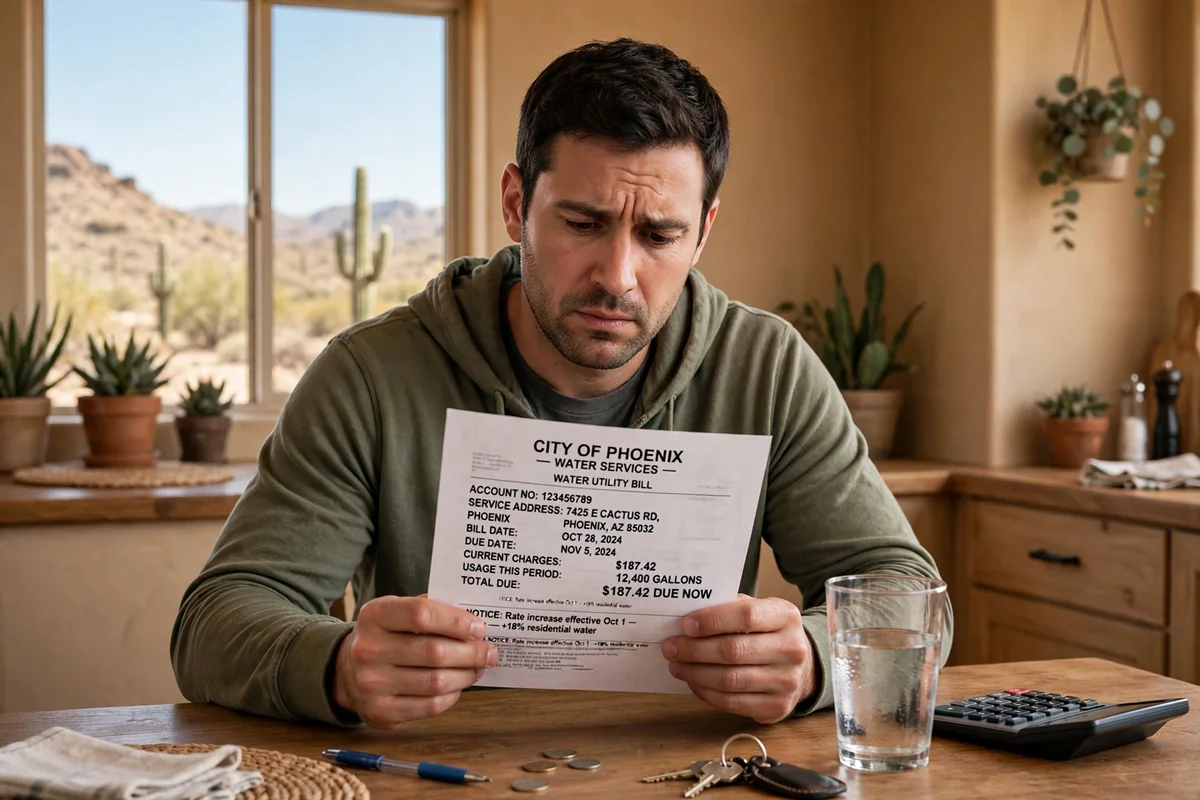
Work it out from your own bill in three steps. First, find your usage in gallons for the month, and compare it with the same month last year. The gap is a rough measure of the leak. Second, find your rate per 1,000 gallons on the bill. Third, multiply: monthly leaked gallons divided by 1,000, times your rate. As an example only, 3,000 leaked gallons at a rate of 5 dollars per 1,000 gallons adds 15 dollars to the water portion of the bill. Your rate will differ, and many utilities use tiered rates, so heavy use can push you into a pricier tier and cost more than the simple math suggests.
Two bill surprises catch homeowners out. Some utilities base sewer charges on water usage, so a slab leak can raise the sewer line of your bill too, even though the leaked water never reaches a drain. And a hot water slab leak adds a second bill: the water heater runs constantly to replace the hot water escaping under the floor, which shows up on your gas or electric bill. If your water bill jumped and you cannot find a visible leak, our guide to a high water bill with no visible leak walks through the triage, and slab leak repair costs covers what fixing it runs.
The hidden extra: hot water leaks waste energy too
A leak on a hot water line is the most expensive kind of slab leak, gallon for gallon. Cold water leaking under the slab wastes water. Hot water leaking under the slab wastes water and the energy used to heat it, because the heater fires again and again to replace what escapes. The signs are specific: a warm spot on the floor, a heater that never seems to shut off, and a gas or electric bill climbing alongside the water bill. If that sounds familiar, read why a water heater running constantly can mean a slab leak before you pay to replace the heater. Detection comes first, because a new heater on a leaking line keeps wasting the same water.
How to measure your own leak in 30 minutes
The meter test turns estimates into your number. It needs no tools and no plumbing skill.
- Turn everything off. No taps, no dishwasher, no washing machine, no irrigation, no pool fill. Tell everyone in the house not to use water for 30 minutes.
- Read the meter. Open the meter box near the street, write down the reading, and note the position of the low flow indicator, usually a small triangle or star.
- Wait 30 minutes, then read it again. If the reading moved or the indicator is spinning, water is leaving the house somewhere. A slab leak is the prime suspect when nothing is running and no fixture is visibly leaking.
- Do the math. Gallons used in 30 minutes times 48 gives gallons per day. Times 30 gives gallons per month. A meter that moved 2 gallons in 30 minutes means about 96 gallons a day, or roughly 2,880 gallons a month.
- Isolate hot from cold if you can. Shut off the cold feed to the water heater and repeat the test. If the meter stops, the leak is on the hot side. That detail helps the detection technician and tells you whether energy is being wasted too.
Our step by step water meter test guide covers meter types, where to find yours, and what to do when the meter keeps spinning. If the test confirms a leak, the next step is professional detection, not more waiting. How slab leak detection works explains the acoustic, pressure, and thermal tools that pinpoint the break without tearing up the floor to find it.
Why wasted water matters more in Arizona
Apache Junction sits in the desert, and every gallon lost under a slab is a gallon pumped, treated, and delivered for nothing. Arizona water managers count on conservation, and a single undetected slab leak can waste more water in a month than a household uses for drinking and cooking in a year. There is also a local soil angle. Expansive desert clay swells when wet and shrinks when dry, so water pooling under the slab moves the ground the slab sits on. Fixing the leak early saves water and protects the foundation at the same time. If you are seeing cracks or sticking doors alongside the water loss, read the slab leak symptoms guide to sort out what is urgent.
When to stop measuring and call
Call for detection right away if any of these are true: the meter moves fast, more than a gallon in 30 minutes; you hear running water when nothing is on; a floor spot feels warm; the water bill jumped by a third or more; or dampness, warping, or a musty smell has appeared. At those rates, every day of waiting adds tens or hundreds of gallons to the total, and the repair does not get cheaper while you wait. If water is actively pooling or a pipe has burst, go straight to emergency leak repair and shut off the main valve first.
Stop the meter: detection first
A slab leak is one of the few home problems where the cost of waiting is easy to count. Take the meter reading today, do the 30 minute test, and you will know within a day whether you are losing 10 gallons or 1,000. If the meter is moving, detection finds the break so the repair fixes the right pipe once, instead of guessing. Call Leak Finders at (480) 885-4943 for slab leak detection in Apache Junction. Same day appointments are available, and the visit ends the guessing about how much water your home is losing.